
Magnitude 6.7 Peru Earthquake Triggers Emergency Response Across Andes
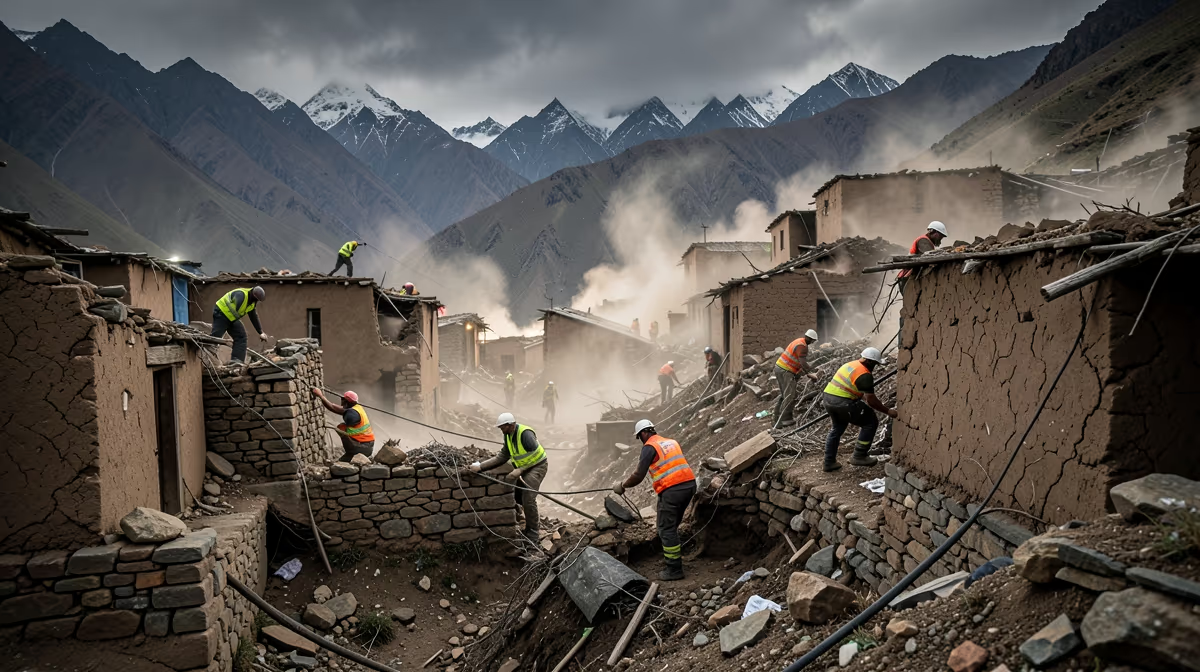
A powerful magnitude 6.7 Peru earthquake has struck Peru's southern Andes, according to recent geological surveys, causing widespread concern among local residents. The strong seismic activity shook the region on Thursday, prompting authorities to urge vigilance across the country as local emergency services assess the impact.
USGS Details and Epicenter Location
The U.S. Geological Survey recorded the seismic event on Thursday, August 20, 2026. The roots of this event trace directly to seismic activity driven by the subduction of the Nazca Plate beneath the South American Plate, leading to significant stress accumulation and a sudden release of energy in Peru's southern Andes. Major news outlets and mapping services tracked the epicenter and its impact across the surrounding areas. While separate assessments in central Peru reported no immediate damage, the southern Andes experienced the brunt of the 6.7-magnitude event. Peru lies along the highly active Pacific Ring of Fire, a region known for frequent seismic and volcanic activity caused by the interaction of tectonic plates, making powerful earthquakes a recurring event in the Andes and coastal areas.
Initial Damage Reports From the Southern Andes
Early reports indicate that at least two people have sustained injuries and several homes have suffered structural damage as a result of the quake. Emergency responders are currently assessing the affected areas to determine the full extent of the impact. Emergency response teams and local authorities have been mobilized to check for further structural damage and potential casualties in more remote mountain communities.
- A magnitude 6.7 earthquake struck Peru's southern Andes.
- The seismic event was recorded by the USGS on Thursday, August 20, 2026.
- At least two people have been reported injured following the tremors.
- Several homes and structures have sustained damage in the affected zone.
- Authorities have urged vigilance and are monitoring the situation across the country.
Why This Matters
Earthquakes of this magnitude possess enough energy to cause structural damage, disrupt local infrastructure, and pose immediate risks to human life. Understanding the impact helps direct emergency response and highlights the importance of seismic preparedness in earthquake-prone regions. Residents living in Peru's southern Andes region, local communities experiencing property damage, and individuals whose families or livelihoods are tied to the affected areas are directly impacted by these sudden tremors.
Political and Economic Dimensions
The disaster places pressure on regional and national authorities in Peru to demonstrate effective emergency response, infrastructure resilience, and resource distribution in vulnerable highland communities. Potential localized infrastructure damage in the southern Andes threatens regional supply chains, local commerce, and prompts government expenditure toward emergency relief and structural repairs. While primarily a domestic humanitarian and disaster management challenge, major seismic events in Peru highlight the broader Andean vulnerability to natural disasters, often prompting international monitoring and cooperative disaster-response frameworks. The earthquake may also accelerate underlying discussions regarding the structural enforcement of building codes in remote Andean settlements versus heavily funded coastal urban centers, drawing historical parallels to the 2007 Pisco earthquake that exposed significant vulnerabilities in Peruvian infrastructure and spurred subsequent updates to national seismic engineering standards.
Future Outlook and Expert Predictions
Emergency response teams and regional authorities in Peru's southern Andes will continue damage assessments following the magnitude 6.7 earthquake, focusing on injured individuals and damaged homes over the next 24 hours. Within the next 72 hours, authorities will likely maintain heightened vigilance across the country, evaluating infrastructure stability, potential aftershocks, and organizing humanitarian aid for affected communities. Analysts and experts expect ongoing aftershocks following a magnitude 6.7 earthquake, prompting sustained safety advisories and structural inspections by local disaster management agencies. In a best-case scenario, damage remains minimal with no further injuries reported, and infrastructure is quickly cleared and repaired by regional teams. Conversely, in a worst-case scenario, significant structural failures emerge in remote mountain areas, complicating rescue efforts and increasing injury counts as aftershocks continue.
Local officials and emergency management agencies continue to evaluate structural damage and assist those injured by the quake while urging nationwide vigilance.
Frequently Asked Questions
What caused the recent earthquake in Peru?
A powerful magnitude 6.7 earthquake struck Peru's southern Andes region, according to the USGS. The strong seismic activity shook the area, prompting immediate assessments from authorities.
Were there any injuries or damages reported from the Peru earthquake?
At least two people were reported injured following the magnitude 6.7 tremor. Additionally, the shaking caused damage to homes in the affected southern Andes region.
Where exactly did the earthquake hit?
The earthquake struck Peru's southern Andes region. Major news outlets and mapping services tracked the epicentre and its impact across the surrounding areas.
What are authorities advising residents to do after the earthquake?
Following the powerful tremor, authorities have urged vigilance across the country. Residents are advised to stay alert for potential aftershocks and follow safety instructions from local emergency services.
Why is Peru prone to significant earthquakes?
Peru lies along the highly active Pacific Ring of Fire, a region known for frequent seismic and volcanic activity caused by the interaction of tectonic plates. This geological setting makes powerful earthquakes a recurring event in the Andes and coastal areas.
What happens next as recovery efforts begin?
Emergency crews and local authorities continue to evaluate structural damage and assist those injured by the quake. Assessments are ongoing to ensure infrastructure stability and provide support to affected communities.
Conclusion
Verified developments confirm that a magnitude 6.7 earthquake struck Peru's southern Andes on Thursday, August 20, 2026, resulting in at least two injuries and property damage. Emergency crews, regional authorities, and disaster management agencies remain mobilized to conduct damage assessments, monitor for potential aftershocks, and provide humanitarian support to affected highland communities.
Sources
- A magnitude 6.7 earthquake has shaken Peru’s southern Andes, USGS says — ABC News - Breaking News, Latest News and Videos
- A magnitude 6.7 earthquake shakes Peru’s southern Andes, injuring at least 2 and damaging homes — AP News
- Strong earthquake strikes central Peru, no damage reported — Reuters
- Map: 6.7-Magnitude Earthquake Shakes Peru — The New York Times
- Peru: Strong earthquake shakes southern Andes — dw.com
- Powerful 6.7 earthquake shakes southern Peru as authorities urge vigilance across country — Anadolu Ajansı


.webp)
