
NASA Moon Crater Discovery Exposes Hidden Risks of SpaceX Rocket Impact
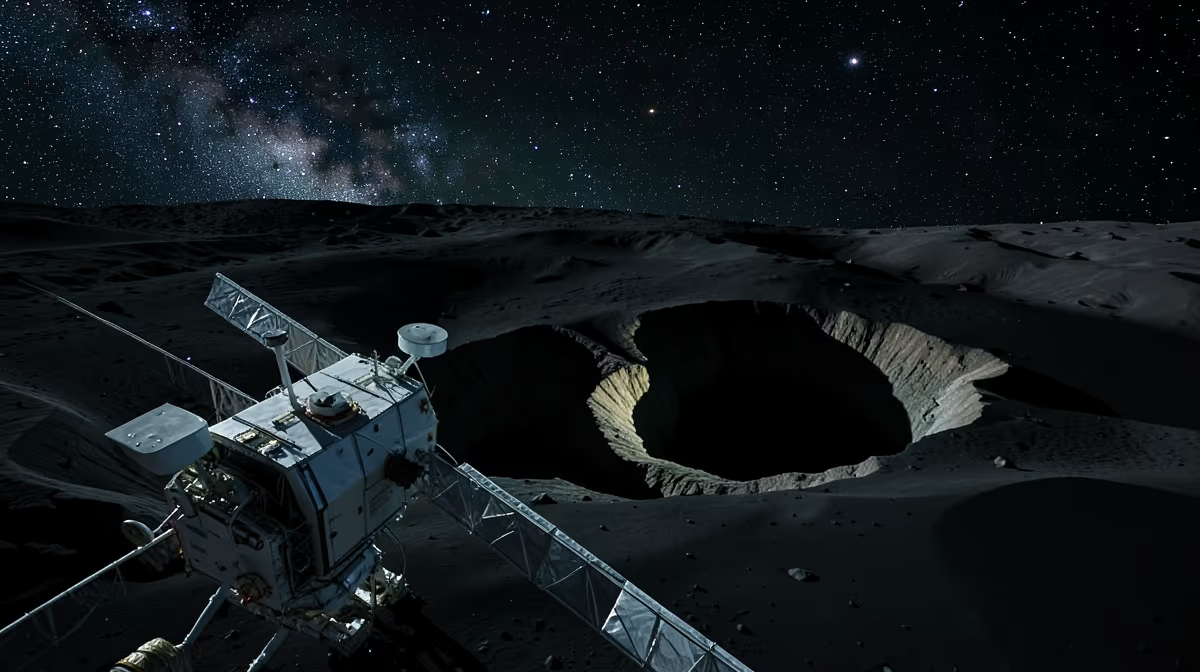
In a remarkable astronomical observation, NASA LRO moon crater images have revealed the exact impact site of a stray SpaceX rocket part. NASA's Lunar Reconnaissance Orbiter has captured new images revealing the crater left on the moon's surface by a SpaceX Falcon 9 rocket part that crashed into it.
What Unfolded
The impact, which involved a spent SpaceX rocket booster, has been analyzed by NASA scientists using the Lunar Reconnaissance Orbiter (LRO). Newly released images provide a detailed look at the resulting double crater and offer new information regarding the size and nature of the hole formed by the collision. Originally tracked by astronomers following its unplanned lunar trajectory, the discarded rocket stage generated significant interest within the scientific community. The LRO's recent passes over the impact site have now successfully imaged the aftermath, confirming details of the disturbance on the lunar surface. While space debris impacting the moon is not entirely unprecedented, capturing the specific aftermath of a commercial rocket stage provides researchers with unique data regarding high-velocity impacts on planetary bodies. The findings contribute to ongoing observations of lunar geology and space traffic management.
- Falcon 9 rocket stage is left in an uncontrolled orbit following a deep-space mission
- The rocket booster impacts the lunar surface, creating a double crater detected by astronomers
- NASA's Lunar Reconnaissance Orbiter captures high-resolution imagery and confirms the crater's specifics
Key Facts
NASA has captured and released images confirming the moon crater caused by a SpaceX Falcon 9 rocket part, along with size estimates of the impact site.
- NASA's Lunar Reconnaissance Orbiter (LRO) captured new images of a crater on the Moon
- The crater was caused by the impact of a SpaceX Falcon 9 rocket part
- Scientists used the new photos to estimate the size of the hole made on the lunar surface
- The findings provide fresh details about the aftermath of the rocket part crashing into the Moon
- Multiple space science and news organizations have reported on NASA's confirmation of the crater
NASA's Lunar Reconnaissance Orbiter captured new images of a crater on the moon caused by a SpaceX Falcon 9 rocket part crash.
Background and Analysis
The expanding commercialization of space and increased lunar exploration traffic have led to predictable orbital debris incidents, highlighted by a discarded SpaceX Falcon 9 rocket booster impacting the lunar surface. Spent rocket boosters and other artificial debris have occasionally ended up on celestial bodies as deep-space missions and commercial space exploration have grown over the decades. This historical parallel mirrors the 1979 uncontrolled reentry of NASA's Skylab space station, which sparked widespread public anxiety and highlighted early orbital debris governance gaps.
The incident sharpens the debate over regulatory oversight and accountability in deep space, testing how national space agencies monitor private sector debris and orbital trajectories. As private aerospace companies scale up deep-space missions, issues of space situational awareness and potential liabilities for lunar surface impacts could drive up compliance and tracking costs. With multiple nations and private entities accelerating lunar exploration, the lack of an international framework for managing lunar debris poses growing diplomatic and strategic challenges for spacefaring powers. The detailed imaging of the crater by NASA's Lunar Reconnaissance Orbiter may quietly establish a precedent for how space agencies monitor and catalog private sector lunar impacts, potentially laying the technical groundwork for future debris tracking treaties.
As human activity in space increases, tracking space debris and understanding its impact on celestial bodies like the Moon becomes increasingly important for scientific research and long-term space exploration safety.
Why This Matters
As human activity in space increases, tracking space debris and understanding its impact on celestial bodies like the Moon becomes increasingly important for scientific research and long-term space exploration safety. Space agencies, aerospace companies, astronomers, and the broader global scientific community studying space weather and debris are directly affected by these events. Researchers will continue studying the LRO images to gather more data on the crater's formation, size, and depth. This analysis will help experts refine models predicting how various materials interact with the lunar surface during high-speed impacts.
Future Outlook
Continued analysis of the newly released NASA Lunar Reconnaissance Orbiter images regarding the SpaceX Falcon 9 rocket impact crater on the Moon is expected over the next 24 hours, with ongoing media coverage and scientific discussions detailing the size and features of the double crater. Over the next 72 hours, further astronomical evaluations and academic commentary will assess the implications of space debris management, lunar impacts, and the specific dynamics of the spent rocket booster collision. Analysts would likely expect increased scrutiny and discussion regarding orbital debris tracking and the long-term environmental impacts of spent rocket components reaching lunar and deep-space destinations. In a best-case scenario, the detailed analysis of the crater provides valuable scientific data on impact physics and lunar regolith properties without affecting any active lunar missions. In a worst-case scenario, heightened concerns over unmonitored space debris lead to rising friction and calls for stricter international regulations on lunar trajectories for commercial spaceflight.
Frequently Asked Questions
What happened when the SpaceX rocket part hit the moon?
A discarded SpaceX Falcon 9 rocket stage slammed into the lunar surface, creating an impact site that NASA later captured in newly released photographs. The collision left a distinct mark on the moon, drawing significant attention from astronomers and space agencies monitoring orbital debris.
How did NASA capture the moon crater caused by the SpaceX rocket?
NASA used its Lunar Reconnaissance Orbiter (LRO) to capture high-resolution images of the impact site on the moon. These detailed photos allowed scientists to analyze the aftermath and learn more about the mechanics of the collision.
Why does the SpaceX rocket moon crater matter?
The incident highlights the growing concerns surrounding space debris and the long-term environmental impacts of human activity in deep space. As more rockets venture beyond Earth orbit, tracking uncontrolled spent stages has become increasingly critical for understanding lunar impacts.
Who is affected by the SpaceX rocket impact on the moon?
While no humans or lunar infrastructure were harmed, the scientific and space policy communities are directly affected. The event sparks important discussions regarding space traffic management, orbital accountability, and the regulations governing discarded rocket parts.
What happens next following the discovery of the moon crater?
Researchers will continue studying the LRO images to gather more data on the crater's formation, size, and depth. This analysis will help experts refine models predicting how various materials interact with the lunar surface during high-speed impacts.
What specific details were revealed about the hole SpaceX made in the moon?
NASA's analysis of the LRO images provided estimates on the size and dimensions of the hole created by the crash. The photos revealed unique characteristics of the double crater formed by the spent rocket stage, offering a rare look at high-velocity debris impacts.
Conclusion
NASA's capture of the lunar crater created by the SpaceX Falcon 9 rocket part provides verified scientific data regarding high-velocity impacts on planetary bodies. Through the Lunar Reconnaissance Orbiter, researchers have confirmed details of the double crater and estimated the size of the impact site. Ongoing analysis of these images and discussions surrounding orbital debris management and lunar safety will continue as scientists examine the physical aftermath of the collision.
Sources
- NASA’s LRO Images Falcon 9 Crater on Moon, Learns New Details — NASA Science (.gov)
- NASA estimates the size of the hole SpaceX made in the moon — The Register
- NASA captures photos of Moon crater caused by SpaceX rocket part — LiveNOW from FOX
- NASA Images Confirm Moon Crater Made by SpaceX Rocket — PetaPixel
- NASA Images Show Crater On The Moon Caused By SpaceX Falcon 9 Crash — Engadget
- A SpaceX rocket slammed into the moon. NASA's new photos show aftermath — USA Today


.webp)
