
Sugar Prices Hit Record High as Ethanol Push Strains Supplies
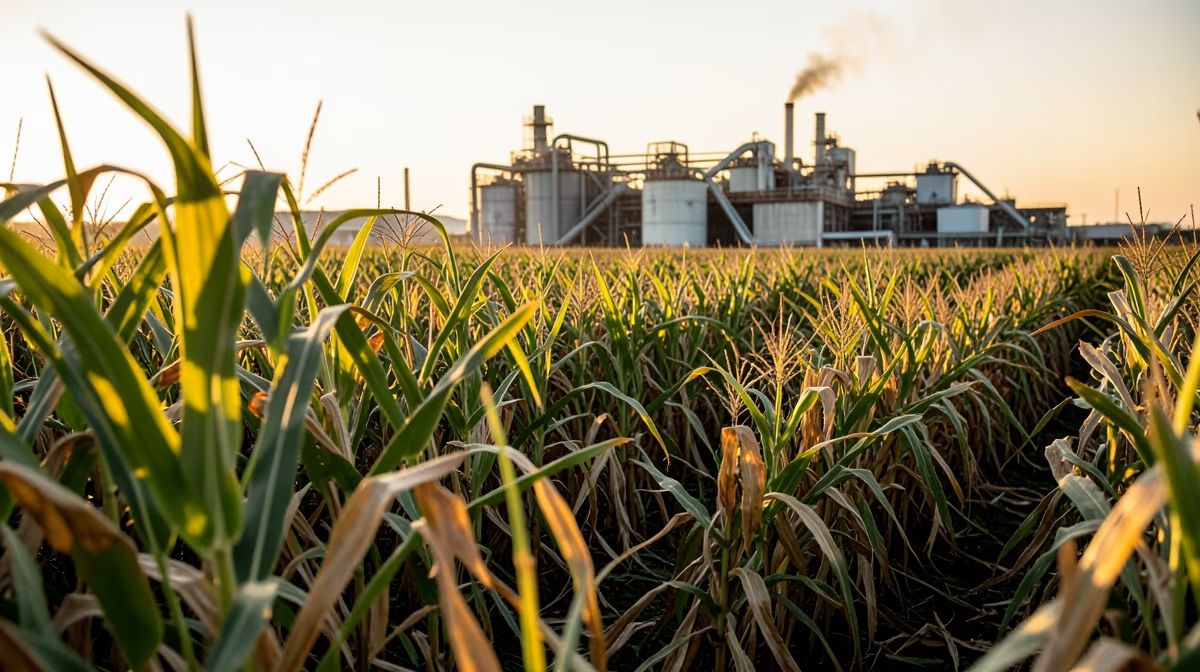
India sugar prices have surged to unprecedented levels, driven heavily by the diversion of sugarcane toward the ambitious E20 ethanol blending program. With ex-factory rates crossing Rs 5,400 per quintal and wholesale prices touching Rs 5,800, the domestic market is facing a tight supply squeeze that is pushing up costs for everyday consumers and food manufacturers alike.
Background and Market Pressures
The sharp spike in domestic sugar prices reflects tight supplies across the market as a significant portion of sugarcane is redirected toward meeting the ambitious E20 ethanol blending targets. Commodity market trends indicate that the aggressive national push toward the E20 ethanol blending mandate has diverted a significant share of sugarcane away from sweetener production and toward biofuel. This shift has severely squeezed domestic sugar supplies, causing ex-factory and wholesale prices to hit record highs.
- Ex-factory sugar rates have crossed Rs 5,400 per quintal
- Wholesale prices have touched Rs 5,800 per quintal
- Sugarcane is actively being diverted to the E20 ethanol blending program
- Domestic sugar supplies have tightened sharply across the market
How E20 Ethanol Diversion is Straining Sugar Supplies
The E20 program diverts a substantial portion of sugarcane away from traditional sugar production and into ethanol manufacturing. This diversion has directly squeezed domestic sugar inventories, creating supply shortages and driving up market prices. When staple commodities like sugar hit record-high prices, it directly drives up inflation and increases the cost of processed foods, beverages, and daily household goods. This puts a financial strain on everyday consumers while forcing policymakers to balance green energy goals, like ethanol blending, with food security and price stability.
Sugar prices have hit record levels with ex-factory rates crossing Rs 5,400 per quintal and wholesale touching Rs 5,800 amid tight supplies driven by cane diversion toward E20.
Government Measures to Contain the Escalating Crisis
In response to the mounting price pressure and supply tightness, India is rushing to contain the crisis. Authorities are actively weighing measures such as allowing limited sugar imports and cutting import duty to stabilize the domestic market and ensure consumer prices are kept in check. Commodity traders, agriculture policy analysts, and business readers interested in Indian markets are closely monitoring these potential policy interventions.
- Evaluation of potential import duty cuts to facilitate smoother trade
- Consideration of limited sugar imports to cool down the domestic market
- Ongoing regulatory balancing between ethanol blending initiatives and food price stability
India must rapidly balance aggressive green energy targets with domestic food security as E20 cane diversion strains sweetener inventories.
Economic Impact and Stock Market Reactions
As the market grapples with these unprecedented price levels, sugar stocks have experienced rallies of up to 10% on the exchanges. Domestic sugar prices have reached historic highs due to tight supplies, prompting sugar stocks to rally on expectations of windfall profits, even as the government weighs cutting import duties to cool the market and protect consumers. Everyday consumers face higher retail prices, food and beverage manufacturers deal with increased production costs, and sugar mill or stock investors react to market rallies and potential government import policies.
Analyst View and Policy Challenges
The ruling administration faces a precarious balancing act: maintaining farmer support via high cane diversion and ethanol pricing while desperately trying to contain food inflation for urban and rural consumers as sugar prices surge past Rs 5,400 per quintal. India's balancing act between aggressive green energy targets and domestic food security highlights the global tension in emerging economies where biofuel policies directly compete with agricultural food commodities. Furthermore, the rapid pivot of cane resources toward ethanol may force India, traditionally a major global sugar exporter, to become a net importer, potentially tightening international sugar balances and driving global price volatility.
Frequently Asked Questions
Why are sugar prices hitting record highs in India?
Sugar prices have surged to record levels due to tight domestic supplies and a significant volume of sugarcane being diverted toward the E20 ethanol blending program. Ex-factory rates have notably crossed Rs 5,400 per quintal while wholesale prices touch Rs 5,800.
What is the impact of the E20 ethanol program on sugar prices?
The E20 program diverts a substantial portion of sugarcane away from traditional sugar production and into ethanol manufacturing. This diversion has directly squeezed domestic sugar inventories, creating supply shortages and driving up market prices.
Is India planning to allow sugar imports to contain the crisis?
Yes, India is considering and rushing to contain the crisis by potentially allowing limited sugar imports. Discussions and focus are also centering on a possible import duty cut to cool down the soaring domestic market.
How are sugar stocks reacting to the price surge?
Sugar stocks have rallied by up to 10 percent in response to soaring domestic prices and tight supplies. Investors are closely monitoring market developments, especially potential government interventions like import duty cuts.
What are the current ex-factory and wholesale rates for sugar in India?
Amid the ongoing supply squeeze, ex-factory rates for sugar have crossed Rs 5,400 per quintal. Meanwhile, wholesale rates have climbed even higher, touching approximately Rs 5,800 per quintal.
What happens next as India rushes to manage the sugar crisis?
Policymakers are actively weighing measures to stabilize the domestic market, balancing the demands of the green energy E20 ethanol mandate with consumer food inflation concerns. Implementing limited imports or adjusting import duties remain key options under consideration.
Conclusion
Domestic sugar prices have reached record highs amid tight supplies driven by cane diversion toward E20, and authorities are actively considering import duty cuts and limited sugar imports to contain the crisis. Market analysts expect continued volatility in sugar stocks and domestic prices until concrete measures on import duties or supply management are officially implemented. Policymakers continue to assess the evolving situation to stabilize the domestic market while balancing green energy targets with consumer price stability.
Sources
- Sugar prices hit record levels: Ex-factory rates cross Rs 5,400 per quintal, wholesale touches Rs 5,800 — ChiniMandi
- Sugar prices hit record high as cane goes to E20; India rushes to contain crisis — India Today
- Sugar stocks rally up to 10% as domestic prices surge on tight supplies; import duty cut in focus — Moneycontrol.com
- Why India is considering sugar imports as prices hit record levels — The Times of India
- India May Allow Limited Sugar Imports as Prices Hit Record Highs: What Could Change for the Market — chshyd.in
- Daily Sugar Market Update By Vizzie -18/08/2026 — ChiniMandi


.webp)
