
US Navy Destroyer Power Loss in South China Sea Sparks Major Concern
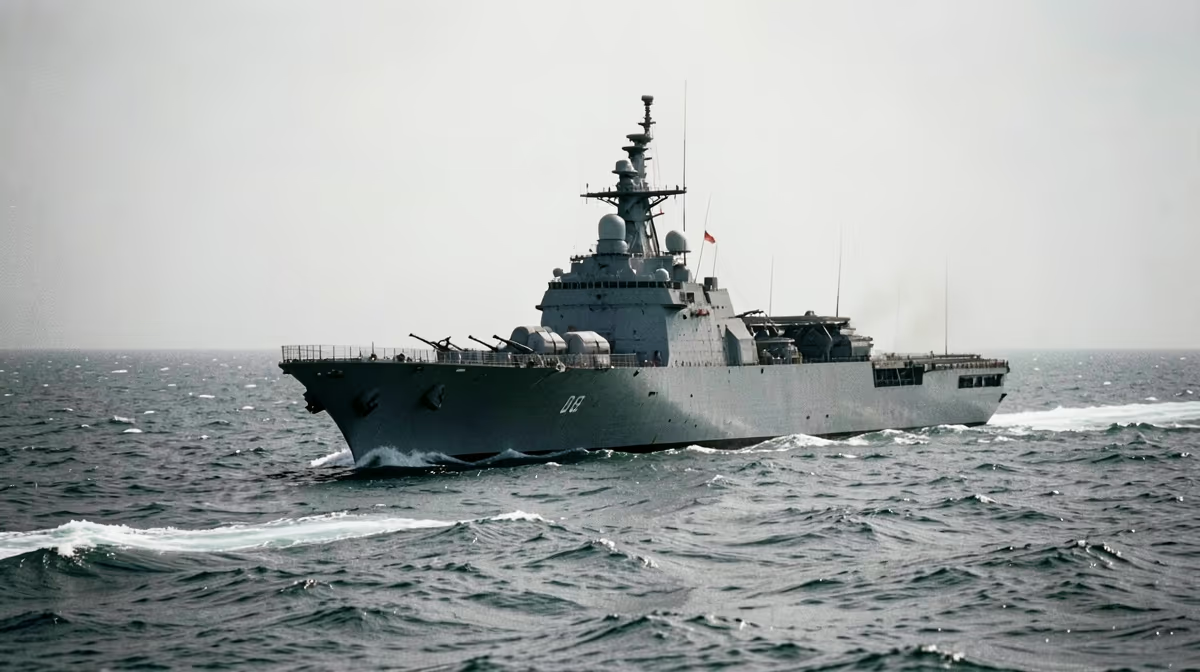
Recent reports highlight a significant navy destroyer power loss incident while operating in the contested waters of the region. A U.S. Navy destroyer recently experienced a major power failure lasting four days while operating in the South China Sea, according to reports from multiple major news outlets including The Washington Post and ABC News. This unexpected mechanical failure transformed a standard maritime deployment into an extraordinary endurance test for the crew on board.
Timeline of the South China Sea Incident
Reports indicate that approximately 300 sailors endured four days without water or functional toilets after the Navy destroyer lost its power system in the region. Naval vessels are massive floating cities reliant on complex engineering systems for propulsion, electricity, and sanitation. When power systems fail entirely, it creates severe logistical and sanitary challenges for the crew until repairs can be made or assistance arrives. The vessel remained completely disabled and without power for a total of four days in the South China Sea, severely disrupting standard shipboard operations.
- A U.S. Navy destroyer lost power in the South China Sea.
- The total duration of the power outage lasted for four days.
- Roughly 300 sailors were onboard during the incident.
- The crew endured four days without water or working toilets.
- Major news outlets including The Washington Post and ABC News reported on the event.
A U.S. Navy destroyer lost power for 4 days in the South China Sea, leaving 300 sailors without water or toilets.
Broader Impacts on Regional Maritime Security
The mishap highlights critical vulnerabilities regarding technical reliability and emergency preparedness for naval vessels deployed in contested or remote regions. Operating without power for an extended period in a strategically sensitive area like the South China Sea raises serious operational concerns. This event exposes potential operational vulnerabilities in the South China Sea, a critical flashpoint where naval presence and deterrence credibility are paramount. Subsurface maintenance backlogs and strained supply chains across the Indo-Pacific may be forcing aging or over-extended surface combatants to operate past safe maintenance thresholds.
This incident brings attention to the difficult and sometimes hazardous conditions military service members face while operating complex machinery in remote and strategically sensitive international waters.
Operational Readiness and Fleet Maintenance
Military analysts and defense officials are expected to face scrutiny regarding fleet maintenance and emergency response protocols following the prolonged power outage. The root cause points to critical technological and logistical vulnerabilities within deployed U.S. naval assets operating in contested strategic waters. This parallels historical events such as the 2017 USS John S. McCain and USS Fitzgerald collisions, which similarly triggered deep congressional and military reviews into U.S. Navy operational readiness and overwork in the Pacific.
- U.S. Navy destroyer suffers a catastrophic power failure while operating in the South China Sea.
- Crew endures four days without propulsion, water, or functioning toilets under difficult environmental conditions.
- Incidents spark broader media reporting and renew political debate surrounding naval fixation and fleet readiness.
Political and Economic Dimensions
The incident intensifies domestic scrutiny from lawmakers regarding military readiness, defense spending efficiency, and the welfare of deployed service members. At the same time, it highlights the massive operational and maintenance costs required to sustain naval power projection in distant Indo-Pacific zones. Naval leadership and logistics teams were tasked with responding to the emergency and assessing the root causes. Further details and official statements from defense officials regarding the U.S. Navy destroyer losing power for four days in the South China Sea are expected to emerge, focusing on the conditions endured by the 300 sailors without water or toilets.
Frequently Asked Questions
What happened to the U.S. Navy destroyer in the South China Sea?
A U.S. Navy destroyer completely lost power while operating in the South China Sea, leaving the vessel disabled for four days. During this critical blackout, the crew had to manage onboard conditions without standard propulsion and operational systems.
How did the power loss affect the sailors onboard?
Approximately 300 sailors endured four difficult days without running water or functioning toilets due to the total power outage. The prolonged failure of essential life-support and sanitation systems created harsh living conditions for the entire crew.
Why is this incident in the South China Sea significant?
The mishap highlights critical vulnerabilities regarding technical reliability and emergency preparedness for naval vessels deployed in contested or remote regions. Operating without power for an extended period in a strategically sensitive area like the South China Sea raises serious operational concerns.
Who was directly affected by the disabled ship incident?
The roughly 300 crew members aboard the destroyer bore the direct impact of the four-day power failure, facing severe discomfort and health challenges. Naval leadership and logistics teams were also tasked with responding to the emergency and assessing the root causes.
What steps are typically taken following such a naval breakdown?
Following a major power failure at sea, naval authorities usually conduct thorough mechanical investigations to determine the cause of the electrical blackout. Ships are typically towed or escorted to a secure port for extensive repairs and system diagnostics before returning to active duty.
How long was the Navy destroyer left without power?
The vessel remained completely disabled and without power for a total of four days in the South China Sea. This extended timeframe severely disrupted standard shipboard operations and forced the crew to endure substandard conditions until assistance or restoration could be achieved.
Conclusion
A U.S. Navy destroyer lost power for four days in the South China Sea, leaving 300 sailors without water or toilets, as confirmed by major news outlets including The Washington Post, ABC News, and KATU. While the exact mechanical cause and potential procedural changes remain unconfirmed, the incident has drawn significant media attention regarding naval operational readiness and crew welfare. Broader media analysis and potential congressional or military inquiries into naval operational readiness and maintenance protocols are expected to follow in the coming days as defense officials examine the logistics failure.
Sources
- How the U.S. Navy Is Helping Get Oil Through the Strait of Hormuz — The New York Times
- Trump’s Current Naval Fixation — The Atlantic
- U.S. Navy destroyer lost power for 4 days in South China Sea — The Washington Post
- 300 sailors endured 4 days without water or toilets after Navy destroyer lost power — KATU
- Navy ship without power for 4 days in South China Sea — ABC News - Breaking News, Latest News and Videos
- Disabled Navy Veteran Sues Her Homeowners Association Over Fees, Debt Collection — Military.com


.webp)
