
Operation Safed Sagar Revealed The Untold Air Force Strategy In Kargil
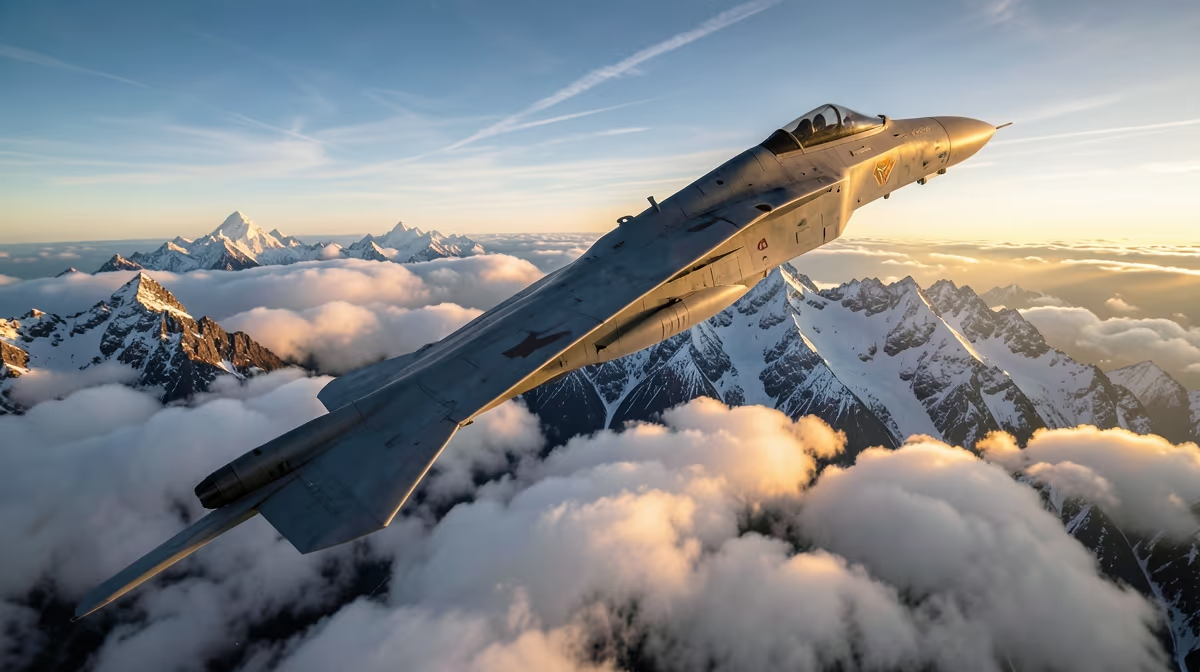
operation safed sagar remains one of the most critical military engagements in modern Indian history, highlighting the strategic might of the indian air force during the 1999 kargil war. Operation Safed Sagar was the Indian Air Force tactical air action code-name executed during the 1999 Kargil War to flush out Pakistani intruders from fortified positions in the high-altitude Himalayan terrain of Jammu and Kashmir. Launched in May 1999, the operation marked the first time air power was utilized in such high-altitude mountainous warfare, testing the limits of both pilots and aircraft. The IAF deployed MiG-21s, MiG-23s, MiG-27s, and Mirage 2000 jets, alongside Mi-17 helicopters, to strike enemy supply lines, ammunition dumps, and command posts perched at altitudes exceeding 16,000 feet. The rugged terrain and unpredictable weather posed severe challenges, requiring pilots to fly blind through clouds and navigate narrow gorges while vulnerable to Stinger missiles.
Background
In the spring of 1999, Pakistani soldiers and militants disguised as locals infiltrated across the Line of Control into the Kargil district of Jammu and Kashmir, occupying vacant winter posts. This triggered the Kargil War, prompting India to launch Operation Vijay on the ground and operation safed sagar in the air to clear the intruders. The root cause of this intervention was the strategic necessity to secure high-altitude logistical supply lines and counter tactical disadvantage in contested Himalayan border sectors. When Pakistani infiltrators secretly crossed the Line of Control and occupied high mountain peaks in Kashmir, Indian ground troops faced an extremely difficult uphill battle. To support them, the Air Force was called in to strike enemy bunkers and supply lines from the sky. Fighter jets and helicopters had to fly at very high altitudes where the thin air makes flying dangerous and reduces engine power. Despite these tough conditions, the air strikes played a crucial role in weakening the intruders, ultimately helping the Indian Army recapture the strategic peaks.
What Unfolded
The deployment of the Mirage 2000 fleet proved to be a game-changer during kargil war operation safed sagar, as these aircraft successfully dropped laser-guided bombs to destroy the heavily fortified enemy bunkers on Tiger Hill and Tololing. This precision bombing drastically reduced the time needed to dislodge the entrenched intruders and significantly lowered ground casualties for the Indian Army. The air campaign worked in tandem with infantry assaults, cutting off the enemy logistical lifeline and forcing a retreat. Operation Safed Sagar concluded in July 1999 following the successful reclamation of the occupied peaks and the withdrawal of Pakistani forces facilitated through international diplomatic pressure. The operation underscored the critical importance of joint civil-military coordination and air superiority in modern limited conflicts, forever altering India defense preparedness along the Line of Control.
Key Facts And Operational Scope
Operation Safed Sagar was launched by the Indian Air Force in May 1999 during the Kargil War in Jammu and Kashmir, marking the first major use of air power in the disputed high-altitude region. Fighter jets like the MiG-21 and MiG-23, along with Mi-17 helicopters, were deployed to operate at extreme heights above 30,000 feet, facing severe weather and terrain challenges. Pilots had to navigate extreme heights exceeding 16,000 feet under extreme weather conditions to destroy enemy supply dumps, bunkers, and command posts. The Mirage 2000 aircraft were specifically utilized to deploy laser-guided bombs against enemy bunkers. The operation concluded in July 1999 after Indian forces successfully recaptured all occupied peaks, paving the way for ground victory. Military historians and defense analysts note that Operation Safed Sagar demonstrated the decisive role of air power in high-altitude warfare, proving that tactical air strikes could systematically dismantle entrenched enemy positions where artillery alone fell short.
Strategic Analysis
The historical campaign carried multiple layers of impact across domestic and international spheres. From a political angle, it marked the consolidation of domestic nationalist resolve and projection of decisive leadership by the central government amidst ongoing territorial disputes. Economically, it drove an escalation of defense expenditure toward high-altitude warfare infrastructure, impacting fiscal allocations for social sectors. Geopolitically, it resulted in the intensification of the regional security dilemma, reinforcing adversarial alignments and accelerating border militarization between nuclear-armed neighbors. The hidden angle of the engagement remained the grueling logistical burden and psychological toll on front-line troops operating in extreme terrain, often overshadowed by triumphalist narratives. Historical parallels can be drawn to the logistical mobilization and operational pivots seen during the 1999 Kargil War under Operation Vijay. Initial intelligence reports indicated tactical incursions and infrastructure buildup along critical high-altitude ridges, prompting the emergency deployment of specialized mountain warfare units and the establishment of secure supply corridors under hostile fire.
Why This Matters
This operation was a major turning point in modern Indian military history because it proved that air power could be effectively used in high-altitude mountain warfare. It forced the military to upgrade its high-altitude combat capabilities and changed how India defends its borders in extremely rugged terrain. The initiative affected Indian Armed Forces personnel, defense strategists, and citizens living in border regions, as well as bilateral relations between India and Pakistan. The strategic lessons learned from kargil conflict air operations continue to shape modern defense doctrines, emphasizing the absolute necessity of precision strike capabilities and seamless integration between air and ground forces in mountainous topography.
Frequently Asked Questions
What is Operation Safed Sagar?
Operation Safed Sagar was the codename for the Indian Air Force role in the 1999 Kargil War. It involved providing close air support to the Indian Army to dislodge Pakistani intruders from heavily fortified positions in the high-altitude mountainous terrain of Kargil.
When was Operation Safed Sagar launched?
The operation was officially launched on May 26, 1999, shortly after the Indian Army initiated Operation Vijay. Air power was brought in to target enemy supply lines, ammunition dumps, and command posts located on treacherous mountain peaks.
Why was Operation Safed Sagar unique?
The operation was unique because of the extreme altitudes at which it was conducted, often exceeding 10,000 to 18,000 feet. Fighter jets and helicopters had to operate in thin air, which significantly reduced their payload capacity and engine performance, presenting unprecedented tactical challenges.
Which aircraft were used in Operation Safed Sagar?
The Indian Air Force primarily deployed MiG-21, MiG-23, MiG-27, and Mirage 2000 fighter aircraft during the conflict. Additionally, Mi-17 and Chetak helicopters were extensively used for transport, reconnaissance, and casualty evacuation.
What was the role of the Mirage 2000 in Operation Safed Sagar?
The Mirage 2000 fleet played a game-changing role by successfully dropping laser-guided bombs on enemy bunkers and supply camps. Their precision strikes heavily damaged the logistical backbone of the infiltrators on the Tiger Hill and Tololing sectors.
What was the outcome of Operation Safed Sagar?
Operation Safed Sagar successfully achieved its objectives by inflicting heavy casualties on the infiltrators and cutting off their supply routes. The coordinated air and ground assaults ultimately led to the complete recapture of the Kargil heights by Indian forces.
Conclusion
Operation Safed Sagar stands verified in modern military archives as a defining chapter in the history of the Indian Air Force, cementing the viability of air power in extreme high-altitude terrain. The tactical lessons and strategic adjustments stemming from the 1999 Kargil War continue to guide contemporary defense policies and operational readiness along sensitive borders. Future operational frameworks in the region project an emphasis on increased surveillance, strategic repositioning of assets, consolidation of operational gains, and enhanced logistical supply chains to maintain a robust deterrence posture.


.webp)
