
Russian Drone Strike Hits Kyiv Warehouse Raising Urgent Conflict Fears
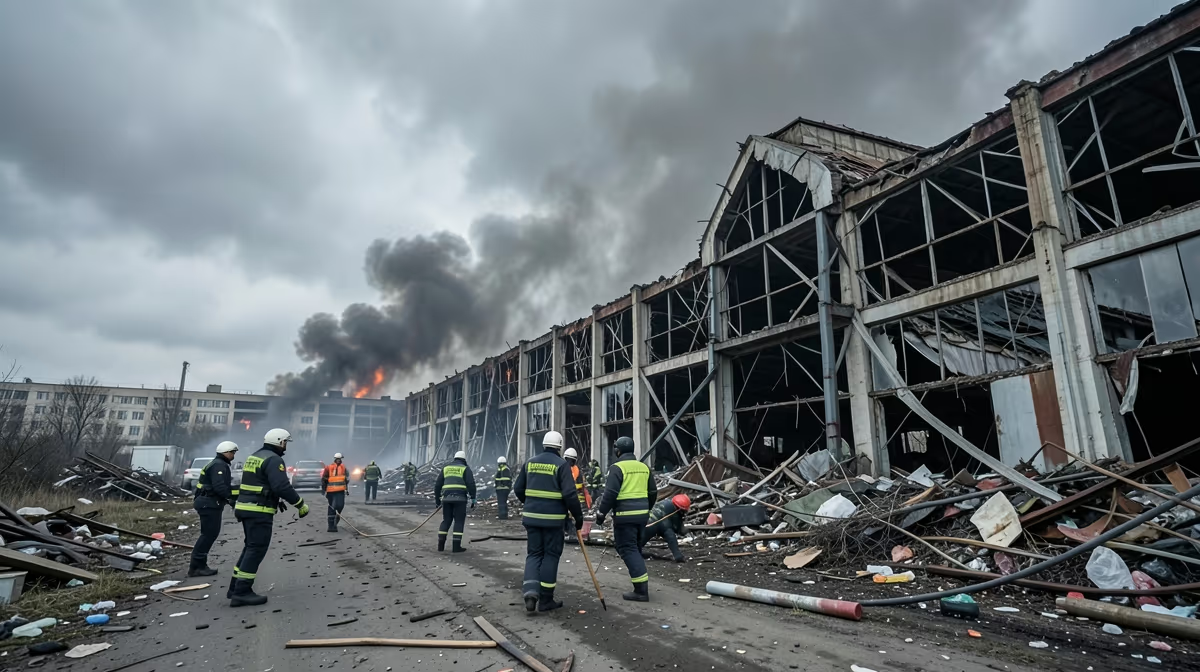
A devastating Kyiv drone strike targeted a major weapon warehouse, resulting in significant casualties and escalating tensions in the ongoing conflict. This violent escalation highlights the heavy human and structural toll of relentless aerial bombardments hitting critical infrastructure nodes inside urban environments.
At least 37 people were killed following a Russian drone strike on a weapons-storing warehouse in Kyiv, marking a severe escalation in urban warfare casualties.
Tactical Escalation and Confirmed Casualties
The deadly strike hit a designated storage facility for weapons in the Ukrainian capital, causing significant destruction and a high casualty toll. Emergency responders have been working tirelessly at the site following the assault to manage rescue and clearance operations.
- A Russian drone strike hit a Kyiv warehouse storing weapons
- The targeted attack resulted in the deaths of at least 37 people
- Emergency response teams continue rescue and clearance operations at the site
Simultaneously, aerial drone activity has continued to impact multiple regions in the ongoing conflict. Reports indicate cross-border drone activity involving both Ukrainian and Russian territories, with separate drone attacks reported in Russia's Rostov and Belgorod regions, as well as Crimea. Specifically, a massive Ukrainian drone attack simultaneously targeted Russia's Rostov region, while separate Ukrainian drone attacks resulted in 4 deaths and 12 injuries in Russia's Belgorod region and Crimea.
Global Geopolitical Context and Regional Impact
The conflict continues to see cross-border friction and widespread aerial warfare. While Ukraine has faced intense aerial bombardments on its infrastructure, regions inside Russia have also been targets of recent drone operations, highlighting the reciprocal nature of the current aerial campaign.
The use of long-range drones has become a central tactic in the conflict between Russia and Ukraine, with both sides frequently employing unmanned aerial vehicles to target military assets, supply lines, and infrastructure across borders. At the same time, separate security alerts and search operations were triggered by suspected drone activity near the Line of Control in Poonch, Jammu and Kashmir, where a suspected Pakistan drone was detected, putting the LoC sector on high alert.
Strategic and Economic Analysis
The ongoing war of attrition and strategic targeting of military logistics and weapon storage hubs by Russian forces in Ukraine drives these high-stakes incidents. The destruction of localized military stockpiles represents a direct capital loss and increases the cost of continuous resupply, logistics rerouting, and infrastructure replacement under wartime conditions.
This dynamic demonstrates the relentless tempo of drone warfare and counter-strikes between Russia and Ukraine, reinforcing the urgency for Western allies to bolster advanced air defense systems for Ukrainian urban centers. Furthermore, the incident pressures the Ukrainian leadership to constantly reassure domestic and international audiences regarding air defense capabilities and the security of military supply chains amid escalating casualties. The concentration of high-value weapon storage near populated areas like Kyiv also raises persistent operational security challenges and difficult choices for military planners balancing urban distribution with concealment.
Future Outlook and Security Assessment
Heightened security alerts and ongoing emergency response in Kyiv are expected following the deadly warehouse strike, alongside continued monitoring of cross-border drone activity involving Russia, Ukraine, and the India-Pakistan border region. Over the next 72 hours, assessments of weapon storage security in urban centers and potential retaliatory or defensive drone countermeasures across active conflict zones will likely intensify.
Analysts would expect an intensification of air defense readiness and retaliatory drone operations following significant casualties from infrastructure strikes. The best-case scenario involves the de-escalation of drone strikes on populated areas and successful interception of aerial threats by defense systems, whereas the worst-case scenario points to further strikes on urban supply hubs resulting in escalated casualties and wider regional instability.
Frequently Asked Questions
What happened during the recent Russian drone strike in Kyiv?
A Russian drone strike hit a warehouse storing weapons in Kyiv, resulting in the deaths of at least 37 people. The attack highlights the continued escalation of aerial bombardments targeting military and logistical supply sites in the region.
Why does this weapons warehouse strike matter for the ongoing conflict?
The destruction of a major weapons storage facility directly impacts Ukraine's military supply chain and defense capabilities. It underscores the high stakes of infrastructure targeting as both sides intensify drone warfare.
Who is most affected by the recent drone strikes in Kyiv and Russia?
Civilians and military personnel in the targeted zones bear the brunt of these attacks, with casualties reported in both Ukraine and border regions of Russia. The persistent drone exchanges continue to heighten insecurity across urban and border communities.
What happens next following the deadly Kyiv warehouse strike?
Emergency response teams continue rescue and clearance operations at the site while security officials assess the broader damage to defense stockpiles. Intensified retaliatory drone campaigns from both sides are widely expected to follow.
What is the broader context of recent drone attacks between Ukraine and Russia?
The strike in Kyiv occurs amidst a broader surge in cross-border and regional drone warfare involving multiple regions in Russia and Ukraine. Both militaries are increasingly relying on long-range unmanned aerial vehicles to strike strategic assets deep behind enemy lines.
How many casualties were reported from the warehouse attack in Kyiv?
At least 37 people were killed in the Russian drone strike on the Kyiv warehouse storing weapons, according to initial reports from The Guardian. The high death toll reflects the severity of the blast and the presence of volatile materials at the location.
Conclusion
The verified developments confirm that a Russian drone strike on a weapons storage facility in Kyiv resulted in at least 37 fatalities amidst a broader backdrop of reciprocal cross-border drone warfare affecting both Ukrainian and Russian territories. Emergency services continue to manage the aftermath at the site while security forces remain on high alert. Future actions will center on air defense reinforcements, security assessments of urban logistical hubs, and ongoing monitoring of aerial threats across active conflict zones.
Sources
- Russian drone strike on Kyiv warehouse storing weapons kills at least 37 — The Guardian
- Massive Ukrainian drone attack targets Russia’s Rostov region — TRT World
- Ukrainian drone attacks kill 4, injure 12 in Russia’s Belgorod region and Crimea — The Times of India
- Suspected Pakistan drone triggers search operation along LoC in Poonch — The Hindu
- Pakistani drone detected in Jammu and Kashmir's Poonch, security forces put LoC sector on high alert — The Times of India
- Suspected Pakistan drone spotted near LoC in Poonch; Jammu and Kashmir on high alert | India News — Hindustan Times


.webp)