
Senator John Thune Takes Senate Helm in a High-Stakes Shift
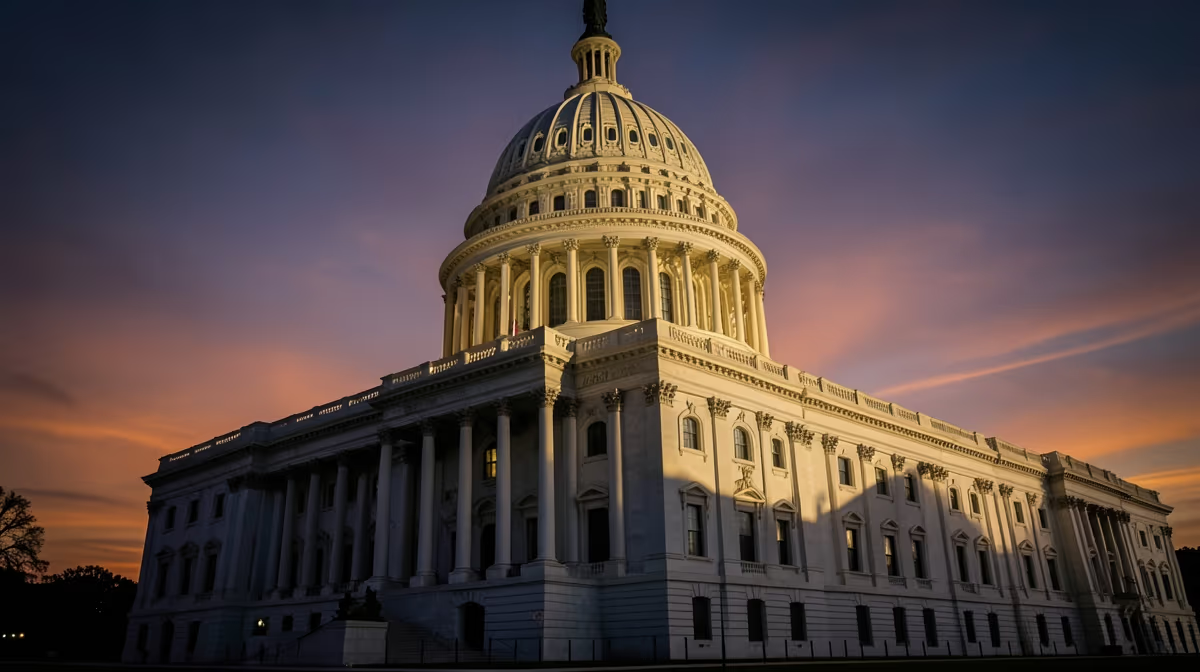
Senator John Thune of South Dakota was elected by his Republican colleagues as the next Senate Majority Leader on Wednesday, positioning the seasoned legislator to helm the upper chamber in the incoming Congress and succeed longtime leader Mitch McConnell. Behind closed doors on Capitol Hill, this high-stakes leadership transition marks the beginning of a new chapter for federal legislative frameworks, economic trajectories, and the broader institutional balance of power in Washington. As policy makers, investors, and political analysts evaluate the implications of this shift, the focus centers on how senator john thune will navigate a narrow majority, balance competing party factions, and manage complex negotiations with the executive branch and the House of Representatives.
Thune, currently the Senate Minority Whip, defeated fellow contenders Senators John Cornyn of Texas and Rick Scott of Florida in a secret-ballot election held on Capitol Hill. His ascent to the top leadership post marks a generational shift for Senate Republicans, bringing a pragmatic and deeply institutionalist approach to the caucus as the GOP prepares to assume the majority in January. Throughout his legislative career, Thune has cultivated a reputation as a consensus-builder and a trusted lieutenant to McConnell, who is stepping down from leadership after a historic tenure. Thune's victory comes at a critical juncture for Washington, as lawmakers gear up to address expiring tax cuts, federal spending legislation, and the legislative priorities of the incoming presidential administration. As majority leader, Thune will wield significant influence over the confirmation of federal judges and cabinet nominees, acting as a crucial bridge between the Senate and the White House. His leadership team will also face the immediate challenge of managing a narrow Republican majority while maintaining party unity on key national security and economic policies. "I am honored and humbled to have the support of my colleagues to serve as Senate Majority Leader," Senator John Thune said in a statement following the vote, emphasizing unity and a commitment to enacting the agenda of the American people.
Institutional Roots And Political Background
To understand the trajectory of the incoming Senate leader, it is necessary to examine his foundational background and legislative journey. John Thune is a U.S. Senator representing South Dakota who was born in Murdo, South Dakota, and earned his undergraduate degree from Western Dakota University and an MBA from the University of South Dakota. Before entering politics, he worked in business development and directed the South Dakota Republican Party. His deep roots in the state have been a cornerstone of his political success. His congressional career began when he was elected to the U.S. House of Representatives in 1996, serving until 2003. He was subsequently elected to the U.S. Senate in 2004, defeating then-Senate Democratic Leader Tom Daschle, and has continued to win re-election to the Senate by comfortable margins. Over the past decade, he rose through the Republican Senate leadership ranks, eventually becoming the number-two Republican before securing the top leadership post. He is recognized as a traditional conservative and an institutionalist who has worked closely with outgoing leader Mitch McConnell for years, earning a reputation for a more conventional and pragmatic political style.
Legislative Priorities And Core Focus Areas
The policy agenda under his stewardship will concentrate heavily on foundational economic and fiscal matters that impact both local communities and the national framework. John thune news typically centers on his core legislative priorities, which include agriculture policy, tax reform, and national security issues relevant to his constituents and the nation. As a senator from an agricultural state, he is a staunch advocate for farmers and ranchers. He also emphasizes economic growth through deregulation and pro-business tax policies. As Senate Majority Leader, he holds immense power over which bills get voted on, which federal judges and cabinet members get confirmed, and how government funding is handled. His leadership will directly shape national policy on taxes, the economy, and federal appointments for the next few years. All U.S. citizens are affected by these responsibilities, as his leadership influences federal laws, the economy, and the confirmation of key government leaders and judges. Furthermore, his extensive behind-the-scenes cultivation of institutional trust and procedural mastery often shields him from media-heavy ideological skirmishes, allowing him to focus on strategic execution.
Analytical Perspectives On The Post-McConnell Era
The structural imperative for institutional continuity within the US Senate amid intense populist polarization has positioned pragmatists as essential buffers in modern American politics. Analysts observe that his leadership involves navigating the delicate equilibrium between the traditional Reaganite Republican establishment and the ascendant populist, MAGA-aligned faction of the party. On the economic front, this requires mediating between corporate fiscal conservatism, deregulation pressures, and the rising protectionist, populist trade policies championed by the working-class base. From a geopolitical angle, his leadership signals to international allies and adversaries the persistence of bipartisan support for traditional US foreign policy, particularly concerning NATO and transatlantic security. Historically, this dynamic parallels the leadership trajectory of Senator Howard Baker, who similarly managed a fractured caucus and balanced executive pressure with legislative independence.
Immediate Next Steps And Strategic Outlook
Short-term operational goals for the incoming leadership focus heavily on alignment, caucus unification, and administrative preparation. Over the next twenty-four hours, observers should monitor Senate leadership meetings and discussions regarding upcoming legislative priorities and committee assignments. Over the next seventy-two hours, Thune is expected to engage in strategic planning sessions with fellow Republican senators to align on the legislative agenda for the new session alongside key players such as Mitch McConnell and John Cornyn. Expert predictions indicate that Thune will focus on unifying the caucus and preparing for negotiations with the House and the administration on key fiscal policies. The best-case scenario involves successful consensus-building leading to a unified caucus and a smooth transition in Senate Republican leadership. Conversely, the worst-case scenario involves internal divisions within the party complicating leadership goals and stalling early legislative priorities.
Frequently Asked Questions
Who is John Thune?
John Thune is an American politician serving as the senior United States Senator from South Dakota, a position he has held since 2005. A member of the Republican Party, he has played a prominent role in Senate leadership. He is recognized as a key figure in conservative policymaking and legislative strategy.
What leadership role does John Thune hold in the Senate?
John Thune serves in Senate Republican leadership, having previously held the position of Senate Minority Whip. He was elected by his colleagues to succeed Mitch McConnell as the Senate Republican Leader starting in the 119th Congress. In this capacity, he coordinates the party's legislative agenda and strategy in the Senate.
What political party does John Thune belong to?
John Thune is a member of the Republican Party. Throughout his career, he has aligned with conservative principles on economic policy, national defense, and agriculture. He has been a dominant force in South Dakota and national Republican politics for decades.
What is John Thune's background and education?
John Thune was born in Murdo, South Dakota, and earned his undergraduate degree from Western Dakota University and an MBA from the University of South Dakota. Before entering politics, he worked in business development and directed the South Dakota Republican Party. His deep roots in the state have been a cornerstone of his political success.
What are John Thune's key legislative priorities?
John Thune focuses heavily on agriculture policy, tax reform, and national security issues relevant to his constituents and the nation. As a senator from an agricultural state, he is a staunch advocate for farmers and ranchers. He also emphasizes economic growth through deregulation and pro-business tax policies.
How long has John Thune been in Congress?
John Thune's congressional career began when he was elected to the U.S. House of Representatives in 1996, serving until 2003. He was subsequently elected to the U.S. Senate in 2004, defeating then-Senate Democratic Leader Tom Daschle. He has continued to win re-election to the Senate by comfortable margins.
Conclusion
Senator John Thune has officially secured the votes necessary to become the next Senate Majority Leader when the new Congress convenes in January, succeeding Mitch McConnell following a secret-ballot election against Senators John Cornyn and Rick Scott. As the upper chamber prepares for this generational and institutional shift, developments will center on the selection of the remainder of the Senate Republican leadership team, committee chairmanships, and strategic negotiations concerning tax policy, federal spending, and executive appointments. Through pragmatic consensus-building and legislative experience, the incoming leader faces the dual task of maintaining caucus unity and steering the Senate through upcoming fiscal and legislative milestones.


.webp)

