
Yaroslavl Oil Refinery Drone Strike Triggers Major Regional Alarm
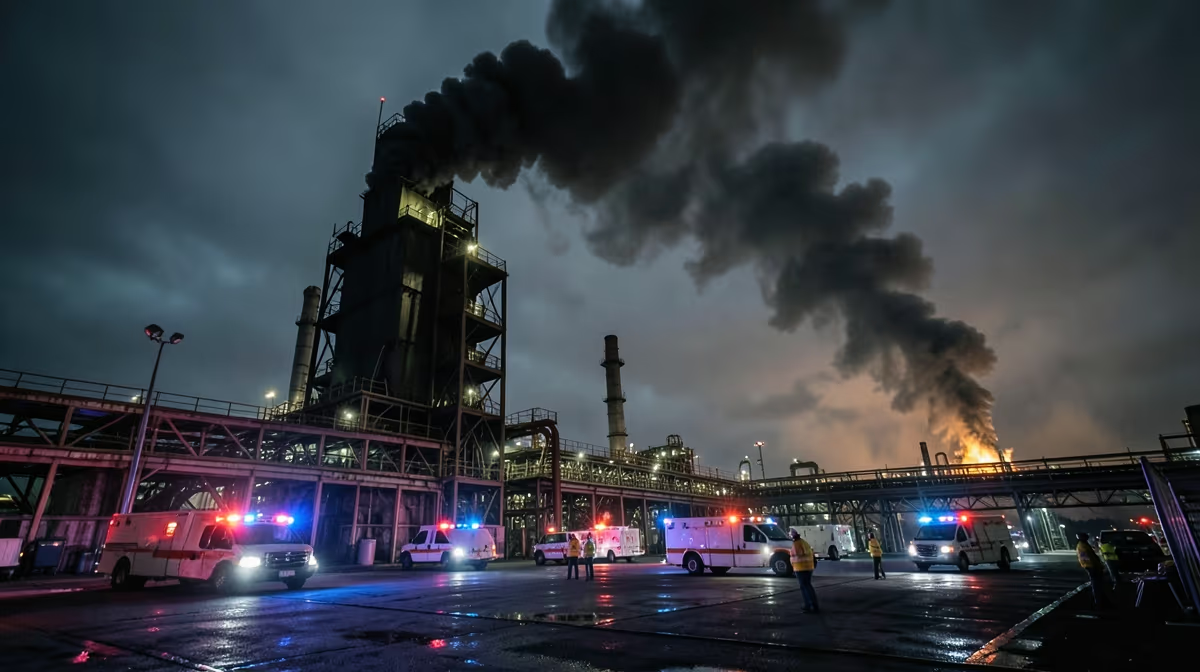
A Ukrainian drone strike targeted the Slavneft-YANOS oil refinery in the Russian city of Yaroslavl, raising fresh concerns regarding regional energy security and infrastructure vulnerabilities inside Russia. A major yaroslavl oil refinery drone strike occurred on Wednesday, causing a localized fire at the facility and highlighting the ongoing vulnerability of Russian energy infrastructure to long-range aerial attacks.
What Unfolded
The strike on the Yaroslavl facility, located hundreds of kilometers from the Ukrainian border, represents the latest in a series of coordinated long-range drone operations aimed at disrupting Russia's fuel processing capabilities. Yaroslavl Regional Governor Mikhail Evrayev confirmed the incident on social media, stating that an enterprise in the Zavolzhsky district was targeted by an unmanned aerial vehicle and urging citizens to remain calm while emergency crews secured the site. Regional emergency services responded swiftly to the incident, reporting that the resulting blaze was contained quickly without immediate reports of casualties. Russian air defense systems have been increasingly strained as Ukraine scales up domestic production of long-range unmanned aerial vehicles designed to strike strategic industrial targets deep within Russian territory. Industry analysts note that while such tactical strikes may not immediately cripple Russia's massive oil sector, they create significant logistical challenges, force the redistribution of air defense assets, and impact domestic fuel distribution.
Key Facts And Verified Data
A drone strike hit the Slavneft-YANOS oil refinery in Russia, resulting in a fire at the industrial facility. Yaroslavl is located northeast of Moscow, hundreds of kilometers from the border and well within range of advanced long-range drones. The refinery is crucial for producing fuel for both civilian and military use in Russia, serving as a major fuel supplier for the capital region and surrounding areas. No immediate mass casualties were reported, but the facility suffered material damage. Regional Governor Mikhail Evrayev confirmed the drone attack, and emergency services extinguished the resulting fire quickly. Assessments of the structural damage to the refinery processing units and potential impacts on regional fuel production are ongoing.
Why This Matters
This attack highlights the vulnerability of Russia's critical energy infrastructure to long-range drone strikes. By targeting refineries, these strikes aim to disrupt the supply of fuel to the Russian military and put economic pressure on the Russian government, potentially leading to higher domestic fuel prices and supply shortages. The primary groups affected are the operators and workers at the Yaroslavl refinery, local residents who may face safety concerns or air quality issues from the fire, Russian consumers dealing with potential fuel supply issues, and the Russian military which relies on refined petroleum products. Since the escalation of the Russia-Ukraine war, there has been a steady increase in drone attacks targeting oil depots, refineries, and industrial sites deep inside Russian territory, forming part of a broader strategy to retaliate against infrastructure attacks in Ukraine and to weaken Russia's war-fighting capabilities by degrading its oil and gas sector.
Analyst View
The root cause of these operations lies in asymmetric technological warfare aimed at neutralizing Russia's critical energy infrastructure to disrupt fuel supply chains and reduce state war-funding revenue. From a political angle, these strikes demonstrate regime vulnerability to the domestic Russian populace and test the deterrence limits of the Kremlin's air defense red lines. Economically, the attacks constrain domestic fuel availability, drive up regional refining costs, and create potential export shortages that affect global oil product benchmarks. Geopolitically, this marks an escalation of cross-border drone warfare, challenging Western calculations regarding the risk of direct escalation versus Ukraine's right to degrade military-industrial targets. A hidden angle involves the strain placed on domestic Russian air defense distribution, forcing Moscow to pull sophisticated electronic warfare and missile systems away from the frontlines to protect interior industrial centers. Historically, this mirrors the Allied strategic bombing campaign targeting Axis synthetic fuel plants and refineries during World War II to cripple logistical mobility. The timeline of this escalation features the initial development and deployment of long-range UAVs by Ukraine, followed by successful deep-strikes on border-region oil depots and storage facilities, culminating in the expansion of drone operational range to central Russian industrial hubs like Yaroslavl.
Future Outlook And Scenarios
Within the next 24 hours, expectations point toward increased air defense patrols around major industrial facilities in central Russia, preliminary damage assessments at the Yaroslavl refinery, and heightened state media rhetoric regarding Ukrainian long-range capabilities. Over the next 72 hours, the situation may see the implementation of emergency repairs at the damaged processing units, potential adjustments to regional fuel supply logistics, and possible retaliatory missile strikes by Russian forces against Ukrainian infrastructure. Key players managing this situation include the Russian Ministry of Defense, Slavneft-YANOS, Ukrainian Special Operations Forces, and the Regional Governor of Yaroslavl Oblast, with impact areas centered on the Russian domestic fuel market, central Russia air defense posture, and cross-border drone warfare escalation. Expert prediction indicates that attacks on Russian domestic refining infrastructure will continue to pressure local fuel supplies and force Moscow to divert valuable air defense assets away from frontline positions to protect critical infrastructure deep within the country. In the best-case scenario, minimal structural damage to the refinery allows for the rapid restoration of full capacity within days, with no significant disruption to domestic fuel prices or supplies. In the worst-case scenario, critical processing units sustain severe, irreparable damage leading to prolonged refinery downtime, regional fuel shortages, and a significant escalation in retaliatory strikes on energy grids.
Frequently Asked Questions
What happened during the Yaroslavl oil refinery drone strike?
The Yaroslavl oil refinery, operated by Slavneft-YANOS, has been targeted by long-range unmanned aerial vehicles. These attacks are part of an ongoing wave of strikes aimed at critical energy infrastructure deep inside Russian territory.
Where is the Yaroslavl oil refinery located?
The refinery is situated in the city of Yaroslavl, which is located roughly 250 kilometers northeast of Moscow. It serves as a major fuel supplier for the capital region and surrounding areas.
Who is responsible for the drone attacks on Russian refineries?
While Ukrainian officials rarely claim direct responsibility for specific strikes inside Russia, Kyiv has openly acknowledged a strategy of targeting strategic military and industrial assets to disrupt Russian logistics and fuel supplies for the war effort.
What damage was caused by the Yaroslavl oil refinery drone strike?
Reports from local authorities and emergency services typically indicate varying levels of structural damage and localized fires following successful drone impacts. However, processing units are often quickly repaired or temporarily shut down for safety assessments.
How are Russian authorities defending refineries against drones?
In response to escalating drone attacks, Russian regional officials and industrial operators have been installing electronic warfare systems and physical netting around critical facilities. Despite these measures, the vast expanse of the country makes securing every energy asset extremely challenging.
Do these refinery strikes impact global oil markets?
The attacks primarily affect domestic Russian fuel availability and refining capacity rather than global crude exports. Nonetheless, repeated strikes on Russian petroleum infrastructure can create temporary regional supply tightness and elevate geopolitical risk premiums.
Conclusion
The drone strike on the Slavneft-YANOS facility in Yaroslavl has been met with a rapid emergency response, extinguishing the resulting fire without casualties while highlighting ongoing vulnerabilities in Russia's industrial interior. Verified developments confirm that local authorities are assessing structural damage and monitoring fuel production impacts as air defenses face continuous strain across central regions. Realistic next steps involve ongoing facility repairs, adjustments to regional fuel logistics, and heightened security measures around vital processing plants as cross-border drone warfare persists.


.webp)

