
SpaceX orbital mission hits historical 100th launch of 2026
EarthInsider brings you the latest updates on space exploration as SpaceX orbital mission successfully reaches a historic milestone this year. The commercial aerospace landscape continues to shift as high-frequency operations transition from ambitious goals to routine industrial realities, redefining how low Earth orbit is utilized.
Milestone 100th Falcon rocket launch of 2026
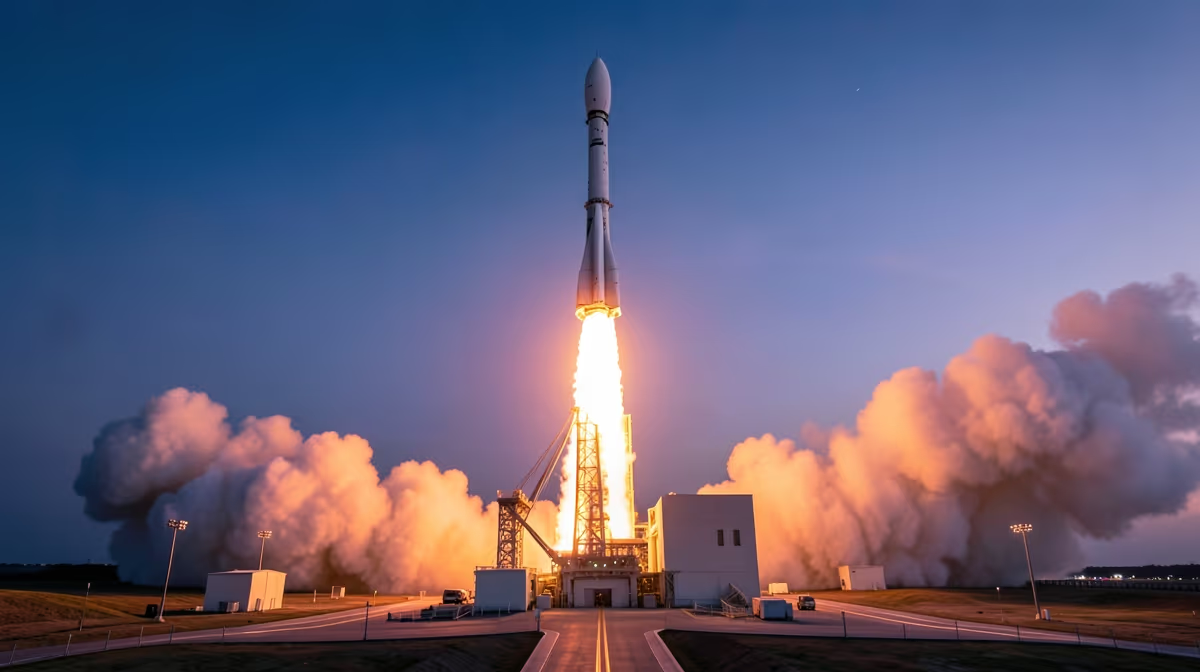
SpaceX has reached a major launch milestone, successfully executing its 100th orbital mission of 2026 and delivering a fresh batch of Starlink satellites to low Earth orbit. The landmark mission lifted off from Vandenberg Space Force Base, utilizing a Falcon rocket to carry 27 Starlink satellites into space. This flight marks the company's 100th orbital launch of the year, underscoring an unprecedented launch cadence for the aerospace manufacturer.
The steady stream of missions continues to expand the Starlink constellation, further scaling SpaceX's global satellite internet capabilities. Vandenberg continues to serve as a crucial launch site for these polar and high-inclination orbital deployments, facilitating rapid turnaround times for the company's reusable rocket fleet. While SpaceX maintains its dominant pace in commercial and proprietary spaceflight, the milestone arrives amid broader industry developments regarding market valuations and competing aerospace efforts globally. The successful deployment solidifies the company's operational trajectory for the remainder of 2026.
- SpaceX successfully launched its 100th orbital mission of 2026.
- The mission carried 27 Starlink satellites into orbit.
- The launch took place using a Falcon rocket from Vandenberg Space Force Base.
- The milestone was achieved before the end of August 2026.
- The flight adds to SpaceX's ongoing efforts to expand its global satellite internet constellation.
Expanding the Starlink satellite mega constellation
SpaceX has just hit a major milestone by completing its 100th orbital mission of the year. This latest flight lifted off from the Vandenberg Space Force Base, carrying a fresh batch of satellites into space. During this mission, a Falcon rocket successfully delivered 27 Starlink satellites into orbit. This achievement highlights the incredible pace at which the aerospace company is launching missions to build out its global internet network.
Reaching 100 launches in just over eight months demonstrates how rapidly the commercial space industry is moving. These frequent flights are becoming routine as companies push to expand satellite-based internet coverage around the world. Historically, space launches were rare and required years of preparation, but companies like SpaceX have revolutionized the industry by reusing rockets to dramatically increase flight frequency.
Analytic and Economic Dimensions
The relentless demand for global broadband connectivity and the rapid scaling of reusable launch vehicle technology have driven SpaceX to achieve an unprecedented cadence of 100 orbital missions by August 2026. Domestic space policy in the US continues to heavily favor commercial partnerships, consolidating America's launch dominance while raising regulatory and airspace management questions around frequent coastal launches from bases like Vandenberg Space Force Base.
The sheer volume of Falcon launches underpins the commercial viability of the Starlink constellation, though broader financial scrutiny persists around private valuations, market competition, and diversifying operational expenditures like energy sourcing. As private enterprise sets the global benchmark for orbital access, strategic competitors like China face heightened pressure to accelerate their own heavy-lift and reusable rocket programs to counter US dominance in low Earth orbit.
Achieving 100 launches in a single year showcases an unprecedented cadence in space flight, making space more accessible and accelerating the deployment of global satellite internet.
Operational Trajectory and Market Outlook
Continued coverage and analysis of SpaceX reaching its 100th orbital mission of 2026 are expected, alongside ongoing reactions to the recent Starlink satellite deployment from Vandenberg Space Force Base. Analysts would likely expect SpaceX to maintain an aggressive launch schedule for the remainder of the year following the milestone 100th orbital mission, while continuing to balance capital requirements and market competition.
Broader industry assessments regarding SpaceX's launch cadence, financial discussions surrounding market positioning and competition, and operational updates on energy or hiring needs will form the core of near-term industry evaluations. The best-case scenario involves smooth continued deployment of Starlink satellite constellations, reinforcing commercial dominance and maintaining investor confidence despite broader market fluctuations. Conversely, operational bottlenecks or regulatory hurdles could slow down the unprecedented launch cadence achieved during the year.
SpaceX has achieved an unprecedented industrial launch cadence by completing its 100th orbital mission of 2026 with a Falcon rocket carrying 27 Starlink satellites from Vandenberg Space Force Base.
Frequently Asked Questions
What milestone did SpaceX reach with its recent rocket launch?
SpaceX successfully completed its 100th orbital mission of 2026. This milestone reflects the company's remarkably high launch cadence throughout the year.
What payload was delivered during SpaceX's 100th launch of the year?
The mission successfully carried 27 Starlink satellites into orbit. This adds to the rapidly growing constellation designed to provide global internet coverage.
Where did the recent SpaceX Falcon rocket launch take place?
The Falcon rocket lifted off from the Vandenberg Space Force Base. This West Coast launch site frequently supports SpaceX's polar and high-inclination orbital missions.
Why is achieving 100 orbital missions so significant for SpaceX?
Reaching 100 launches within a single year demonstrates unprecedented operational efficiency and rocket reusability in the aerospace industry. It highlights SpaceX's dominance in commercial launch services and mega-constellation deployment.
Who is affected by the rapid expansion of the Starlink network?
Global consumers, particularly those in rural or underserved areas, benefit from improved broadband connectivity as more satellites are deployed. Additionally, the astronomical and aerospace communities continue to monitor the impact of large satellite constellations on orbit congestion.
What happens next for SpaceX following this milestone?
SpaceX will continue working through its packed manifest for the remainder of the year to surpass previous annual launch records. The company also focuses on supporting its expanding energy needs and ongoing technological developments.
Conclusion
SpaceX's successful execution of its 100th orbital mission of 2026 using a Falcon rocket from Vandenberg Space Force Base underscores a transformative shift in the aerospace industry. By deploying 27 additional Starlink satellites into low Earth orbit, the company continues to scale its global broadband infrastructure at an unprecedented rate. Confirmed developments highlight the reliability of reusable launch systems and the viability of high-cadence flight operations. Realistic next steps involve maintaining the active launch manifest for the remainder of the year while navigating broader commercial and market landscapes.
Sources
- SpaceX stock down for week following share unlock, big rocket news from China — Yahoo Finance
- SpaceX launches 100th orbital mission of 2026 — Spaceflight Now
- SpaceX sends 27 Starlink satellites to orbit on 100th Falcon rocket launch of the year (video, photos) — Space
- UPDATE: SpaceX launches Falcon 9 rocket from Vandenberg Space Force Base — KSBY News
- Anthropic Could Outdo SpaceX With Its IPO. Here's How Much Investors Think It's Worth Right Now and Why. — Yahoo Finance
- SpaceX is hiring in natural gas trading for energy needs — Fortune


.webp)
