
SpaceX Super Heavy Booster Test Paves the Way for Flight 14
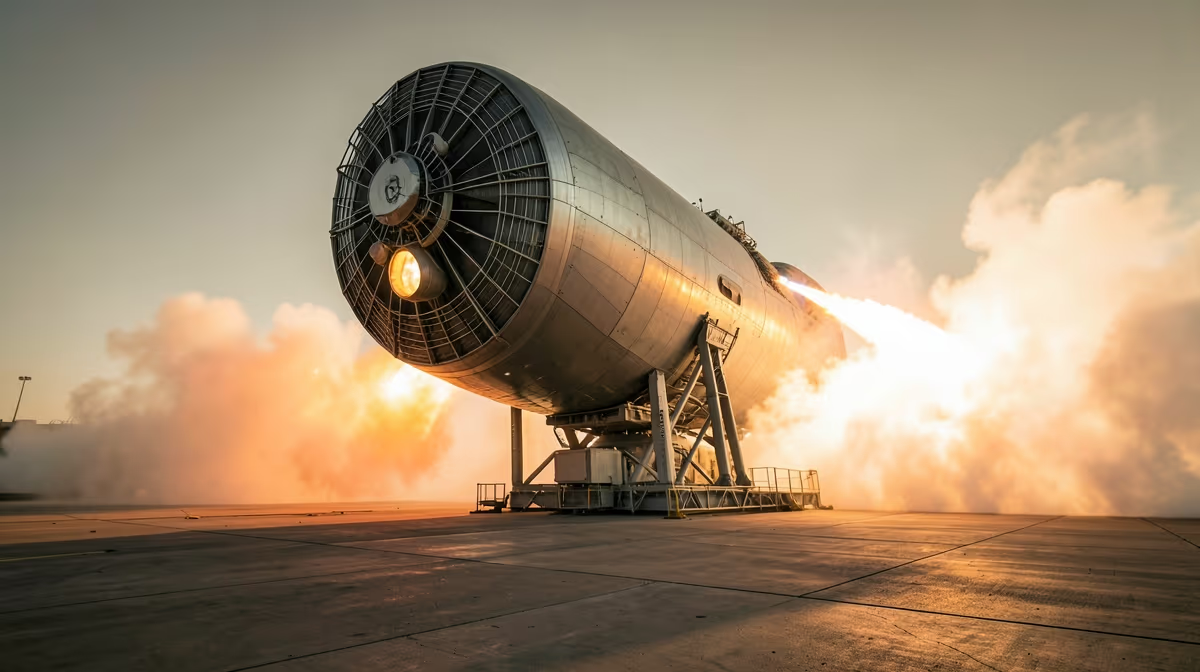
SpaceX continues its rapid development cycle as engineers successfully execute a static fire test of the SpaceX Starship Super Heavy booster. As preparations ramp up ahead of Flight 14, this critical milestone brings the aerospace company one step closer to launching its next major mission iteration from Starbase.
What Unfolded
SpaceX has conducted a test-fire of its Starship Super Heavy booster, bringing the aerospace company one step closer to the launch of Starship Flight 14. During this test, the powerful rocket's engines were ignited while the structure remained firmly anchored to the ground at the launch site, allowing engineers to check systems and ensure everything is working properly.
While the company has been actively preparing for the flight, recent reports indicate that SpaceX has scaled back some plans for this upcoming launch iteration as it continues to refine its testing and development roadmap. Rocket test-firing, often called a static fire test, is a standard industry procedure where a rocket's engines are briefly ignited while the vehicle is held down on the launch pad to gather performance data before an actual flight attempt.
Technical Hurdles and Orbital Refuelling
Simultaneously, industry analysts and experts are evaluating the broader technological hurdles facing the Starship program. Beyond the rocket hardware and flight distances, large-scale orbital refuelling remains a critical unproven technology standing between Starship and its ultimate deep-space exploration goals to Mars. Spacecraft have transferred conventional propellants in orbit since 1978, but no one has docked two giant spacecraft at the scale required for deep-space operations.
- Large-scale orbital refuelling remains unproven for deep-space missions
- Docking two giant spacecraft at scale presents an unprecedented technical challenge
- Conventional propellant transfers have occurred in orbit since 1978
The biggest unproven technology standing between Starship and Mars is not the rocket or the distance—it is large-scale orbital refuelling.
Economic Impact and Market Growth
Financial analysts view Flight 14 as a key step toward the program's future growth ramp. As testing progresses, financial institutions like UBS note that the progress of Starship Flight 14 acts as a foundational catalyst for accelerating commercial growth and scaling future revenue models.
- August 2026: Starship Flight 14 targets key operational milestones amid scaled-back tactical planning
- Late August 2026: SpaceX successfully executes critical test-fires of the Super Heavy booster
- Upcoming: Progression toward critical orbital testing and validation of orbital refuelling technologies
Analysis and Regulatory Environment
The relentless iteration cycle of SpaceX's heavy-lift architecture requires continuous ground static-fire testing of the Super Heavy booster to clear engineering milestones for impending test flights. At the same time, regulatory oversight by agencies like the FAA remains a central friction point, balancing rapid aerospace innovation cycles against environmental and safety mandates during high-cadence launch preparations. As domestic commercial space infrastructure expands its heavy-lift capabilities, strategic advantages in orbital access and deep-space logistics increasingly shape national space hegemony.
SpaceX successfully test-fired the Starship Super Heavy booster while addressing critical engineering milestones for Flight 14, though large-scale orbital refuelling remains a central technical hurdle for future Mars missions.
Future Outlook
Further assessment and review of the Super Heavy booster test-firing data will take place over the next 24 hours as preparations continue for Flight 14. Over the next 72 hours, operations will see a continuation of pre-launch milestones, component checks, and operational sequencing for the upcoming Starship Flight 14 test campaign. Analysts would likely expect SpaceX to proceed with further integrated testing and countdown rehearsals following the successful Super Heavy booster test-fire.
| Scenario | Operational Outlook |
|---|---|
| Best Case | Smooth completion of remaining pre-flight tests leading to an on-time and successful execution of Starship Flight 14, validating key orbital systems |
| Worst Case | Anomalies detected during post-test data analysis requiring additional hardware modifications, leading to further scaled-back plans or launch delays |
Frequently Asked Questions
What recently happened with SpaceX's Starship program ahead of Flight 14?
SpaceX successfully test-fired the Starship Super Heavy booster as preparation continues for the upcoming Flight 14 mission. This static fire test is a crucial milestone to verify booster readiness before launch attempts.
Why is Starship Flight 14 considered an important milestone?
Flight 14 represents a key step toward scaling up SpaceX's launch cadence and operational growth ramp, as noted by financial analysts. Each test brings the company closer to achieving full reusability and operational readiness.
What is the biggest unproven technology standing between Starship and Mars?
Beyond the rocket design and travel distance, large-scale orbital refueling remains a critical technological hurdle. While conventional propellants have been transferred in orbit before, docking two giant spacecraft safely at scale is an unprecedented challenge.
Who is affected by the progress of SpaceX's Starship program?
Industry stakeholders, commercial satellite operators, and financial markets closely monitor these tests because of their implications for space exploration and the space economy. Successful flights also impact investors tracking SpaceX's broader commercial goals.
What happens next in the preparations for Starship Flight 14?
Following successful booster test-firings, SpaceX will analyze telemetry data and complete final vehicle checkouts before setting a definitive launch date. The mission is expected to target ambitious flight goals, including further testing of orbital capabilities.
What scale changes have been reported regarding the upcoming Starship launch?
Reports indicate that SpaceX has scaled back certain plans for the upcoming Starship launch as part of its iterative testing philosophy. These adjustments help the engineering team focus on core technical objectives and risk reduction.
Conclusion
SpaceX has carried out a verified test-fire of the Super Heavy booster in preparation for Starship Flight 14, marking a significant developmental step for the aerospace company. While technical challenges such as large-scale orbital refuelling remain ahead of deep-space operations, the ongoing testing campaign continues to drive the program forward. Market analysts, industry observers, and engineering teams will continue monitoring telemetry data and pre-launch sequencing as preparations for Flight 14 advance.
Sources
- SpaceX test-fires Starship Super Heavy booster ahead of critical Flight 14 (video) — Space
- The biggest unproven technology standing between Starship and Mars is not the rocket or the distance—it is large-scale orbital refuelling. Spacecraft have transferred conventional propellants in orbit since 1978, but no one has docked two giant spacecraft an — Space Daily
- SpaceX scales back plans for next Starship launch — SpaceNews
- Starship Flight 14: 5 Details That Matter Right Now — BASENOR - Tesla Accessories
- Starship Flight 14 Targets First Orbital Run, X Report 5 Aug 2026 — KeepTrack
- SpaceX’s Starship Flight 14 is key step toward growth ramp: UBS (SPCX:NASDAQ) — Seeking Alpha


.webp)