
Strait of Hormuz Standoff Puts Global Energy Supplies on Edge
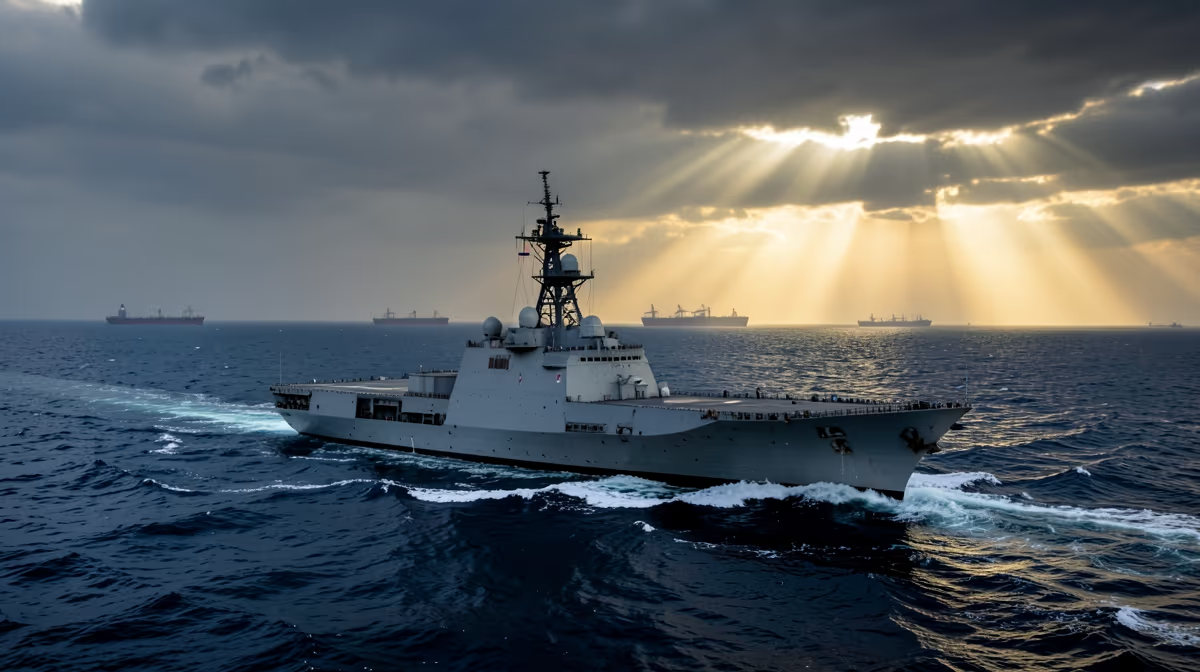
A narrow strip of water separating Oman and Iran quietly determines the rhythm of international commerce, yet its vulnerability has once again placed global energy security on high alert. When the U.S. Navy's Fifth Fleet announced an immediate increase in patrols within the Strait of Hormuz, it underscored a fragile geopolitical balance where routine maritime transit can instantly transform into a high-stakes standoff. This critical waterway connects the Persian Gulf with the Gulf of Oman, serving as a maritime artery through which roughly a fifth of the world's petroleum passes daily from Middle Eastern producers to global markets. As military posturing intensifies following unprovoked vessel interactions, policymakers, investors, and shipping associations are closely monitoring a supply chokepoint where a single miscalculation can trigger widespread economic shockwaves.
Background
For decades, the Strait of Hormuz has stood as a primary strategic flashpoint in international affairs. Because of its narrow width, bordering nations like Iran have frequently used the waterway as leverage during political disputes with Western powers and neighboring countries. The root cause of ongoing volatility lies in the structural dependency of global energy supply chains on a single chokepoint, a vulnerability that is continually exacerbated by asymmetric warfare, naval posturing, and sanctions enforcement in the Persian Gulf. This historical tension mirrors past conflicts, such as the 1980s Tanker War during the Iran-Iraq conflict, which similarly involved attacks on commercial shipping, naval escorts, and heightened risks of inadvertent escalation. Over time, the region has evolved into a key theater for multipolar competition, where major energy importers depend heavily on security guarantees to keep trade routes open despite persistent geopolitical friction.
What Unfolded
The current escalation unfolded when two commercial oil tankers reported being approached and harassed by armed fast-attack craft belonging to the Iranian Islamic Revolutionary Guard Corps Navy while transiting international waters in the strait. U.S. naval forces responded swiftly to the distress calls, dispatching guided-missile destroyers and aircraft to the scene to monitor the situation and ensure safe passage. Defense officials confirmed that while no shots were fired and no boarding actions took place, the aggressive maneuvers necessitated a robust defensive reaction. The U.S. Fifth Fleet formally announced the resulting increase in security patrols to deter further unlawful maritime interference and maintain freedom of navigation in accordance with international law. This event marks another chapter in a timeline defined by maximum pressure campaigns, clandestine grey-zone tactics, electronic warfare, and frequent close encounters between U.S. naval assets and regional fast-attack craft.
The Numbers Behind The Story
The sheer volume of commerce moving through this geographic bottleneck explains why military movements in the region command immediate global attention. Roughly twenty percent of the world's petroleum passes through the passage every single day, making it the most vital energy transit corridor on the planet. Alongside crude oil, substantial volumes of liquefied natural gas shipments rely on this exact route to supply international markets. Insurance underwriters and commercial operators calculate risk based on these figures, leading to immediate fluctuations in maritime insurance rates whenever naval threat levels are adjusted upward.
Why This Matters
When security threats disrupt the steady flow of energy through the corridor, the global price of crude oil routinely responds with immediate volatility. For everyday consumers and businesses, this dynamic translates directly into higher prices at the gas station, increased costs for heating homes, and inflated expenses for any goods that rely on international shipping and transportation. Regional shipping insurers have expressed growing anxiety over the potential for escalation, prompting several major commercial carriers to review their security protocols, evaluate route planning, and consider the deployment of armed guards. Drivers, airlines, and logistics firms across the United States and beyond feel the direct economic pinch when geopolitical friction in the Middle East threatens the predictability of global supply chains.
Analyst View
Strategic analysis of the current crisis reveals a complex interplay of deterrence and economic vulnerability. The United States deterrence strategy relies heavily on naval power projection via the Fifth Fleet to reassure allies, protect open navigation, and counter Iranian regional hegemony, all while navigating domestic political pressures to avoid a wider Middle Eastern war. Concurrently, a hidden dimension of the conflict involves the proliferation of maritime grey-zone tactics, including ship-to-ship transfers, the spoofing of automatic identification systems, and sophisticated sanctions evasion networks that operate largely outside traditional intelligence oversight. China and other major energy importers maintain a quiet stake in this theater, relying implicitly on external security guarantees to keep trade moving despite persistent low-intensity skirmishes.
What Comes Next
Short-term projections indicate that the next twenty-four hours will likely see continued naval patrols and reconnaissance flights by the U.S. Fifth Fleet to maintain a visible deterrent posture near the threat zone. Over the next seventy-two hours, diplomatic messaging via backchannels is expected to work toward de-escalation, accompanied by minor, precautionary adjustments to commercial shipping routes. Experts predict that posturing and heightened readiness will persist without direct kinetic engagement, as both Washington and Tehran actively seek to avoid a wider regional conflict. In the best-case scenario, tensions gradually subside following successful third-party mediation, resulting in normal commercial traffic flow and stable oil markets. Conversely, the worst-case scenario warns that an unforeseen miscalculation could lead to a localized naval skirmish, causing an immediate spike in crude oil prices and temporary disruptions to tanker transits.
Frequently Asked Questions
What is the current news in the Strait of Hormuz?
Recent news centers on heightened geopolitical tensions, military patrols, and occasional commercial vessel disruptions involving Iran and Western navies. These events have kept global crude oil markets and shipping insurers on high alert. Monitoring updates from maritime authorities remains essential for cargo vessels navigating the region.
Why is the Strait of Hormuz so important for global oil?
The Strait of Hormuz is a critical chokepoint through which a significant percentage of the world's petroleum passes daily from Middle Eastern producers to global markets. Any military conflict or blockade in this narrow waterway can instantly trigger massive spikes in international oil prices. Consequently, major economic powers maintain a continuous naval presence to ensure open passage.
Are commercial ships currently safe in the Strait of Hormuz?
While most commercial traffic continues uninterrupted, the perceived risk of seizure or harassment by Iranian forces has elevated maritime security threat levels. Shipping companies frequently adjust their transit routes, use armed guards, and coordinate closely with naval coalitions like Operation Prosperity Guardian. Navigators are strongly advised to follow the latest maritime advisories and warnings.
What role does the US Navy play in the Strait of Hormuz?
The US Navy's Fifth Fleet, headquartered in Bahrain, routinely patrols the Strait of Hormuz to deter hostile actions and guarantee freedom of navigation. They escort flagged vessels when necessary and respond rapidly to distress calls or unlawful boardings. This military posture aims to reassure international shipping and maintain stability in vital supply chains.
How does tension in the Strait of Hormuz affect US gas prices?
Because oil is a globally traded commodity, any supply threat in the Strait of Hormuz directly impacts benchmark crude prices worldwide. When fear of disruption rises, crude futures climb, which eventually translates into higher gasoline prices at US pumps. Drivers often feel the pinch of Middle Eastern geopolitics within days of a major maritime incident.
Has Iran closed the Strait of Hormuz recently?
Iran has frequently threatened to close the strait during periods of intense diplomatic or economic sanctions, but a total closure has not occurred. Fully shutting down the waterway would severely damage Iran's own oil exports and likely provoke a devastating military response. Therefore, actions typically remain limited to harassment, temporary detentions, or drone and missile posturing rather than a complete blockade.
Conclusion
Recent developments in the Strait of Hormuz highlight the persistent fragility of international energy corridors and the delicate balance required to maintain maritime security. While U.S. naval forces continue active patrols to deter unlawful interference and reassure commercial operators, diplomatic channels remain the primary avenue for preventing further escalation. Stakeholders across global shipping, energy markets, and government sectors will continue to monitor regional threat levels, adjust transit protocols, and prepare for potential market fluctuations as the situation develops.


.webp)
