
Strait of Hormuz Security Crisis Sparks Global Energy Concerns
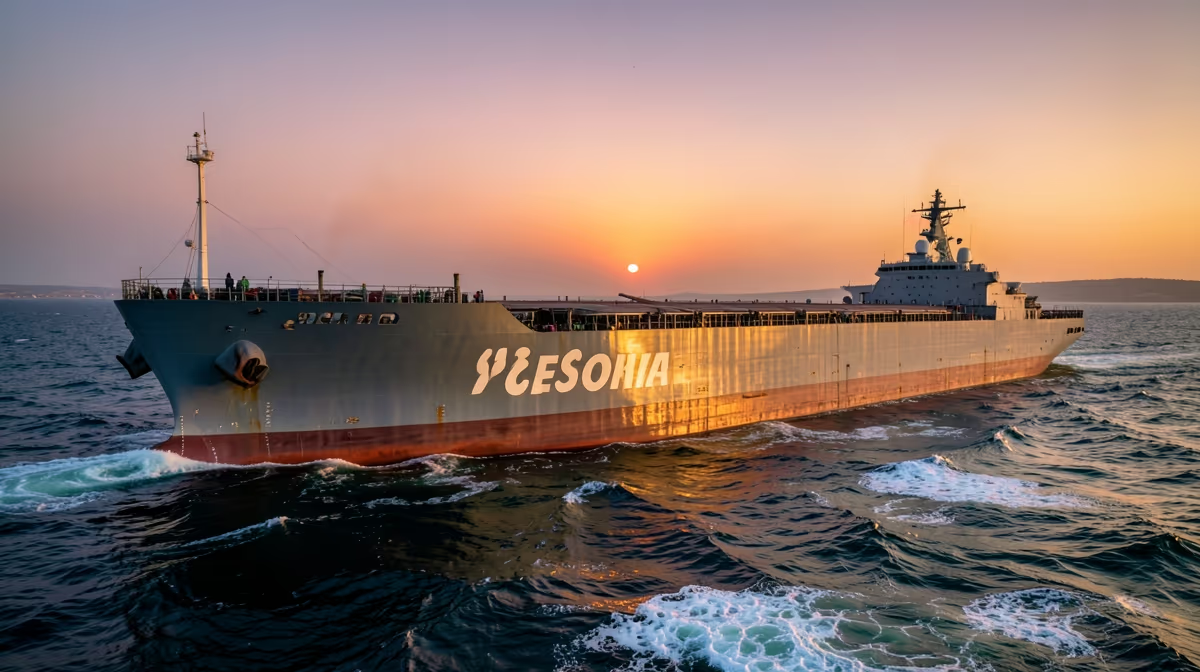
Tensions escalated significantly in the Strait of Hormuz on Tuesday after maritime authorities reported an unprovoked boarding attempt on a commercial tanker by armed forces, prompting international naval patrols to increase their readiness in the critical oil transit chokepoint. Navigating the geopolitical friction surrounding the strait requires understanding that this narrow stretch of water between Oman and Iran connects the Persian Gulf to the open ocean, serving as the world's most critical petroleum highway where a massive portion of global energy supplies travels by ship. As conflicts flare up in the Middle East, this specific passage frequently becomes a primary flashpoint where any military escalation or seizure of oil tankers can immediately choke global trade, spark financial panic, and trigger widespread oil supply disruption for importing nations across Asia, Europe, and beyond.
Current Status of Shipping Lane Security
The recent incident occurred in international waters just off the coast of Oman, where at least two fast-attack craft approached a Marshall Islands-flagged merchant vessel. According to private intelligence firms and maritime security reports, armed individuals attempted to board the ship before a coalition warship responded to the distress call, causing the attackers to withdraw without seizing the vessel or injuring the crew. This event marks the latest in a series of maritime disruptions within the waterway, where roughly one-fifth of the world's petroleum passes daily. Shipping insurers and industry groups have expressed growing concern that regional geopolitical friction is increasingly spilling over into commercial waterways, threatening global energy supply chains and driving up marine war-risk insurance premiums. In response to the heightened risk profile, naval forces operating under the Combined Maritime Forces have increased their presence and escort missions across the Persian Gulf and the Gulf of Oman, while commercial operators have been advised to maintain heightened vigilance, report suspicious approaches immediately, and review their security protocols.
Impact on Global Oil Supply Disruption
When the flow of energy through this vital marine corridor is threatened, it directly impacts the global economy. Because so much of the world's energy relies on this single chokepoint, any disruption causes crude oil prices to spike, which quickly leads to higher gasoline prices at the pump and increased costs for everyday goods everywhere. Drivers, global consumers, shipping companies, airline industries, and economies worldwide that depend on imported oil and stable energy prices face immediate financial vulnerability during periods of heightened military readiness. The structural dependency of global energy markets on a single geographic bottleneck combined with asymmetric warfare strategies employed by regional state actors creates persistent market volatility, inflated maritime insurance premiums, and subsequent inflationary pressures on importing economies. Furthermore, the quiet militarization of commercial maritime data manipulation, such as AIS spoofing, and cyber-warfare targeting port logistics and vessel navigation systems add hidden layers of complexity to modern shipping lane security.
Historical Context and Geopolitical Anatomy
The strategic importance of this waterway is deeply rooted in history, drawing direct parallels to the 1980s Tanker War during the Iran-Iraq conflict, which similarly internationalized Persian Gulf security and drew direct superpower naval intervention. Over the past several decades, the region has frequently been the site of regional disputes and tanker seizures, notably highlighted by the 2019 seizure of commercial tankers and the escalation of shadow warfare. Politically, the situation reflects a high-stakes test of US naval dominance, security commitments to allies, and the acceleration of alternative overland energy corridors designed to bypass maritime risks. At the same time, regional actors leverage these maritime choke points as a form of coercive statecraft to counter Western sanctions and project regional hegemony, balancing tactical posturing against the risk of open conflict.
Near-Term Outlook and Tactical Projections
Looking ahead across the immediate horizon, intelligence assessments indicate distinct operational trajectories for commercial and military vessels navigating the corridor. Over the next 24 hours, expect increased naval patrols and heightened readiness among commercial vessels navigating the strait following recent intelligence reports of potential maritime disruptions. Extending this outlook into the next 72 hours, diplomatic back-channel communications aimed at de-escalation are anticipated, alongside minor rerouting of oil tankers as a precautionary measure by major shipping firms. Key players managing these developments include the US Navy Fifth Fleet, the Iranian Islamic Revolutionary Guard Corps Navy, OPEC maritime logistics coordinators, and global energy traders, all navigating a delicate balance of power. Expert predictions suggest that posturing and tactical maneuvering will likely remain high without triggering a direct military conflict, though heightened risk premiums will temporarily affect shipping costs. In a best-case scenario, quiet diplomatic intervention successfully lowers tensions, ensuring uninterrupted commercial transit and stabilizing oil futures. Conversely, the worst-case scenario warns that a miscalculation could lead to a localized skirmish or vessel seizure, causing a sharp spike in oil prices and severe delays in global energy supply chains.
Frequently Asked Questions
Why is the Strait of Hormuz currently in the news?
The Strait of Hormuz frequently makes headlines due to escalating geopolitical tensions between Iran and Western nations. Recent news often highlights threats of maritime blockades, military exercises, and increased naval patrols to protect commercial shipping lanes.
What makes the Strait of Hormuz so geopolitically important?
This narrow waterway connects the Persian Gulf with the Gulf of Oman and the Arabian Sea, serving as a vital choke point for global energy supplies. Approximately a fifth of the world's petroleum passes through it daily, making it critical for global economic stability.
How are oil prices affected by Strait of Hormuz disruptions?
Any military escalation, seizure of oil tankers, or threats to close the strait immediately trigger spikes in global crude oil prices. Markets react nervously to potential supply bottlenecks, driving up energy costs worldwide.
Are commercial vessels safe transiting the Strait of Hormuz?
Commercial vessels face heightened security risks, leading many shipping companies to alter routes or employ armed guards. International naval coalitions actively monitor the area to deter unlawful boardings and ensure safe passage for cargo ships.
What role does the US military play in the Strait of Hormuz?
The United States maintains a strong naval presence in the region, including the Fifth Fleet based in Bahrain, to deter Iranian aggression and protect freedom of navigation. U.S. forces frequently escort flagged vessels and respond to distress calls from commercial tankers.
Has Iran ever closed the Strait of Hormuz?
While Iran has frequently threatened to close the strait in response to economic sanctions or military pressure, it has never enacted a total, permanent closure. Doing so would severely impact Iran's own oil exports and almost certainly provoke a major military conflict.
Conclusion
Recent events in the Strait of Hormuz underscore the fragile nature of global energy transit and the persistent security challenges facing commercial shipping in the Persian Gulf. Verified developments confirm that a Marshall Islands-flagged vessel was subjected to an unprovoked boarding attempt by armed actors before coalition naval forces intervened, resulting in the withdrawal of the attackers without crew injury or vessel seizure. As regional naval commands assess defensive escort requirements and commercial operators maintain heightened vigilance, stakeholders across the global energy market continue to monitor diplomatic back-channels and naval patrol readiness. Realistic next steps involve ongoing investigations into the identity of the armed actors, continued coalition patrols to safeguard international waters, and precautionary risk management by global shipping firms navigating the world's most vital petroleum chokepoint.


.webp)
