
Strait of Hormuz Tensions Threaten Global Oil Supply Instantly
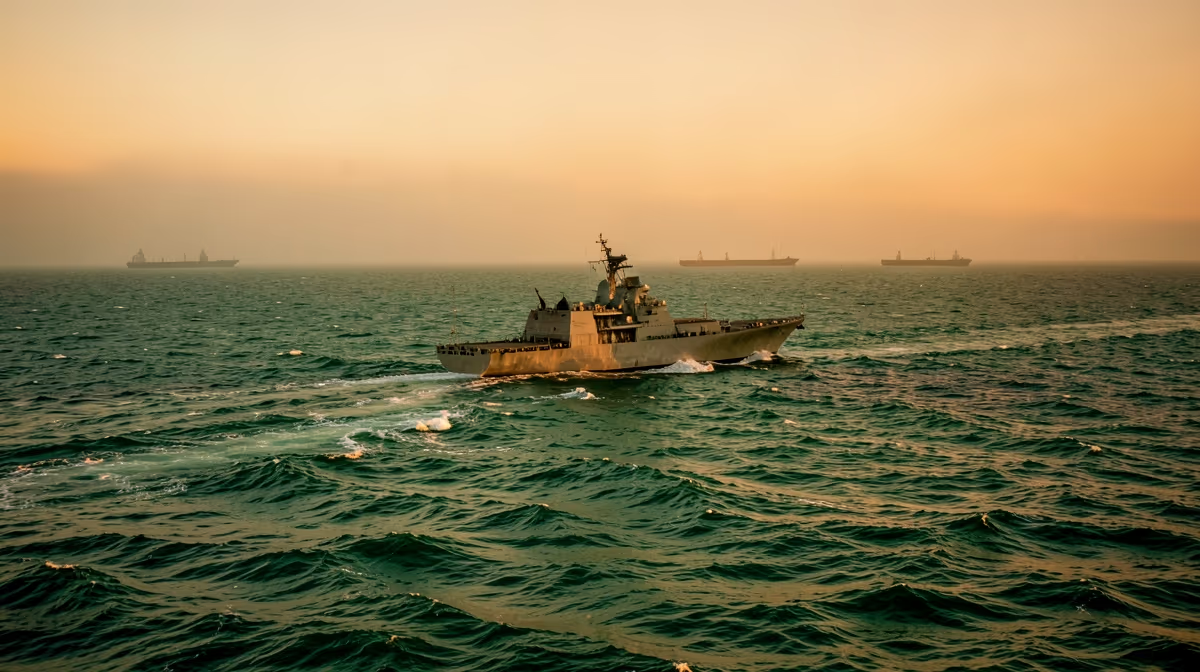
The U.S. Navy's Fifth Fleet confirmed Tuesday that regional maritime security forces intercepted a suspicious unmanned surface vessel operated by Iran in international waters near the strategic Strait of Hormuz. Situated between Oman and Iran, this vital maritime chokepoint handles roughly a fifth of the world's petroleum daily, making stability in the corridor a fundamental requirement for global energy markets. Tensions in the region have continuously tested the fragile security architecture governing international shipping lanes, as military encounters between regional forces and Western naval assets threaten to disrupt the delicate flow of global trade and fuel markets.
What Unfolded
The incident involving the unmanned surface vessel occurred during routine patrols by coalition forces tasked with maintaining commercial shipping lanes in the Persian Gulf and surrounding waterways. According to naval officials, the autonomous vessel was operating in close proximity to international merchant traffic, prompting a rapid response to prevent potential navigational hazards or hostile actions. Defense analysts note that the Strait of Hormuz remains a critical global chokepoint, through which vast quantities of the world's petroleum pass daily. Tensions in the region have periodically flared due to encounters between U.S. naval assets and Iranian forces, highlighting the fragile security architecture governing the vital trade route. Following the interception, the unmanned vessel was safely escorted away from commercial shipping lanes without any exchange of fire or reported injuries among U.S. personnel. Regional commanders reiterated their commitment to freedom of navigation and international law in these contested waters. U.S. forces remain vigilant and will continue to intercept any maritime traffic that poses a direct threat to the safe passage of commercial vessels in international waters, stated Commander Tim Hawkins, spokesperson for the U.S. Fifth Fleet.
Key Facts And Maritime Architecture
The Strait of Hormuz connects the Persian Gulf with the Gulf of Oman, forming a narrow corridor of immense economic and strategic value. Roughly a fifth of the world's petroleum passes through this specific chokepoint every single day on cargo ships. Recent security incidents have heightened fears of trade blockades, prompting naval forces from various nations to patrol the area to keep shipping lanes open. Energy markets and oil prices fluctuate rapidly based on news from this region due to the structural dependency of global energy markets on a single maritime choke point combined with enduring U.S.-Iran strategic deterrence failures. The strait has historically been a geopolitical flashpoint for decades, serving as a frequent site of military standoffs and shipping disruptions between Middle Eastern nations and Western powers.
Economic Fallout And Market Pressures
When trouble brews in the Strait of Hormuz, the flow of global oil is threatened, which directly causes fuel prices at gas stations in the United States and around the world to spike. Higher energy costs make it more expensive to manufacture goods, transport food, and run businesses, ultimately driving up inflation and increasing the cost of living for everyday consumers. Beyond immediate price shocks, economic impacts include immediate spikes in marine insurance premiums, rerouting costs, and long-term volatility in liquefied natural gas and crude futures. These financial ripples directly affect drivers, consumers, businesses reliant on global shipping, airlines, and the global economy at large, reflecting domestic political vulnerability in Washington regarding inflation contrasted with Tehran's use of asymmetric naval deterrence to extract sanctions relief.
Geopolitical And Historical Context
The structural vulnerability of the strait intersects with broader geopolitical anxieties, including the acceleration of Asian energy security anxieties and a subtle shift toward bilateral non-Western security arrangements in the Persian Gulf. Observers also point to the quiet militarization of commercial maritime data and cyber-electronic warfare targeting GPS and automatic identification systems of tankers. These dynamics mirror historical parallels such as the 1980s Tanker War during the Iran-Iraq conflict, which ultimately drew direct U.S. naval intervention to protect freedom of navigation. Timeline factors contributing to the current environment include maximum pressure sanctions campaigns against Iranian oil exports, asymmetric harassment of commercial vessels and drone deployments in the Gulf, and heightened naval escorts and gray-zone cyber disruptions impacting daily transit.
Short-Term Outlook And Risk Assessment
U.S. naval forces maintain a heightened alert status in the Strait of Hormuz following recent Iranian maneuvers, while commercial shipping continues transit under increased surveillance over the next 24 hours. Looking toward the next 72 hours, diplomatic channels remain active through intermediaries to de-escalate maritime tensions, while energy markets monitor freight rates and insurance premiums for potential spikes. Expert prediction models indicate that posturing and verbal warnings will likely continue without escalating into direct kinetic conflict, as both Washington and Tehran have strong incentives to avoid a broader regional war. In a best-case scenario, observers anticipate a quiet resumption of standard naval communication protocols and a decrease in harassing maneuvers by regional forces, stabilizing oil shipping costs. Conversely, the worst-case scenario involves a miscalculation that leads to a localized skirmish or the temporary seizure of a commercial tanker, triggering immediate retaliatory U.S. strikes and a sharp surge in global oil prices.
Frequently Asked Questions
Why is the Strait of Hormuz in the news?
The Strait of Hormuz frequently makes headlines due to its critical role as a global oil choke point. Recent news often highlights military tensions, vessel seizures, and heightened security patrols involving Iranian forces and the United States Navy.
How much global oil passes through the Strait of Hormuz?
Roughly one-fifth of the world's petroleum consumption passes through this narrow waterway daily. Any geopolitical disruption or closure threat in the strait immediately causes global crude oil prices to spike.
Are US military ships currently stationed in the Strait of Hormuz?
Yes, the U.S. Navy maintains a consistent presence in the Persian Gulf and the broader Middle East region. These deployments aim to deter hostile actions, protect commercial shipping lanes, and ensure freedom of navigation.
What recent incidents have occurred in the Strait of Hormuz?
Recent incidents involve Iranian Revolutionary Guard naval vessels harassing, boarding, or attempting to seize commercial oil tankers. These actions have prompted the U.S. to increase air and naval patrols in the region.
Is it safe for commercial cargo ships to travel through the strait?
While commercial shipping continues under heightened security protocols, maritime advisories warn vessels of potential risks. Operators often coordinate closely with naval authorities and employ armed security teams when transiting.
Who controls the Strait of Hormuz?
The strait is bordered by Iran to the north and Oman and the United Arab Emirates to the south. Under the UN Convention on the Law of the Sea, it is classified as an international strait, allowing transit passage for all commercial and military vessels.
Conclusion
Recent developments confirm that U.S. naval forces intercepted an Iranian unmanned surface vessel near the Strait of Hormuz to protect commercial shipping, with no reported injuries or exchange of fire. Assessments of the seized drone's capabilities and ongoing diplomatic communications between Washington and Tehran represent the primary developing narratives. As regional maritime security forces maintain heightened surveillance and diplomatic channels remain active through intermediaries, commercial shipping continues its transit under watchful international oversight.


.webp)
