
Drone Tariffs Announced by Trump Target China and Supply Chains
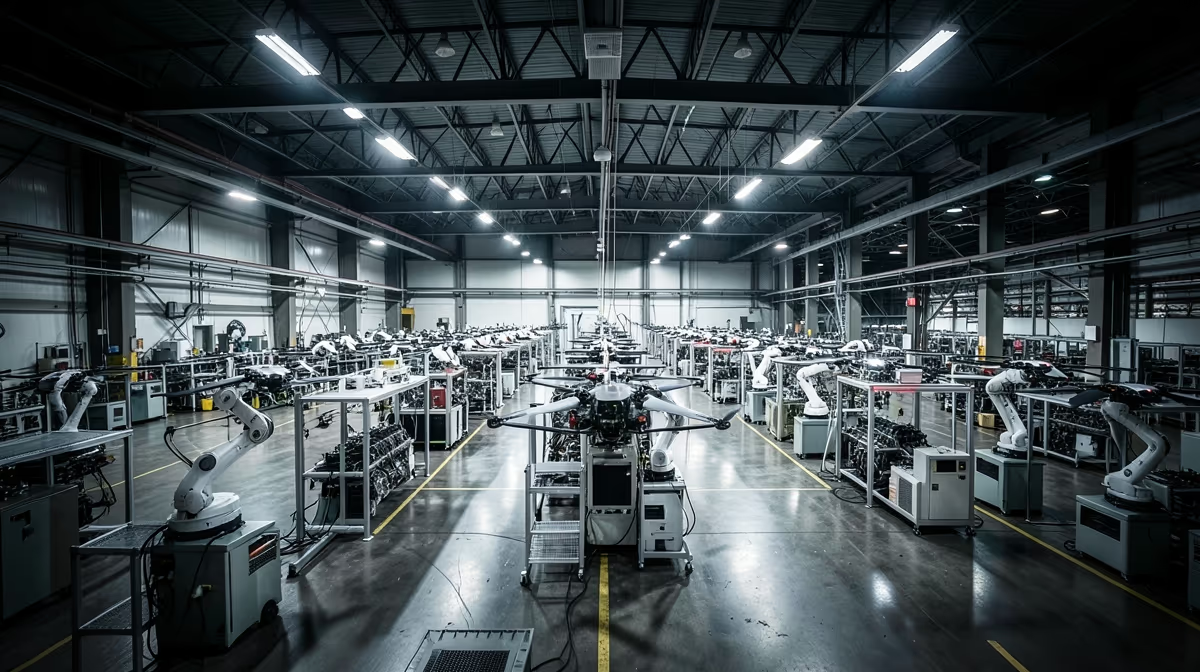
The strategic race to control tomorrow's aerial technology has entered a pivotal new phase with sweeping executive trade interventions. Former U.S. President Donald Trump has officially announced new drone tariffs specifically designed to bolster domestic American supply chains and aggressively counter China's manufacturing dominance.
This major policy shift arrives alongside concurrent legal victories for the administration, including a critical U.S. court decision supporting the government's power to rescind the de minimis tariff exemption. Together, these regulatory and trade measures mark a calculated acceleration of protectionist economic policies aimed at reshaping international logistics, forcing industrial reshoring, and dismantling deep-seated technological dependencies on foreign rivals.
Trade Policy Shift and Core Developments
The newly announced drone tariffs represent a targeted sector intervention within a much broader economic strategy. Growing strategic reliance on foreign manufacturing for dual-use technologies, particularly unmanned aerial systems, has prompted the U.S. administration to leverage trade policy to force domestic industrial reshoring and reduce vulnerabilities tied to geopolitical rivals like China.
Simultaneously, the legal landscape surrounding import enforcement has shifted dramatically in favor of the administration's trade agenda. A recent U.S. court ruling backed the executive branch's authority to rescind the de minimis tariff exemption. This long-standing trade rule previously allowed low-value packages shipped directly to consumers from overseas to enter the United States entirely duty-free. By successfully defending the power to close this loophole, the administration can now apply tariffs to low-cost imports that previously bypassed tax enforcement, adding immense pressure to foreign e-commerce and direct-to-consumer supply chains.
Economic Strategy and Market Repercussions
Imposing tariffs on foreign-made drones and tightening enforcement on cheap import loopholes will create immediate ripples across commercial and industrial markets. Short-term costs are expected to rise significantly for commercial drone operators, tech firms, and businesses reliant on imported hardware, while artificially incentivizing domestic capital investment in alternative local supply chains.
- Trump announced new drone tariffs aimed at bolstering U.S. supply chains and countering China
- A recent U.S. court ruling backed the administration's power to rescind the de minimis tariff exemption
- The de minimis exemption previously allowed certain cheap foreign imports to bypass tariffs entirely
- Related trade adjustments and copper market trends continue to act as real-time gauges for upcoming tariff moves
While proponents argue that these protective duties are vital for securing national infrastructure and leveling the playing field, regional friction is already emerging. Craft beverage producers and state officials, such as Colorado's state treasurer, have publicly claimed that broader tariff policies are actively hurting domestic industries like craft beer and wine through rising material and operational costs.
Geopolitical and Supply Chain Dynamics
This measure acts as another front in the ongoing economic decoupling between the United States and China, accelerating the balkanization of high-tech manufacturing. Beyond direct drone manufacturing, these sweeping tariff adjustments and court-backed closures of trade loopholes may create downstream compliance bottlenecks for software, firmware, and specialized raw materials sourced globally, subtly reshaping international logistics networks.
The administration is using targeted protectionist measures to appeal to domestic manufacturing labor bases and national security hawks, aligning aggressive trade actions with broader populist themes of economic independence. Historically, these actions mirror mid-20th-century strategic trade controls and domestic industrial mobilizations during the Cold War, which utilized tariffs and export restrictions to protect critical technological sectors from foreign dominance.
Immediate Outlook and Future Projections
Markets and industry stakeholders will continue to digest Trump's newly announced drone tariffs and their immediate implications for domestic supply chains and trade relations with China over the next 24 hours. Legal and trade analysts are expected to monitor how the drone tariffs interact with recent court rulings regarding de minimis tariff exemptions and broader import restrictions over the next 72 hours.
Analysts expect increased compliance scrutiny on tech hardware imports as the administration pairs targeted sector tariffs with broader efforts to close cheap import loopholes. In the best-case scenario, the tariffs successfully incentivize domestic drone manufacturing and strengthen local supply chains without causing critical supply shortages or retaliatory disruptions in adjacent tech sectors. Conversely, the worst-case scenario involves tariffs significantly increasing costs for commercial drone operators, straining domestic supply chains further if local production fails to scale rapidly enough to meet market demand.
These developments signal an aggressive continuation of protectionist trade policies that directly impact global supply chains, manufacturing costs, and the price of imported goods for American consumers and businesses.
Frequently Asked Questions
What prompted the introduction of new drone tariffs?
Growing strategic reliance on foreign manufacturing for dual-use technologies, particularly unmanned aerial systems, prompted the U.S. administration to leverage trade policy to force domestic industrial reshoring and reduce vulnerabilities tied to China.
What did the recent U.S. court ruling regarding trade exemptions involve?
A U.S. court backed the administration's power to rescind the de minimis tariff exemption, allowing authorities to apply tariffs to low-cost imports that previously entered the country tax-free.
How do these policies affect commercial drone operators?
The tariffs and tighter trade enforcement are expected to raise short-term costs for commercial operators while artificially incentivizing investment in alternative domestic manufacturing supply chains.
Conclusion
The announcement of targeted drone tariffs, paired with court-backed enforcement of de minimis trade exemptions, underscores a determined push by the Trump administration to reshape U.S.-China trade dynamics and enforce domestic supply chain security. As domestic manufacturers, commercial operators, and foreign exporters navigate these shifting trade regulations, stakeholders must adapt to heightened compliance scrutiny and evolving cost structures across the technology sector. Future developments will depend heavily on the ability of local manufacturing infrastructure to scale in response to these protectionist measures.
Sources
- How a niche copper trade became a real-time gauge of Trump’s next tariff move — CNBC
- Trump Announces Drone Tariffs to Bolster U.S. Supply Chains and Counter China — WSJ
- Court backs Trump on rescinding de minimis tariff exemption — The Hill
- Trump wins legal battle to keep cheap imports subject to tariffs — Axios
- US court backs Trump's power to close 'de minimis' tariff exemption — Reuters
- Colorado's state treasurer claims tariffs hurting craft beer and wine industry — cbsnews.com


.webp)

