
5-Year BTech Model Proposed by Former IIT Director Sparks Major Debate
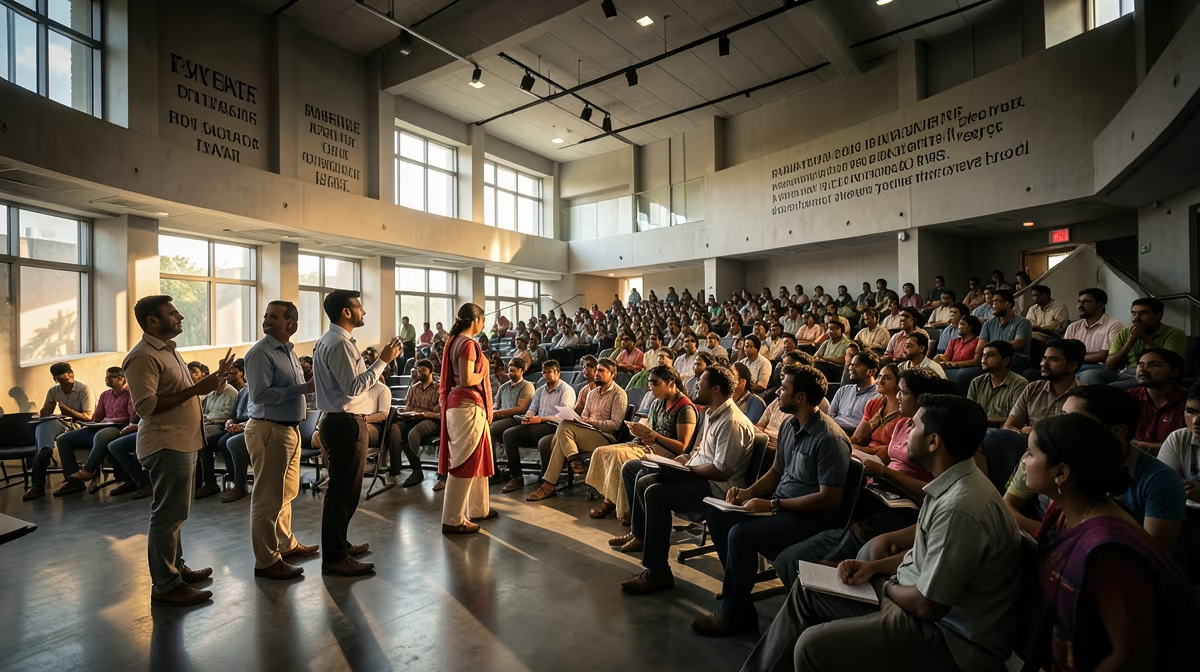
The hallowed halls of India’s premier technical institutes are currently the staging ground for a debate that could redefine the professional trajectory of millions. The debate around higher education reforms in India has intensified as former IIT Delhi Director V Ramgopal Rao proposes a revolutionary 5-year BTech model for engineering students. This shift is not merely an administrative adjustment but a fundamental challenge to the rigid four-year structure that has defined Indian engineering for decades.
The proposal aims to replace the rigid one-size-fits-all approach with a flexible framework that prioritizes student mental health and diverse learning paces.
Addressing the Root Cause of Student Burden
The traditional architecture of engineering education in India is increasingly coming under scrutiny for its uncompromising nature. V Ramgopal Rao argues that the current one-size-fits-all structure places excessive academic and mental stress on students. This rigidity creates a significant mismatch between standardized curricula and the diverse demands of a rapidly evolving global industry. For many students, the intensity of the four-year timeline becomes a source of burnout rather than a pathway to excellence.
By extending the undergraduate timeline to five years, the proposed framework seeks to provide "breathing room." This additional time is intended to accommodate different learning speeds, allowing students to engage more deeply with their subjects without the constant threat of academic overwhelm. The core of this proposal lies in the recognition that not every student processes complex technical information at the same rate, and forcing them through a singular, high-speed pipe can be counterproductive to actual learning and well-being.
The Case for Flexible Exit Options
A standout feature of the 5-year BTech model is the inclusion of multi-tier exit options. This flexibility is designed to ensure that the higher education journey is not an all-or-nothing endeavor.
- Students could potentially navigate their education at a more manageable pace.
- Flexible exit pathways would allow for individual career trajectories.
- The model aims to reduce the "bottleneck" effect created by the traditional four-year format.
- Multi-exit options provide a safety net for students who may need to transition into the workforce or change their focus before the full five years are complete.
This suggested shift reflects broader global university reforms seen during the late 20th century. Historically, these reforms aimed to accommodate diverse career paths and reduce the attrition rates seen in rigid, elite programs. Rao’s proposal suggests that by bringing this flexibility to the Indian context, technical institutions can better serve a student body that is increasingly diverse in its aspirations and needs.
Contextualizing the Crisis: The IIT Bombay Controversy
The timing of this proposal is deeply connected to ongoing tensions within the IIT system. V Ramgopal Rao’s suggestions gained significant momentum after he publicly backed Prof Doolla amid controversies at IIT Bombay. These events have brought systemic issues regarding campus environments and academic stress into the public spotlight.
The current rigid structure of engineering programs places undue pressure on students, failing to accommodate diverse learning speeds and interests.
The friction between specialized departmental demands and broad administrative policies has reached a tipping point. Professors and administrators are facing increasing pressure to address student mental health crises, which are often cited as a byproduct of the high-stakes, competitive atmosphere inherent in premier technical institutes. Rao’s proposal is a direct response to these systemic failures, suggesting that structural change is the only viable path forward to ensure student welfare.
Economic and Geopolitical Implications
The proposed transition to a 5-year BTech model carries weight far beyond the classroom, touching upon national economic interests and international competitiveness.
Talent Pipeline Economics
Human Capital Competitiveness
Analysis of the Shifting Landscape
| Aspect | Description |
|---|---|
| Root Cause | Rigid one-size-fits-all structure creates academic and mental mismatch. |
| Political Angle | Leadership autonomy intersecting with public debates on student welfare. |
| Economic Angle | Potential reduction in early-career burnout and better market alignment. |
| Geopolitical Angle | Focus on the adaptability of human capital in a shifting global tech market. |
The move toward a 5-year BTech model also reflects a political shift in academic leadership. There is a growing trend where institutional autonomy is being used to advocate for student welfare, pressuring regulatory bodies to reconsider standardized higher education frameworks. This represents a move away from purely achievement-based metrics toward a more holistic view of education.
Predictor: The Path Toward Implementation
As the proposal circulates, the next several days and weeks are expected to be critical for its trajectory.
- Faculty discussions and student welfare debates intensify within premier engineering institutions.
- Former IIT Delhi Director V Ramgopal Rao publicly proposes a five-year BTech model with flexible exits.
- Broader stakeholder discussions emerge regarding structural changes to India’s engineering education framework.
Within the next 24 hours, discussions and academic debates regarding the proposed five-year model and flexible exit options are expected to gain momentum across educational forums and social media. Following this, in the next 72 hours, educational institutions, policymakers, and academic bodies may issue formal responses or analyses regarding the feasibility of restructuring these programs.
The best-case scenario for this proposal would be a constructive policy reform that introduces greater flexibility and reduces stress for students nationwide. Conversely, the worst-case scenario involves these discussions stalling due to administrative resistance and institutional complexities, leaving the existing rigid structures unchanged while the debate over academic stress continues to deepen.
Frequently Asked Questions
What did former IIT Delhi director V Ramgopal Rao suggest regarding the BTech program?
Former IIT Delhi director V Ramgopal Rao has suggested implementing a five-year BTech model. This proposed structure aims to introduce more flexibility and ease academic burdens on students.
Why does V Ramgopal Rao believe the current engineering education model needs change?
He argues that the traditional one-size-fits-all approach to engineering education ultimately hurts students. By moving toward a five-year model, institutions can better accommodate diverse learning paces and career interests.
What specific features are included in the suggested five-year BTech model?
The proposed framework highlights flexible exit options for students. This allows learners greater adaptability throughout their higher education journey without being locked into a rigid timeline.
Who is affected by this proposed shift in engineering education?
Current and prospective engineering students across premier institutions like the IITs are directly impacted by these proposed curricular changes. Faculty members and academic administrators are also weighing in on how such structural shifts would alter engineering coursework.
What triggered the recent discussion surrounding engineering curriculum reforms?
The dialogue gained fresh momentum when V Ramgopal Rao backed Prof Doolla amid ongoing academic controversies at IIT Bombay. This support brought broader systemic issues in Indian technical education back into the public spotlight.
What happens next regarding the five-year BTech proposal?
While the suggestion has sparked significant national conversation across major media outlets, formal adoption depends on individual institute policy reviews and broader higher education policymaking bodies. Universities will need to evaluate feasibility before altering current four-year structures.
Conclusion
V Ramgopal Rao’s proposal for a 5-year BTech model serves as a critical intervention in a long-standing debate over the health and efficiency of India’s technical education system. By advocating for an end to the "one-size-fits-all" approach, Rao has highlighted the urgent need for flexible exit options and a curriculum that acknowledges the diverse needs of the student body. While the proposal is rooted in the goal of reducing academic burden and student burnout, its successful implementation depends on the willingness of institutional leaders and policymakers to navigate significant administrative challenges. As the academic community begins to analyze the feasibility of this transition, the focus remains on whether these premier institutions can evolve to prioritize student well-being alongside technical excellence. Realistic next steps involve formal institutional reviews and a deeper dialogue between faculty, students, and regulatory bodies to determine if the five-year framework will become the new standard for Indian engineering.
Sources
- Former IIT-D director calls for 5-year BTechs, says one-size-fits-all hurts students — India Today
- IIT Bombay controversy: Ex-IIT Delhi director V. Ramgopal Rao backs Prof Doolla, suggests 5-year B.Tech m — The Times of India
- Former IIT director suggests 5-year BTech, flexible exit option to ease student burden — The Indian Express


.webp)


