
Abhishek Sharma Century Destroys Rohit Sharma Record in Historic Match
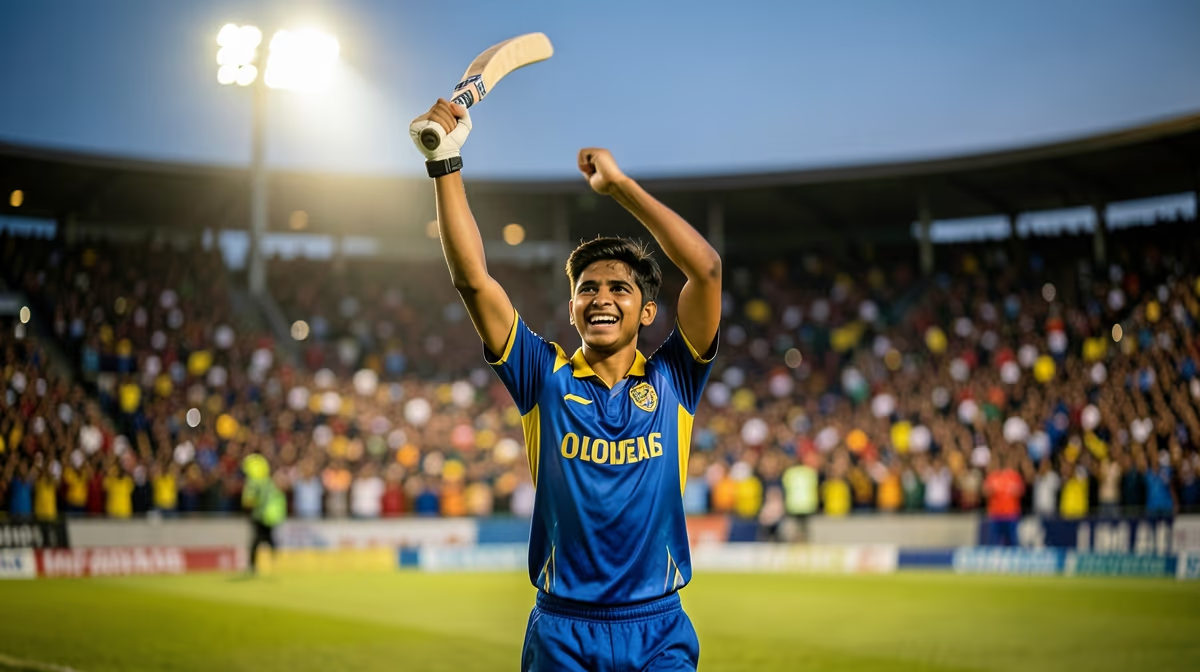
A seismic shift in modern opening tactics has rewritten the national record books of international cricket. Reaching three figures at breakneck speed, young Indian opener Abhishek Sharma made headlines by registering the fastest T20I century Indian cricket has ever witnessed, surpassing the previous milestone held by captain Rohit Sharma.
Abhishek Sharma set a new national benchmark by reaching a T20I century in just 30 balls against Afghanistan, breaking Rohit Sharma's long-standing record and solidifying his role at the top of India's order.
A Record-Breaking Display in Delhi
However, it was the 3rd T20I on September 17, 2026, in Delhi that produced an unprecedented milestone in international cricket. Batting with relentless aggression, Abhishek Sharma dismantled the Afghanistan bowling attack, hitting a barrage of boundaries and sixes to reach his hundred off just 30 balls. The record-breaking performance captivated cricket fans across the globe and underscored India's fearless approach in the shortest format of the game.
The match was not without dramatic tactical shifts. During the 3rd T20I, Shreyas Iyer introduced a new tactic that backfired as Afghanistan started strongly in their chase. Nevertheless, Sharma's astonishing innings anchored India's dominant campaign, earning extensive coverage across sports media giants including Cricinfo, Cricbuzz, NDTV Sports, and India Today.
Behind the Numbers: The Evolution of Modern Power Hitting
The root cause of this accelerating scoring speed stems from the relentless evolution of domestic T20 leagues. These platforms have accelerated hyper-aggressive batting approaches, enabling rising talents to surpass established international benchmarks previously set by legendary veterans like Rohit Sharma.
Reaching an international T20 century in just 30 balls places an opener into an elite global tier of power hitters, fundamentally shifting how teams approach the powerplay.
This tactical evolution draws a compelling historical parallel to Virender Sehwag, who redefined aggressive opening batting benchmarks in Test and limited-overs cricket decades prior. Just as Sehwag shifted the psychological ceiling for subsequent generations by attacking from the very first ball, Sharma's high-octane knock represents a modern continuation of that philosophy—putting immediate, overwhelming pressure on opposing bowling lineups.
Board Selection Pressures and Economic Forces
- Board-Level Selection Dynamics: Board-level selection pressures and the push for aggressive generational transitions within national team squads create a high-stakes environment. Young players are required to deliver immediate, explosive impact to cement their roles at the top of the batting order.
- Economic Brand Valuation: Explosive batting milestones directly elevate player brand valuations, broadcasting viewership metrics, and commercial sponsorship revenues within the lucrative bilateral cricket ecosystem.
- Global Market Resonances: Domestic and bilateral milestones achieved in powerhouse nations like India resonate across global cricket markets, directly influencing franchise league valuations and international touring dynamics.
This record-breaking achievement directly impacts key stakeholders across the sport: - Indian Cricket Selectors: Provided with concrete evidence to solidify aggressive top-order combinations for upcoming international fixtures. - National Team Squad Dynamics: Pushing the entire squad toward a higher baseline strike rate during powerplay overs. - Aspiring Young Athletes: Providing a new benchmark for modern power-hitters coming through domestic pipelines.
Technical Vulnerabilities and Strategic Outlook
Over the next 24 hours, sports media and cricket analysts will continue discussing Abhishek Sharma's record-breaking 30-ball T20I century and analyzing its direct impact on Team India's opening batsman selection. Over the next 72 hours, discussions are expected to shift toward broader implications of the Rohit Sharma record broken event, focusing on squad depth and upcoming international fixtures following the India-Afghanistan series.
Cricket analysts expect this milestone performance to solidify Abhishek Sharma's role as a permanent fixture at the top of the batting order for future T20I series.
- Best-Case Scenario: Abhishek Sharma maintains his explosive form, successfully translating domestic and bilateral success into consistent, world-class performances for India in major upcoming tournaments.
- Worst-Case Scenario: High expectations and the pressure of breaking the record lead to inconsistent form, requiring technical adjustments to counter specialized international bowlers.
Frequently Asked Questions
How many balls did Abhishek Sharma take to score his T20I century?
Abhishek Sharma reached his remarkable century in just 30 balls during the match. This blistering knock showcased his immense power-hitting capabilities in the shortest format of the game.
Whose record did Abhishek Sharma break for the fastest T20I century by an Indian?
Abhishek Sharma broke the longstanding record previously held by Rohit Sharma for the fastest T20I century by an Indian batsman. This milestone marks a significant changing of the guard in Indian T20 cricket.
Why is Abhishek Sharma's record-breaking century important for Indian cricket?
This achievement highlights the incredible depth and aggressive intent of the new generation of Indian cricketers in international matches. It sets a new benchmark for explosive batting performances in the T20 format.
Which teams were playing in the series where Abhishek Sharma broke the record?
The record-breaking innings occurred during India's series against Afghanistan. Performances from players like Abhishek Sharma, alongside teammates like Samson and Reddy, helped power India to a strong series campaign.
What does this record mean for Abhishek Sharma's international career?
Scoring the fastest T20I century by an Indian firmly solidifies Abhishek Sharma's place as a key player in India's limited-overs setup. It increases his chances of remaining a permanent fixture in the team's future squad selections.
What happens next for the Indian team following this T20I series success?
Following their strong performances against Afghanistan, the Indian team will look ahead to upcoming bilateral series and major global tournaments. Players who set new milestones during this tour will carry high confidence into future fixtures.
Conclusion
Abhishek Sharma's 30-ball century against Afghanistan on September 17, 2026, represents a historic landmark in Indian cricket, officially breaking Rohit Sharma's record for the fastest T20I century by an Indian. Driven by the evolution of domestic T20 leagues and a team-wide push for hyper-aggressive powerplay batting, the young opener has cemented his standard at the international level. As sports analysts evaluate squad dynamics over the coming days, Sharma's milestone performance establishes a new benchmark for Team India's top order heading into future bilateral series and global tournaments.
Sources
- IND vs AFG Cricket Scorecard, 1st T20I at Delhi, September 13, 2026 — Cricinfo
- AFG vs IND, 1st T20I, Afghanistan vs India in India 2026 - Commentary — Cricbuzz
- Samson, Abhishek and Reddy power India to series win — Cricinfo
- India vs Afghanistan 3rd T20I LIVE Score: Shreyas Iyer's New Tactic Backfires, Afghanistan Start Strongly In Chase — NDTV Sports
- Abhishek Sharma hits 30-ball century, breaks Rohit Sharma's Indian record in T20Is — India Today
- IND vs AFG Cricket Scorecard, 3rd T20I at Delhi, September 17, 2026 — Cricinfo


