
Abu Dhabi Crown Prince Bypasses Hormuz Chokehold in Multi-Billion Move
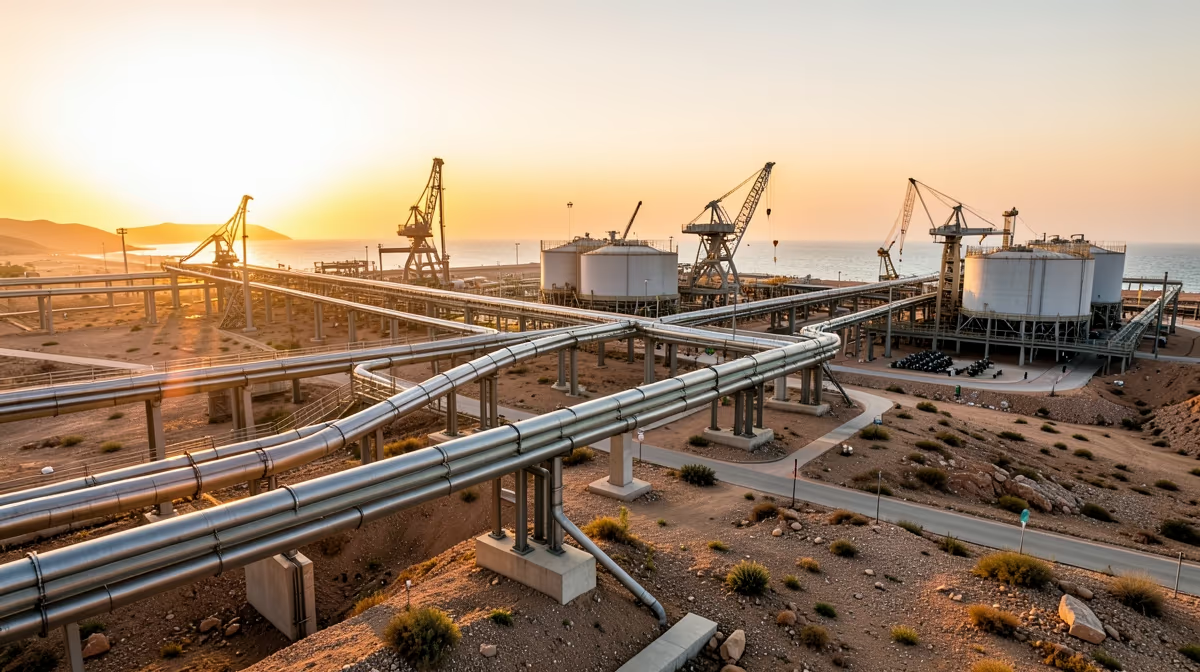
The narrow stretch of the Strait of Hormuz has long been the world’s most sensitive energy trigger, capable of sending global markets into a tailspin with a single naval maneuver. Yet, a silent, multi-billion-dollar construction surge is now underway that threatens to render this historic maritime bottleneck obsolete. As regional tensions mount, the focus on UAE bypassing Hormuz chokehold has intensified significantly, with leadership investing heavily in alternative export infrastructure to ensure that energy flows remain uninterrupted regardless of Tehran’s posturing.
The Abu Dhabi Crown Prince is spearheading a financial and engineering campaign to fundamentally redraw the map of Middle Eastern energy logistics. By committing billions of dollars to massive infrastructure projects, the United Arab Emirates is moving to neutralize the strategic advantage Iran has held for decades over the world’s most critical oil transit point. This is not merely a local construction project; it is a high-stakes geopolitical maneuver designed to shift the balance of power in the Persian Gulf by ensuring that the global economy is no longer a hostage to maritime threats in the strait.
The Abu Dhabi Crown Prince’s multi-billion-dollar strategic pivot to bypass the Strait of Hormuz represents a permanent shift in regional power, stripping Iran of its most potent tool for geopolitical blackmail and securing the future of global energy flows.
The Strategic Redirection of Global Energy
The scale of investment flowing into the Abu Dhabi oil pipeline project and related maritime infrastructure underscores a departure from traditional reliance on the Strait of Hormuz. For nearly half a century, this waterway has served as the primary bottleneck for Middle Eastern oil exports. The UAE’s leadership is now prioritizing the creation of alternative overland and maritime routes that connect internal production centers directly to the Gulf of Oman and the Arabian Sea.
This diversification effort is driven by the need to safeguard critical oil revenues and lower the prohibitive maritime insurance premiums that frequently spike during periods of regional friction. By establishing these bypass routes, Abu Dhabi is positioning itself as a more reliable partner for global energy consumers who have long feared the economic fallout of a closed or contested strait. The financial commitment required for such a transition is staggering, but the cost of inaction—remaining vulnerable to a single point of failure—is deemed far higher by regional strategists.
Securing Middle East Energy Export Routes
The UAE's strategy involves a complex network of pipelines and export terminals designed to handle massive volumes of crude transport. By circumventing the narrow waterway, these projects provide a literal safety valve for the global economy. As regional oil exports begin to rebound, the presence of these alternative pathways ensures that the recovery is not derailed by localized maritime security risks. International shipping companies and global energy consumers stand to benefit from a more fragmented and therefore more resilient export landscape.
Dismantling Iran’s Historical Leverage
For decades, the Strait of Hormuz has been Iran’s most effective geopolitical bargaining chip. Because a massive percentage of the world's petroleum must pass through this narrow passage, Tehran has been able to exert significant influence over international policy by simply hinting at its ability to restrict trade. The Abu Dhabi Crown Prince’s current infrastructure outlay is a direct strike against this leverage.
The Erosion of the Maritime Chokehold
As these bypass initiatives reach operational maturity, the "chokehold" that once defined Persian Gulf dynamics is showing signs of structural failure. Analysts suggest that the erosion of this maritime leverage diminishes Iran’s primary tool for pressuring Western powers and regional rivals. This shift is already manifesting in the market, where Middle East oil exports have begun to rebound even as geopolitical rhetoric remains sharp. The ability to move oil without transiting the strait fundamentally changes the risk calculus for every nation involved in the Persian Gulf.
The erosion of Iran's maritime chokehold diminishes its primary geopolitical bargaining chip against Western powers and regional rivals, altering Middle Eastern security dynamics.
The Geopolitical and Economic Calculus
The decision to spend billions on the UAE bypassing Hormuz chokehold is rooted in a deep-seated need for regional autonomy. By reducing strategic dependence on the transit lanes controlled by Tehran, Abu Dhabi is solidifying its own diplomatic and economic power. This move allows the UAE to negotiate from a position of strength, unburdened by the constant threat of a supply disruption that could cripple its national budget.
From an economic perspective, these infrastructure investments are expected to stabilize global energy flows against future disruptions. When a single nation holds a monopoly over a critical trade route, it creates a state of perpetual economic vulnerability for the rest of the world. The UAE’s bypass routes act as a form of global economic insurance, spreading the risk across multiple geographic corridors rather than concentrating it in one volatile waterway.
Shifting the Balance of Power
Beyond the immediate goal of moving oil, these massive infrastructure outlays may be laying the groundwork for a broader regional trade network. This network could permanently integrate Gulf economies in a way that moves them away from Iranian-influenced corridors. Such a shift would not only protect oil exports but also foster new avenues for trade and logistics that bypass traditional maritime flashpoints entirely.
A Historical Parallel in Energy Security
The current push to bypass the Strait of Hormuz is not without precedent. In the 1980s, during a period of intense regional conflict and naval threats in the Persian Gulf, Saudi Arabia undertook a similar strategic project. The construction of the Abqaiq-Yanbu oil pipeline, also known as the East-West Pipeline, was a landmark effort to ensure that Saudi crude could reach global markets via the Red Sea, effectively circumventing the need to pass through the Strait of Hormuz.
The UAE’s current multi-billion-dollar initiative follows this logic but on a more technologically advanced and integrated scale. While the 1980s projects were often seen as emergency measures, the modern Abu Dhabi projects are being built as permanent, high-capacity fixtures of the global energy grid.
| Phase | Strategic Development |
|---|---|
| Initial Leverage | Iran exerts maximum leverage over regional crude transit via the Strait of Hormuz. |
| Market Instability | Global markets experience severe anxiety and fluctuating energy exports due to ongoing regional tensions. |
| Strategic Pivot | Abu Dhabi commits billions to alternative bypass routes as oil shipments begin to rebound. |
The Role of International Diplomacy
While the UAE builds, the international community continues to engage in complex diplomatic maneuvers to stabilize the region. Discussions regarding ceasefires and U.S. counterproposals are unfolding in parallel with these economic shifts. These high-level talks, involving key players like the United States, Iran, and the Abu Dhabi Crown Prince, are critical to managing the immediate security environment while the long-term infrastructure is completed.
U.S. Counterproposals and Regional Stability
The involvement of the United States in ceasefire negotiations highlights the global importance of the region’s stability. Reports indicate that the U.S. has provided counterproposals to help resolve ongoing conflicts that have historically threatened the strait. These diplomatic efforts are seen as a necessary complement to the physical infrastructure being built by the UAE. While pipelines provide the hardware for energy security, diplomacy provides the software needed to navigate the immediate political friction.
Future Outlook and Expert Predictions
As the UAE continues its heavy investment into bypassing the Strait of Hormuz, the next 24 to 72 hours are expected to see continued market analysis of how these projects will affect long-term shipping dependencies. Energy analysts suggest that if these bypass routes reach their full potential, the strategic landscape of the Middle East will be permanently altered.
- In the next 24 hours, market reporting is expected to focus on the specific operational updates of Abu Dhabi's infrastructure and the latest U.S. diplomatic movements.
- Within the next 72 hours, a broader evaluation of shifting regional trade routes will likely emerge, alongside data on rebounding export volumes.
- Long-term expert predictions suggest that the successful diversification of oil export routes will stabilize global supplies and reduce the geopolitical tensions that have long surrounded maritime bottlenecks.
The best-case scenario involves a smooth transition to these new routes, leading to steadier energy prices and a significant reduction in the likelihood of a global energy crisis sparked by regional conflict. However, the worst-case scenario warns that as traditional transit leverage diminishes, it could trigger heightened regional instability or escalations in military posturing as affected parties react to their loss of strategic influence.
Frequently Asked Questions
Why is the Abu Dhabi Crown Prince spending billions on infrastructure projects?
The Abu Dhabi Crown Prince is investing heavily in alternative export routes to bypass the Strait of Hormuz, reducing reliance on the critical shipping lane. This strategic move aims to safeguard regional oil exports from geopolitical tensions and potential blockades by Iran.
How is Iran's leverage over the Strait of Hormuz changing?
Recent reports indicate that Iran has lost considerable leverage over the Strait of Hormuz as alternative trade and transport workarounds take effect. Oil shipments from the Middle East are beginning to rebound as this historical chokehold breaks down.
What role are international diplomatic efforts playing in the region?
Amid ongoing maritime security challenges, international actors are actively discussing ceasefires and diplomatic counterproposals to stabilize the region. These high-level talks run parallel to economic measures being taken by Gulf nations to secure their supply chains.
Who is most affected by the efforts to bypass the Hormuz chokehold?
Middle Eastern oil producers, global energy markets, and international consumers are the primary beneficiaries and stakeholders in these infrastructure changes. By creating alternative export pathways, nations can maintain steadier oil flows and potentially mitigate severe price spikes.
What happens next for global oil shipments and prices?
As new bypass routes are developed and regional shipments normalize, energy markets are closely watching whether crude prices will continue to stabilize. Continued investment in secure infrastructure will likely reshape Middle Eastern oil logistics for the long term.
What is the background of Iran's control over the Strait of Hormuz?
The Strait of Hormuz has long served as a vital maritime bottleneck for a massive share of global petroleum shipments, giving Tehran significant strategic leverage. Recent bypass initiatives represent a major turning point in diminishing that singular point of vulnerability.
Conclusion
The multi-billion-dollar investment by the Abu Dhabi Crown Prince to bypass the Strait of Hormuz marks a definitive turning point in the geopolitical history of the Middle East. By constructing alternative infrastructure to secure regional oil exports, the UAE is effectively dismantling a maritime chokehold that has allowed Iran to influence global energy markets for decades. As oil shipments begin to rebound and international diplomatic efforts continue, the permanent shift toward diversified trade routes offers a path toward greater global energy stability. While the full operational capacity of these new bypass routes remains a developing story, the strategic intent is clear: the era of the Strait of Hormuz as a singular, inescapable bottleneck is coming to an end.
Sources
- Live Updates: Iran says it has received U.S. counterproposal to 7-day ceasefire plan rejected by Trump — CBS News
- Is Iran losing its leverage over the Strait of Hormuz? — Al Jazeera
- Abu Dhabi’s Crown Prince Is Spending Billions to Bypass Iran’s Grip on Hormuz — Bloomberg.com
- Iran has lost considerable leverage in the Strait of Hormuz. It can’t go on like this forever — CNN
- Middle East Oil Exports Rebound as Iran’s Chokehold on Hormuz Breaks Down — WSJ
- How the U.S. got oil shipments moving and what it would take to bring prices down — The Washington Post


.webp)

