
Bank of England AI Warning Triggers Major Financial Stability Alarms
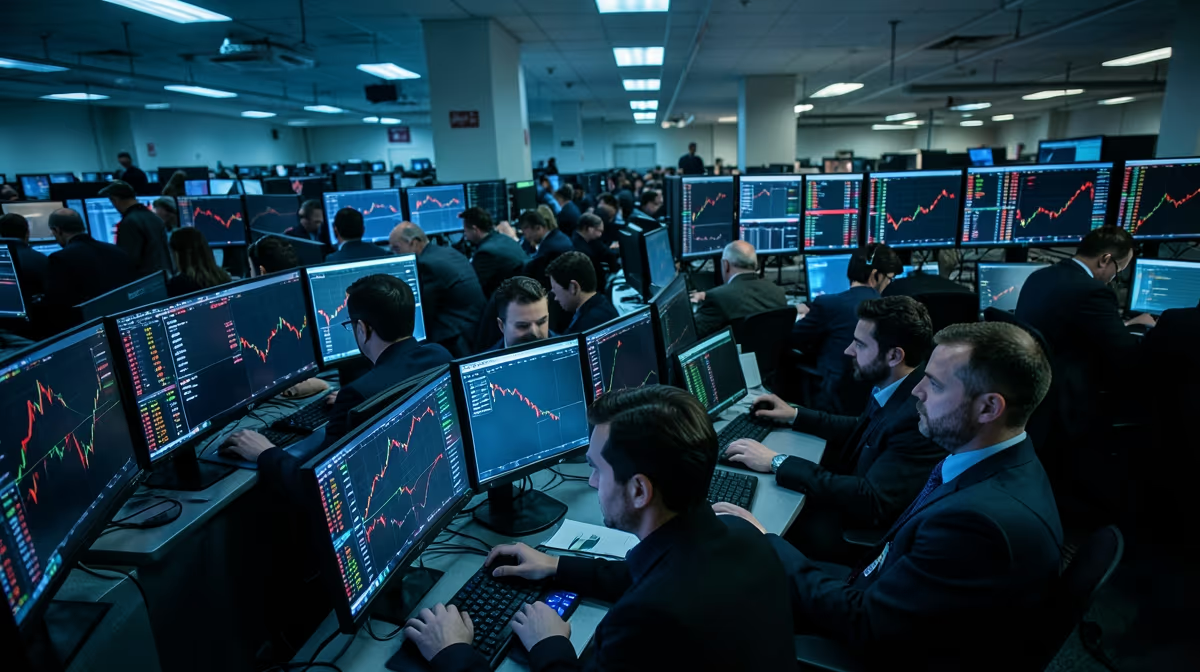
The Bank of England AI warning has sparked urgent discussions worldwide as officials highlight how rapidly advancing artificial intelligence models could jeopardize global financial stability and reshape the economy. As financial institutions increasingly adopt advanced software and automated systems to make split-second trading decisions and manage risk, new vulnerabilities are being introduced into the market.
The Rising Threat to Financial Stability
The Bank of England chief warned that new AI models threaten global financial stability. While technology has long been a part of modern banking, these newer, highly complex AI systems can behave in unpredictable ways, especially during times of market stress. Regulators are growing concerned that if multiple institutions rely on similar automated models, a sudden glitch or cascading error could quickly spiral out of control and disrupt the entire global economy.
Financial institutions are increasingly adopting advanced software for automated trading and risk management. As artificial intelligence continues to integrate into various sectors, the financial industry is facing new scrutiny regarding its reliance on advanced technologies. Recent developments highlight the growing footprint of AI across software economics, surveillance networks, and automated systems.
Financial regulators and central banks are increasingly examining the systemic risks introduced by complex algorithms and machine learning models operating at unprecedented speeds within global markets. While AI adoption accelerates efficiency in areas ranging from healthcare diagnostics to software pricing, authorities are raising concerns over how interconnected digital systems could amplify market shocks or vulnerabilities.
Systemic Risks and Economic Vulnerabilities
The root cause of these emerging dangers lies in the rapid integration of complex and autonomous artificial intelligence models into high-frequency trading and financial infrastructure. This integration creates systemic vulnerabilities that traditional risk management frameworks cannot adequately predict or control. Advanced AI models can execute complex trades at unprecedented speeds and introduce hidden systemic risks if multiple institutions rely on the same flawed algorithms. This high degree of technological correlation across the financial sector could amplify market shocks and trigger sudden liquidity crises.
Unchecked algorithmic decision-making threatens global financial stability by introducing automated herd behavior, potential liquidity shocks, and erratic software pricing and valuation dynamics across international markets. Governments and central banks face mounting political pressure to regulate fast-evolving financial technologies without stifling domestic innovation, exposing regulatory gaps between aggressive tech development and conservative fiscal policy. Furthermore, as major economies race to establish financial dominance using advanced technology, differing national regulatory standards on AI deployment risk creating fragmented global markets and regulatory arbitrage.
The opacity of proprietary AI models used by institutional investors may allow hidden systemic leverage and correlated risks to accumulate undetected until a sudden market correction occurs. This mirrors historical parallel events such as the 2010 Flash Crash, which demonstrated how high-frequency algorithmic trading could trigger sudden, cascading market disruptions faster than human oversight could intervene.
Market Timeline and Developments
- Mon, 31 Aug 2026: Bank of England leadership formally warns that emerging AI models pose a direct threat to global financial stability.
- Tue, 01 Sep 2026: Broader economic discussions highlight how automation and AI software economics are rapidly reshaping enterprise software and operational risks.
- Wed, 02 Sep 2026: Industry analysts scrutinize the broader market dynamics and the growing urgency for harmonized regulatory responses to automated financial tools.
Global financial institutions, central banks, fintech companies, and everyday investors are all directly impacted by these emerging risks. As automated trading and risk assessment tools become more prevalent, the entire banking ecosystem must adapt to new operational dangers. When the central bank of a major global financial hub warns that new technology threatens financial stability, it highlights the hidden dangers of modernizing critical infrastructure too quickly. If automated systems fail or react poorly to unexpected market events, it can trigger widespread economic turmoil that ultimately impacts everyday consumers, job markets, and retirement savings.
Regulatory Outlook and Next Steps
Financial markets and regulatory bodies are expected to digest warnings from the Bank of England chief regarding the potential systemic risks new artificial intelligence models pose to global financial stability over the next 24 hours. Analysts and economic policymakers will likely review risk management frameworks, software economics, and automated systems integration within the financial sector to address emerging stability concerns over the next 72 hours.
Regulatory bodies are expected to increase scrutiny on algorithmic trading systems and demand greater transparency from institutions deploying advanced machine learning models. Financial leaders will likely face stricter compliance guidelines to ensure automated decisions do not compromise market integrity. Analysts expect increased scrutiny from central banks and regulatory authorities on the deployment of complex AI models within core financial systems to prevent systemic disruptions.
Proactive regulatory alignment and risk assessment frameworks successfully mitigate vulnerabilities, allowing safe integration of advanced AI tools into global financial markets in the best-case scenario. Conversely, the worst-case scenario involves rapid, unmonitored adoption of advanced AI models triggering unexpected systemic vulnerabilities or automated trading anomalies that threaten global financial stability.
The Bank of England chief warned that new AI models threaten global financial stability as complex algorithms and automated trading systems introduce unprecedented systemic risks to the global economy.
Frequently Asked Questions
What did the Bank of England chief warn about new AI models?
The Bank of England chief warned that rapidly emerging artificial intelligence models pose a significant threat to global financial stability. The growing integration of advanced technology into financial markets creates new vulnerabilities that traditional regulatory frameworks may struggle to contain.
Why do new AI models threaten global financial stability?
Advanced AI models can execute complex trades at unprecedented speeds and introduce hidden systemic risks if multiple institutions rely on the same flawed algorithms. This high degree of technological correlation across the financial sector could amplify market shocks and trigger sudden liquidity crises.
Who is affected by the Bank of England's warning on AI?
Global financial institutions, central banks, fintech companies, and everyday investors are all directly impacted by these emerging risks. As automated trading and risk assessment tools become more prevalent, the entire banking ecosystem must adapt to new operational dangers.
What happens next as financial authorities address AI risks?
Regulatory bodies are expected to increase scrutiny on algorithmic trading systems and demand greater transparency from institutions deploying advanced machine learning models. Financial leaders will likely face stricter compliance guidelines to ensure automated decisions do not compromise market integrity.
What is the background of financial regulators raising concerns about technology?
Central banks have long monitored the intersection of technology and market infrastructure, but the sudden commercial explosion of generative AI and complex machine learning has accelerated these concerns. Regulators are racing to understand how autonomous systems might behave during extreme economic downturns.
How do recent warnings highlight the intersection of AI and economics?
While sectors like software pricing and healthcare are rapidly transforming through automation, the financial sector faces unique systemic hazards due to interconnected global markets. The warning from the Bank of England underscores that unchecked technological adoption could destabilize international economies.
Conclusion
The warning issued by the Bank of England highlights verified concerns regarding the rapid integration of artificial intelligence models into global financial markets. As central banks and regulatory bodies evaluate the systemic risks posed by automated trading and complex machine learning systems, financial institutions face mounting scrutiny over their technological dependencies. Policymakers and economic analysts will continue to review risk management frameworks to address these emerging vulnerabilities and maintain stability across international markets.
Sources
- ‘Superhuman’ AI tool spots heart disease in less than 2 seconds | AI (artificial intelligence) — The Guardian
- When AI starts doing the work: The new economics of software pricing — ET CIO
- Flock's rapidly expanding AI surveillance network facing growing backlash in US — BBC
- Bank of England chief warns new AI models threaten global financial stability — CNBC
- Young people from China explore AI through media and information — UNESCO
- Did you know the term 'Artificial Intelligence' was coined 71 years ago? | World News — Hindustan Times


