
George W. Bush 9/11 Reflections Unveil New Truths About the Bunker
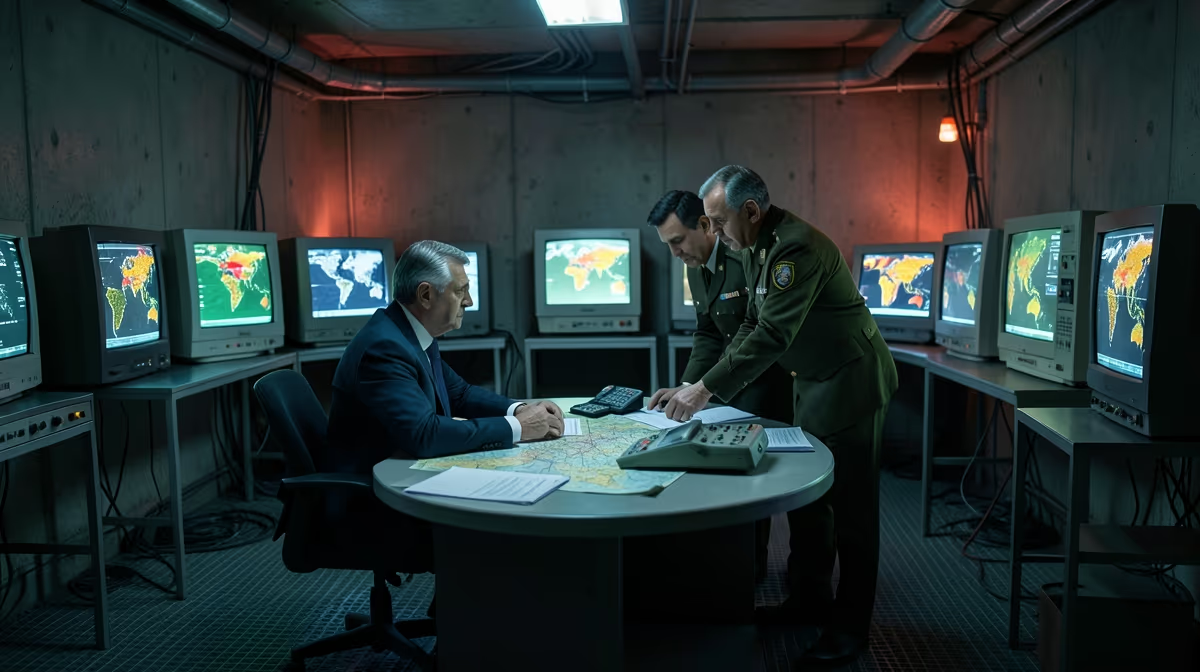
More than two decades after the smoke cleared from the ruins of the World Trade Center and the Pentagon, the internal decision-making during those chaotic hours continues to reveal new, sobering truths. The terrifying moments spent inside a highly secure bunker and the profound fear that followed have re-emerged as key figures from the administration look back at the defining crisis of modern American history. In a recent discussion regarding George W. Bush 9/11 reflections, the former president and his national security advisor opened up about the fateful day.
These direct accounts offer a rare historical perspective on leadership during an unprecedented national security crisis. It serves as a reminder of how deeply the event shaped modern security, politics, and American society, while challenging current generations to remember the unity and vigilance that followed.
The enduring legacy of the September 11 attacks lies not just in the historical reforms of homeland defense policy, but in the ongoing challenge to preserve national unity and civic cohesion in an increasingly polarized era.
Inside the Oval Office on September 11
The initial hours of the attacks were marked by confusion, urgent intelligence assessments, and decisions made under immense psychological weight. As former officials look back at 9/11, they describe an atmosphere of profound uncertainty where standard operating procedures were rendered obsolete in a matter of minutes. For those tasked with executive crisis management, the immediate challenge was determining the scope of the threat while attempting to safeguard the nation's remaining airborne civilian flights.
During the height of the crisis, the administration grappled with an agonizing scenario. The Bush White House experienced a tense, horrible moment when officials briefly believed that the U.S. military had shot down United Airlines Flight 93. In the chaotic environment of the emergency operations center, this terrifying misunderstanding weighed heavily on leaders who were forced to make split-second decisions regarding national airspace. This false alarm illustrated the deep fog of war that dominated the immediate governmental response to the hijackings.
From her vantage point as National Security Advisor, Condoleezza Rice managed the fast-flowing stream of raw intelligence. In a subsequent Condoleezza Rice 9/11 anniversary interview, she recounted the immediate chaos, the high-pressure decision-making processes, and the heavy emotional toll of the events. Her firsthand memories provide a window into a leadership team forced to react to a highly coordinated domestic attack without the benefit of a pre-existing blueprint for homeland defense.
Evolution of US national security after September 11
The structural response to the tragedy fundamentally transformed the architecture of American governance. Prior to the attacks, domestic law enforcement and foreign intelligence operations existed largely in administrative silos. The systemic failures highlighted during the initial terrorism intelligence briefing forced a comprehensive legislative and institutional overhaul.
The immediate result was a sweeping consolidation of federal powers and the eventual creation of the Department of Homeland Security. This period marked a complete transition in homeland defense policy, shifting the focus from reactive law enforcement to proactive, intelligence-driven counterterrorism operations. The lessons learned during those initial weeks established a new baseline for domestic surveillance, border security, and air travel protocols.
This security evolution was not limited to administrative structures; it fundamentally altered how information was processed and acted upon. The restructuring aimed to ensure that critical threat assessments could be communicated directly to the executive branch without administrative delay, permanently reshaping the relationship between intelligence agencies and executive decision-makers.
Preserving the Soul of a Nation Under Crisis
As the administration responded to the immediate threat, it also had to navigate the deeper societal and moral implications of its actions. Both leaders emphasized that defending the nation required more than just military readiness; it demanded the preservation of the country's core identity.
During the turbulent period following the attacks, George W. Bush struggled with the profound tension between expanding state authority and protecting foundational liberties. He expressed a deep personal desire to ensure the country did not lose its soul while establishing new security measures. This delicate balance between national defense and the preservation of civil liberties remains one of the most heavily debated aspects of his administration's legacy.
In an opinion piece, Condoleezza Rice reflected on the durability of the American spirit, writing that September 11 tested the nation deeply but ultimately did not break it. She pointed out that while the structural damage and loss of life were devastating, the tragedy also brought forth an era of remarkable national unity and resilience.
However, the former president has offered a sharp warning to contemporary society. In recent public appearances, Bush expressed concern that modern Americans no longer pay adequate attention to the lessons of 9/11. He suggested that as the years pass, the collective memory of that day's gravity is fading, leaving the country potentially vulnerable to complacency.
Analyst View: The Deep Roots of Modern Vulnerability
A deeper structural analysis reveals that the challenges facing the United States today are closely linked to the legacy of the post-9/11 era. The root cause of the ongoing struggle to maintain vigilance lies in the enduring national trauma of the attacks and the challenge of preserving a unified national identity two and a half decades later.
Politically, both George W. Bush and Condoleezza Rice are utilizing these high-profile reflections to shape their historical legacy. At the same time, their statements serve as a subtle warning to modern political figures against the dangers of complacency and internal division.
Economically, the post-9/11 era created a massive, long-term fiscal footprint. This period was characterized by:
- Unprecedented federal defense spending and resource allocation.
- The massive expansion of homeland security infrastructure.
- The permanent integration of strict security protocols into global commerce and supply chains.
From a geopolitical perspective, the unilateral defense doctrines developed under the Bush administration continue to influence modern strategic calculations. These doctrines altered the global balance of power and redefined international norms regarding national sovereignty, preemptive military action, and intelligence sharing.
Perhaps the most significant insight from analysts is the hidden angle of these reflections. The warnings issued by the former administration figures suggest that the greatest threat to national resilience may no longer be external state actors or foreign terrorist networks. Instead, the erosion of institutional trust and deep internal political polarization present a more immediate threat to the nation's capacity to withstand future crises. This dynamic draws a strong historical parallel to the post-Pearl Harbor domestic consolidation, where a major intelligence failure led to a complete reassessment of defensive posture and national unity.
Timeline of Crisis and Reform
The trajectory from the morning of the attacks to the modern era of reflection illustrates the long-term impact of the crisis on American policy and national memory.
| Date / Period | Key Developments |
|---|---|
| September 11, 2001 | Terrorist attacks strike the United States, prompting immediate emergency military protocols and executive crisis management. |
| Post-9/11 Era | Implementation of sweeping legislative, intelligence, and defense reforms under the Bush administration. |
| Present Day | Leadership figures reflect on the anniversary, evaluating lessons learned and warning of contemporary public amnesia regarding national unity. |
Future Outlook and the Battle for Collective Memory
In the immediate term, public attention is expected to focus on the ongoing commentary and historical reassessments offered by former officials. Over the next 24 hours, media outlets will likely continue to broadcast and dissect these executive reflections, drawing renewed attention to the details of the crisis.
Over the next 72 hours, this media coverage is anticipated to transition into a broader political and analytical discourse. Historians and national security analysts will examine the long-term legacy of the counterterrorism policies initiated under the Bush administration, as well as the contemporary state of American societal unity.
According to expert predictions, these reflections will trigger ongoing debates regarding how the fundamental lessons of the attacks continue to influence contemporary political division, security measures, and national cohesion.
In the best-case scenario, these historical reflections will serve as a constructive moment for national unity. This outcome would encourage public engagement with historical education, helping younger generations understand the significance of the event and the resilience shown in its aftermath.
Conversely, the worst-case scenario would see these reflections become heavily politicized. This could revive past divisions over foreign policy, civil liberties, and counterterrorism strategies, further deepening the polarization that current leaders warn against. Ultimately, the challenge remains how to pass down a clear, objective memory of 9/11 to a generation of Americans who have no personal recollection of the day that reshaped their world.
Frequently Asked Questions
What did George W. Bush and Condoleezza Rice reflect on regarding 9/11?
George W. Bush and Condoleezza Rice reflected on the enduring impact of the September 11 terrorist attacks, emphasizing resilience and the importance of preserving American values. Rice noted that the tragedy tested the nation deeply without breaking it. Both leaders shared personal memories and perspectives from their time in the White House during the crisis.
Why does George W. Bush believe Americans ignore the lessons of 9/11?
George W. Bush expressed concern that Americans have grown complacent and no longer pay adequate attention to the vital lessons learned from the 9/11 attacks. He highlighted the ongoing need for vigilance and unity in safeguarding the country against future threats. This perspective serves as a warning about forgetting the historical gravity of that day.
What was Condoleezza Rice's personal recollection of the 9/11 attacks?
Condoleezza Rice recounted harrowing memories from her vantage point as National Security Advisor during the September 11 attacks. She spoke about the immediate chaos, decision-making processes, and the heavy emotional toll of the events. Her reflections provide a firsthand look into the high-stress environment of the Bush administration on that fateful day.
Who was affected by the Bush White House's fears regarding Flight 93?
During the chaotic moments of 9/11, officials in the Bush White House initially believed that the U.S. military had shot down United Flight 93 to prevent it from reaching its target. This terrifying misunderstanding weighed heavily on leaders who were grappling with unprecedented threats to national airspace. The confusion highlighted the fog of war that characterized the emergency response.
What specific detail did George W. Bush share about maintaining national character?
Reflecting on the aftermath of the attacks, George W. Bush emphasized a specific desire to protect the nation's core identity. He stated that he did not want the country to lose its soul while responding to the unprecedented security crisis. This sentiment underscores the delicate balance between national defense and preserving civil liberties.
What happens next in terms of remembering and learning from the 9/11 attacks?
As years pass, leaders and citizens continue to grapple with how to pass down the historical memory of 9/11 to younger generations who did not experience it firsthand. Reflections from figures like Bush and Rice aim to reignite public awareness about national unity and preparedness. Ongoing commemorations ensure that the sacrifices and lessons of that day are not forgotten.
Conclusion
The recent reflections by former President George W. Bush and former Secretary of State Condoleezza Rice bring the critical events of September 11, 2001, back into the public consciousness. Their accounts highlight the immense pressure of executive crisis management, including the terrifying moment when officials feared Flight 93 had been shot down by the U.S. military. As the nation continues to navigate the long-term geopolitical and domestic security changes set in motion over two decades ago, these leaders emphasize the importance of retaining national cohesion. The realistic next step for the public and policymakers is to find constructive ways to preserve this historical memory, ensuring that the lessons of vigilance, resilience, and unity are successfully communicated to future generations who did not live through the crisis.
Sources
- Opinion | Condoleezza Rice: ‘Sept. 11 tested us, but it did not break us’ — The Washington Post
- George W. Bush says Americans "don't pay attention to the lesson of 9/11" — CBS News
- ‘I didn't want us to lose our soul': George W. Bush, Condoleezza Rice remember 9/11 — NBC 5 Dallas-Fort Worth
- For 'horrible moment,' Bush White House thought US military shot down Flight 93 — foxnews.com
- Condoleezza Rice recounts her memories from the 9/11 attacks — NBC News
- Ex-president Bush and Condoleezza Rice reflect on 9/11 — CNN


.webp)


.webp)