
Grand Slam Tennis Dispute Reaches a Sudden Truce That Changes the Game
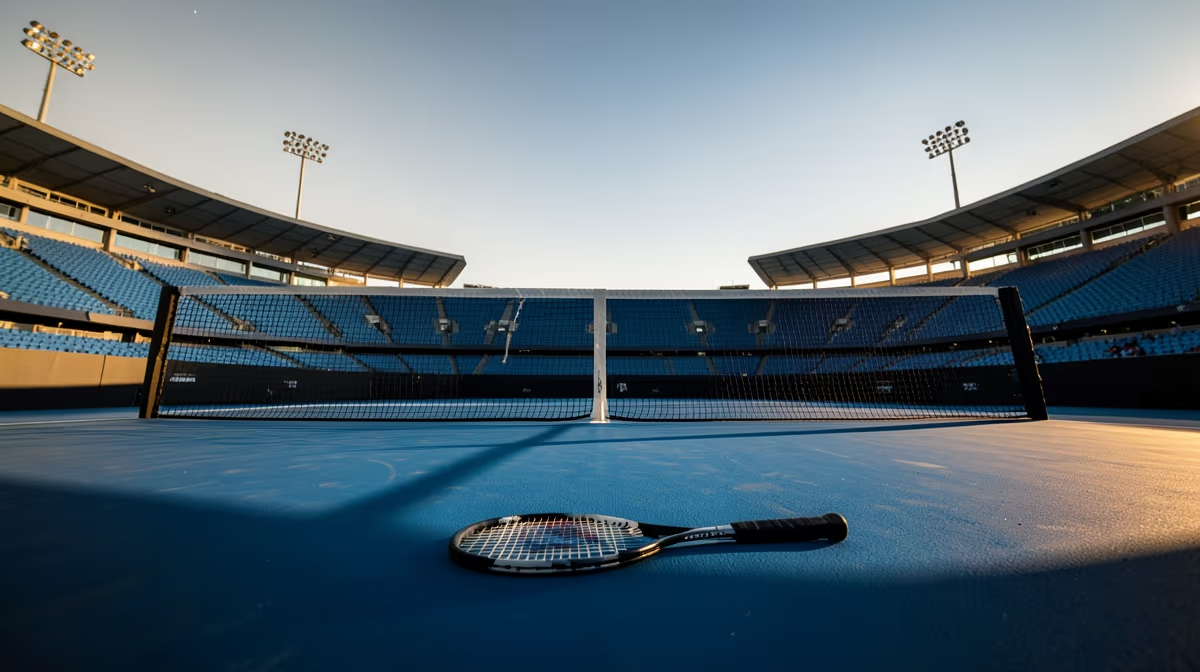
The multi-million-dollar courtrooms of professional sports are often far more volatile than the clay and grass surfaces where titles are won. Behind the scenes of the world's most prestigious tournaments, a quiet but high-stakes rebellion has reached a sudden standstill. The latest developments in the grand slam tennis dispute have captured global attention as athletes reach a temporary agreement. This truce suspends a long-running standoff over how the sport's massive revenues are shared, fundamentally altering the economics of the professional game.
The temporary peace between players and grand slam organizers, highlighted by a 20% boost in the US Open purse, shifts the financial landscape of professional sports but leaves underlying structural tensions unresolved.
The Roots of the Grand Slam Tennis Dispute
For years, elite tennis players have pushed for a larger share of the massive revenues generated by the four grand slam tournaments—the Australian Open, French Open, Wimbledon, and the US Open. These stand as the most prestigious annual tennis events in the world, serving as the financial and cultural engines of the sport. However, the financial rewards generated by these tournament empires have historically failed to scale proportionally with the commercial growth of the sport, leading to prolonged tensions.
At the heart of this conflict is the financial reality of the professional tennis circuit. Unlike team sports where athletes receive guaranteed salaries, professional tennis players operate as independent contractors. Players must personally fund their entire operations, including coaching, travel, and training required to compete globally. While top-tier stars secure lucrative sponsorships, lower-ranked players exiting in earlier rounds struggle to break even. Athletes argue that massive tournament profits should translate into higher payouts, especially for early-round participants, to ensure sustainable careers.
To address these inequities, players have organized to demand a fairer distribution of tournament revenues. Collective action, including the threat of boycotts, has served as leverage against entrenched institutional authority. This pressure forced tournament directors to reconsider their financial structures, culminating in negotiations that paved the way for a temporary truce.
Behind the Numbers: The 2026 Financial Shifts
The resolution of the high-stakes dispute has manifested most clearly in the financial restructuring of major tournaments. A primary example of this is the 2026 US Open, which serves as a major milestone in the ongoing discussions between competitors and tournament officials. During this cycle, tournament organizers agreed to expand the overall US Open prize money purse by an unprecedented 20 percent.
Under this adjusted framework, overall payouts have surged, ensuring winners take home massive sums. However, the benefits of the boosted purse extend beyond the champions, reflecting player demands for a more equitable redistribution of wealth across the entire draw to help mitigate the financial risks associated with early-round exits.
| Metric or Event Component | Verified Details and Impacts |
|---|---|
| 2026 US Open Purse Increase | 20% overall expansion from previous levels |
| Primary Resolution Milestone | Truce declared between top players and Grand Slam organizers |
| Immediate Financial Impact | Massive payouts for tournament winners and elevated early-round compensation |
| Core Player Demands | Fairer revenue sharing, sustainable payouts for lower-ranked competitors |
This substantial financial shift occurred amid intense scrutiny of player performance and advocacy. High-profile athletes, including those navigating intense matches like Alexander Zverev US Open campaigns, stood at the center of these discussions. The pressure exerted by top-tier players highlighted how crucial competitive stability is for both organizers and broadcast partners, forcing a redistribution model that placates top earners while managing broader demands for equity.
The Politics of Professional Sports Governance
Institutional Power and Collective Action
Geopolitical and Economic Concentrations of Wealth
However, the flow of this capital has historically favored the institutions hosting these events rather than the global workforce of players driving the entertainment value. The surging revenues of modern tennis made traditional distribution models increasingly indefensible, forcing tournament organizers to implement the 20% purse increases seen in 2026 to preserve the sport's global image and avoid disruptive labor conflicts.
Historical Parallels and Future Trajectories
The Legacy of 1973
The 1973 boycott proved that when players stand together, they can redefine the entire economic framework of professional sports.
The Hidden Strategy Behind the Truce
The Path Forward: Predictions and Industry Forecasts
In the next 24 hours, discussions and analysis surrounding the newly agreed truce will continue to circulate across global sports media, focusing on the US Open payouts and structural changes. Over the next 72 hours, the focus is expected to broaden as analysts and player associations begin evaluating how these financial concessions will impact other tournaments on the global calendar. The central question remains whether smaller tournaments can survive if they are forced to match the escalated purse demands set by the wealthy Grand Slams.
According to expert predictions, this resolution will likely pave the way for more collaborative, formalized financial negotiations between players and grand slam committees in upcoming seasons. However, the future remains divided between two distinct paths:
- The Best-Case Scenario: A sustained and cooperative financial framework is established, securing transparent prize pool increases and maintaining stable relations across all major tournaments.
- The Worst-Case Scenario: Underlying tensions over revenue sharing resurface as smaller, less-resourced tournaments struggle to match the escalated financial benchmarks set by the major Grand Slams, leading to a fragmented professional circuit.
Frequently Asked Questions
What happened in the prize-money battle between tennis players and grand slams?
The world's top tennis players have called a truce in their prize-money dispute with the major grand slams, following extensive discussions regarding revenue distribution.
Why does the resolution of the prize-money battle matter?
This truce ensures financial stability and prevents disruptive boycotts between athletes and organizers, keeping focus on the sport while establishing a fairer financial framework.
Who is affected by this agreement between players and grand slams?
Professional tennis players at all ranking levels, tournament organizers, and fans benefit from a cooperative relationship that secures the scheduling of major events.
What happens next following the truce in tennis?
Both sides will work collaboratively on long-term compensation structures. Tournaments like the US Open have already increased overall purses, setting a precedent.
What is the background of the prize-money dispute in grand slam tennis?
Players have pushed for a larger share of grand slam revenues, arguing prize pools have not scaled proportionally with the commercial growth of the sport.
How much do US Open winners get paid out under the current structure?
Following recent adjustments, the overall purse increased significantly and winners are set to take home massive sums, reflecting ongoing efforts to elevate compensation.
Conclusion
The truce declared between the world's top tennis players and Grand Slam organizers represents a temporary but significant stabilization in the economics of professional sports. Driven by a 20% overall purse increase at the 2026 US Open, the agreement addresses immediate player demands for fairer revenue sharing and more sustainable compensation across all competitive levels. While this compromise averts immediate boycotts and provides a stable front for upcoming media rights negotiations, the long-term structural questions of revenue distribution remain open. The coming months will determine if this truce can evolve into a permanent, cooperative financial framework or if it merely delays an inevitable return to conflict.


.webp)

.webp)