
Rajasthan Municipal Election Result 2026 Triggers Major Shift in Jaipur
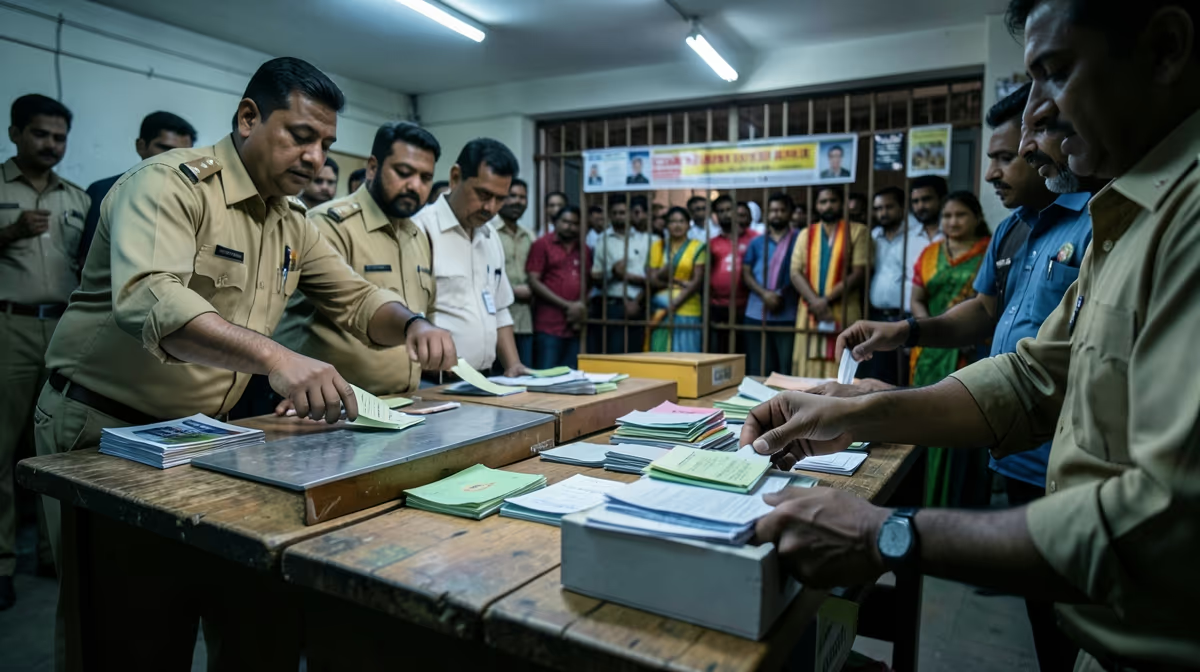
The quiet streets of Jaipur transformed into arenas of intense political anticipation as the first ballot boxes were unsealed at 8 AM. Beneath the immediate flurry of ward-by-ward announcements lies a deeper shift in how urban voters are steering the state's political direction. As citizens track the Rajasthan Municipal Election Result 2026, both the Bharatiya Janata Party (BJP) and the Indian National Congress (Congress) have secured early, crucial ward victories in the state capital. This pivotal political exercise concluded its voting phase with a robust voter turnout of 70.68 percent, indicating high civic engagement across the region. As counting progresses, the state waits in anticipation of a complete structural update for its urban governance.
The high 70.68% voter turnout in Rajasthan's urban local bodies has set the stage for a highly competitive standoff between the BJP and Congress, reshaping municipal governance across Jaipur.
Behind the Numbers: Turnout and Polling Trends
The primary narrative of the Rajasthan local body polls is defined by voter engagement. When polling booths closed, election authorities confirmed that 70.68% of eligible voters had participated, signaling a tense wait for political parties and candidates. This level of participation from the electorate indicates that urban voters in Rajasthan are deeply invested in the leadership of their local municipal administrations.
The mobilization of voters across various urban local bodies demonstrates that the stakes extend far beyond simple local management. Citizens waited in long queues at local polling booths, representing diverse demographics eager to influence policy regarding municipal administration, local development, and civic service delivery.
To understand the structured progression of these crucial elections, the timeline below outlines the transition from the voting booths to the counting halls:
| Phase of Election | Key Activity and Details |
|---|---|
| Polling Phase | Voters across urban local bodies cast ballots, achieving a significant 70.68% voter turnout. |
| Tense Interim | Candidates and political parties wait as ballot papers and counting setups are secured. |
| Commencement of Counting | Election officials begin opening ballot boxes and tallying votes starting at 8:00 AM. |
| Live Ward Updates | Initial wins for both BJP and Congress are confirmed in various Jaipur wards. |
This structured timeline highlights how the state transitioned from high-voter participation to an intense phase of live tracking.
The Battle for Jaipur Wards
The Jaipur Municipal Corporation election serves as the central battlefield for the major political parties. Early results show a highly competitive environment as candidates from both the BJP and Congress secure crucial victories in multiple Jaipur wards. Local election officials and party headquarters have been monitoring the progression of results as boxes and electronic data are compiled.
The direct impact of these ward victories is felt at the most local level. Newly elected councillors will take their oaths and begin addressing civic issues, ranging from sanitation to infrastructure development.
As the counting of votes continues, the focus remains on the specific numbers:
- Counting of votes for the Jaipur Municipal Corporation and other urban bodies commenced at 8 AM.
- Early results show that both the BJP and Congress have won key wards within the capital.
- Local party offices are monitoring the ward-by-ward breakdown to gauge broader state-level momentum.
- The high participation of 70.68% recorded during the polls set a tense stage for all contenders.
With several wards still awaiting final declarations, political observers are watching closely to see which party will secure dominant control over the municipal bodies.
Root Causes and Political Dynamics
To understand the intensity of these local elections, one must look at the root causes driving voter turnout and party competition. Urban local body elections in Rajasthan serve as a critical grassroots barometer of public sentiment, testing the ruling state government's delivery on civic infrastructure and local governance.
The victories secured by both the BJP and Congress across Jaipur wards highlight a fiercely competitive urban landscape. These municipal outcomes do not merely decide who manages local sanitation; they dictate local party hierarchy, momentum, and administrative control in the state capital. The BJP and Congress vote share in these municipal wards reflects how deeply entrenched both parties remain in the urban centers of the state.
Local Infrastructure and Civic Expectations
The focus on ward results highlights how municipal elections directly shape local governance. The elected councillors will have direct authority over urban planning and public works. Thus, every ward victory represents a direct mandate from the public on issues of everyday governance.
Economic and Geopolitical Dimensions
While local issues dominate the immediate campaign narratives, municipal election outcomes have broad economic and geopolitical implications. At the economic level, these results directly impact urban development spending, local commercial licensing, property taxation frameworks, and the allocation of state and central civic grants for Jaipur's infrastructure modernization. The winning party will control the distribution of resources across the municipal corporation's jurisdiction.
From a geopolitical perspective, sub-national domestic political exercises in India's most populous states reflect broad national democratic trends and voter alignment shifts. The results from these urban local bodies subtly influence federal political stability by signaling shifts in voter loyalty.
The Hidden Dynamics of Turnout
While media coverage naturally focuses on high-profile party wins, shifts in voter turnout rates often reveal deep-seated urban apathy or targeted mobilization by local independent factions. These alternative dynamics can disrupt the traditional two-party dominance of the BJP and Congress in future state elections.
Historical Context and Alignment
The pattern of intense polarization and high-stakes competition in Rajasthan's urban civic polls is not a new phenomenon. It mirrors historical municipal showdowns in major Indian state capitals ahead of state legislative assembly cycles. Historically, control over capital cities like Jaipur has provided parties with a vital administrative and promotional platform.
As seen in previous civic elections, the momentum gained from controlling key municipal corporations often translates into broader political capital during regional and national campaigns. Therefore, both the BJP and Congress deploy significant resources and mobilize their local party machinery to secure even the smallest wards.
Future Projections and Expert Outlook
The coming hours and days are critical for the final political alignment of Jaipur's municipal administration. Within the next 24 hours, the counting of votes for the Rajasthan municipal elections will continue, with live updates tracking ward-level wins for major parties.
Within the next 72 hours, final election results will be fully consolidated and declared. This will lead to an in-depth analysis of voter turnout and political reactions to the urban poll outcomes.
The upcoming hours are critical as final vote counts determine control of key municipal wards and local leadership positions.
According to expert analysis, political analysts expect heightened maneuvering as final vote counts determine control of key municipal wards and local leadership positions. The potential scenarios for the final stage of the election process are:
- Best-Case Scenario: Smooth and transparent final vote tabulation with peaceful acceptance of results by all participating political parties and their supporters.
- Worst-Case Scenario: Disputes over closely contested ward results leading to localized tensions and administrative delays in forming municipal bodies.
Frequently Asked Questions
What are the latest updates on the Rajasthan Municipal Election Result 2026?
The counting of votes for the Rajasthan municipal elections began at 8 AM, with early updates showing both the BJP and Congress winning wards in Jaipur. These results mark the conclusion of a closely watched urban local body election cycle across the state.
What was the voter turnout in the Rajasthan urban polls?
The Rajasthan urban polls recorded a voter turnout of 70.68 percent, setting up a tense wait for election results. This high participation reflects strong civic engagement among voters in urban local bodies.
Who is affected by the Rajasthan Municipal Election Result 2026?
The outcomes directly impact local residents, urban communities, and political stakeholders in Jaipur and other municipal areas across Rajasthan. Local governance and municipal administration for the upcoming term will be shaped heavily by these ward-level victories.
What happens next following the counting of votes in Jaipur?
Following the vote counting and the declaration of ward winners, political parties will focus on consolidating their numbers to secure leadership positions within the municipal corporations. Newly elected councillors will then take their oaths and begin addressing local civic issues.
Why do the Jaipur Municipal Corporation elections matter?
Municipal elections serve as a crucial barometer of urban political sentiment and grassroots support for major political parties like the BJP and Congress in Rajasthan. Winning key urban wards helps parties strengthen their administrative influence at the local level.
When did the voting and counting take place for these municipal polls?
Voting for the Rajasthan urban polls concluded previously with a high turnout, followed by the official counting of votes commencing early on Monday, September 14, 2026. This schedule allowed election officials to process results swiftly after the tense wait following polling day.
Conclusion
The Rajasthan municipal elections have demonstrated the intense engagement of the urban electorate, as evidenced by the high 70.68% voter turnout. The commencement of counting at 8 AM on Monday, September 14, 2026, brought an end to a tense wait for political parties, with early results showing both the BJP and Congress securing crucial victories in Jaipur wards. As final votes are tabulated, the focus shifts toward the consolidation of ward wins and the eventual formation of local municipal administrations. These outcomes will directly shape the governance, infrastructure development, and civic service delivery of Rajasthan's urban centers, serving as a critical indicator of political momentum in the state.
Sources
- Rajasthan Municipal Election Result 2026 Live Updates: BJP, Congress win Jaipur wards — The Indian Express
- Jaipur Municipal Corporation Election Result 2026 LIVE: Counting of Votes to Start at 8am — news18.com
- Rajasthan urban polls over, 70.68% turnout sets up tense wait for results — The Indian Express


.webp)

.webp)