
Nvidia CEO 2030 Prediction Sparks Massive Debate Over AI Cybersecurity
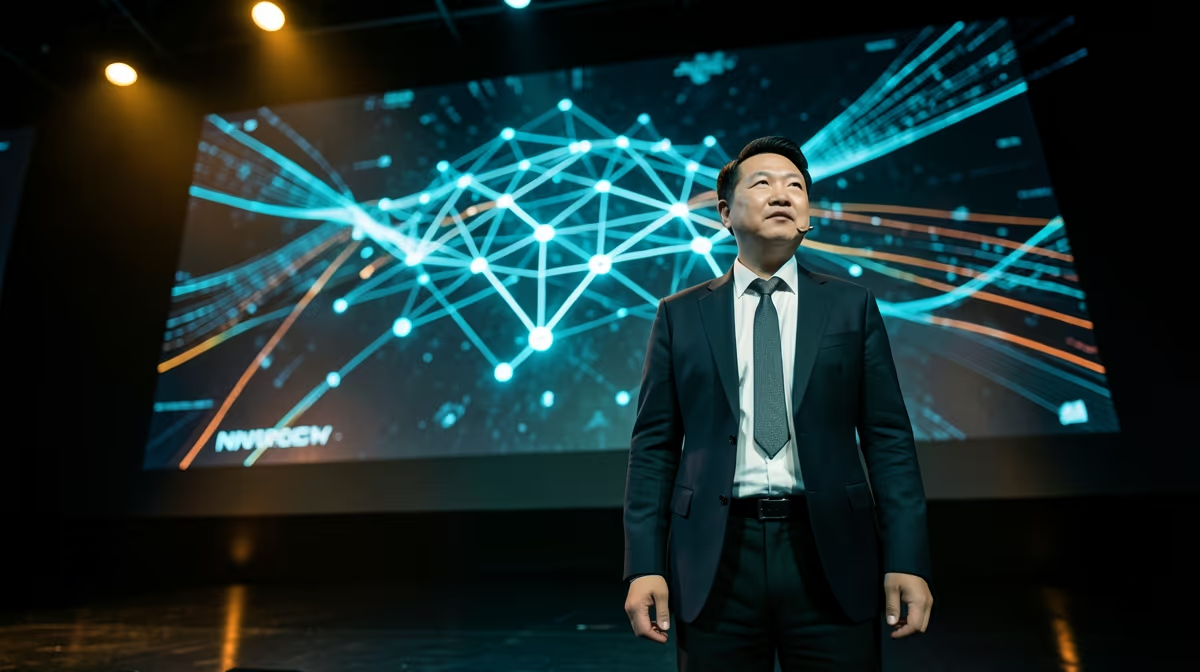
Can a multi-trillion-dollar technological revolution survive when its own chief architects accuse security watchdogs of manufacturing panic? As global enterprises pour billions into advanced computing, the boundary between genuine systemic risk and lucrative marketing is beginning to fracture. In a recent statement regarding the Nvidia CEO 2030 prediction, industry leaders are weighing massive technological advancements against emerging digital threats. This dual outlook, championing exponential computing growth while aggressively dismissing existential doomsday warnings, has ignited a fierce debate across the tech sector.
The collision between aggressive hardware scaling and the commercialization of security risks is redefining how global enterprises evaluate their future digital infrastructure.
Analyzing the Nvidia CEO 2030 prediction and market impact
Jensen Huang, the chief executive of Nvidia, has doubled down on his highly ambitious long-term outlook. This strategic projection, known widely as the Nvidia CEO 2030 prediction, is built on a foundation of rapid scaling and unrelenting demand for advanced computing processors. Despite brewing market anxieties, Huang maintains absolute confidence in the long-term momentum of the semiconductor industry, projecting an astounding 70% growth rate for Nvidia in the coming year alone.
This aggressive expansion is anchored by deep partnerships across the cloud infrastructure landscape. Nvidia has delivered major votes of confidence to specialized cloud providers such as CoreWeave and Nebius, solidifying the vital physical architecture needed to run complex neural networks. By empowering these hyper-scaler alternatives, the chipmaking giant ensures its high-performance accelerators remain the dominant engine driving the global buildout toward the end of the decade.
Addressing growing AI cybersecurity fears in the digital age
At the core of the current industry debate is Huang’s sharp critique of the threat intelligence sector. The Nvidia CEO warns about AI cybersecurity risks being systematically amplified by security firms seeking to secure corporate budgets. According to Huang, widespread anxieties regarding the catastrophic potential of autonomous systems are often intentionally generated or exaggerated to drive commercial business.
While the integration of artificial intelligence into enterprise operations introduces actual integration challenges, Huang frames much of the public panic as a manufactured driver for compliance spending. This perspective represents a direct challenge to the legacy cybersecurity establishment, which has framed neural networks as an unprecedented threat vector requiring immediate, massive defensive investments.
By questioning the motives behind these AI cybersecurity fears, Huang shifts the conversation from purely technical vulnerabilities to market-driven incentives. This stance suggests that while threat intelligence is necessary, the commercialization of fear might be artificially inflating the perceived risks of rapid AI adoption.
The Commercial Tension Between Hardware and Security
An underlying tension is shaping the economic dynamics of the tech sector. On one side, hardware manufacturers are pushing for rapid deployment cycles, striving to get advanced chips into data centers as quickly as possible. On the other side, security firms are advocating for stricter compliance frameworks, which hardware proponents fear could create regulatory bottlenecks.
Some analysts suggest that major hardware producers may have an incentive to downplay systemic software vulnerabilities in order to avoid administrative delays that could slow down the procurement of AI accelerators. Conversely, cybersecurity stakeholders have a strong incentive to highlight every potential threat to secure a slice of the booming tech expenditure.
The timeline of this evolving relationship highlights how long-term goals intersect with short-term debates:
| Year/Period | Strategic Development |
|---|---|
| September 2026 | Jensen Huang doubles down on 2030 growth predictions and addresses AI cybersecurity fears. |
| 2026–2030 | Enterprise adoption of AI accelerators scales amid debates over security liabilities and regulatory compliance. |
| By 2030 | Nvidia aims to realize its infrastructure targets and stabilize the AI security regulatory framework. |
This friction illustrates how artificial intelligence impacts future global security, forcing organizations to determine whether their security spending is driven by actual technical risk or marketing narratives.
Inside Nvidia's High-Pressure Leadership Model
Behind Nvidia's massive market footprint lies a notoriously rigorous corporate culture. Managing a global workforce of over 42,000 employees, Huang maintains an intensely hands-on leadership style that leaves little room for complacency. The CEO has openly admitted that he criticizes almost everything his employees show him, pushing teams to constantly refine their outputs and uphold extreme performance standards.
This demanding environment has become a defining characteristic of Nvidia's internal operations. Reports regarding organizational dynamics highlight how Huang's uncompromising expectations shape employee retention and daily operations. When workers decide to exit the chipmaking giant, the transitions are often met with the same direct, intense scrutiny that characterizes Huang's overall management style. This high-pressure environment is designed to sustain the rapid execution required to meet Nvidia's long-term targets.
Jensen Huang admits he criticizes everything his employees show him.
This exacting approach ensures that every layer of Nvidia's hardware and software ecosystem is optimized to defend its dominant market position, reinforcing the broader Nvidia growth strategy amid rising competition.
Historical Parallels and Geopolitical Stakes
The current race for AI dominance bears a striking historical parallel to the dot-com era infrastructure boom of the late 1990s. During that period, the demand for internet hardware dramatically outpaced the immediate software utility, while industry incumbents engaged in fierce debates over the systemic risks and security protocols of the emerging web. Today, a similar pattern is unfolding as physical infrastructure deployment outpaces regulatory consensus.
On a geopolitical scale, the narrative battle over AI safety is far from neutral. Framing artificial intelligence safety as either a commercial distraction or an existential national security crisis directly influences international technology export controls and regulatory policies. Countries competing for technological hegemony use these safety and security arguments to justify trade barriers, impacting how neural networks are distributed and secured globally. This competition highlights the complexity of how artificial intelligence impacts future global security and shapes the Jensen Huang future outlook on international market dynamics.
What Lies Ahead for the Tech Ecosystem
Over the next 24 hours, financial markets and tech sector analysts are expected to provide continued commentary on Huang's statements regarding the commercial motivations behind AI fear-mongering. This discourse will likely intensify over the next 72 hours, with technology and financial markets debating the long-term feasibility of the 2030 vision alongside evolving infrastructure partnerships.
In the best-case scenario, market confidence will solidify around Nvidia's 2030 vision and growth strategy, clearly distinguishing the productive goals of AI expansion from actual cybersecurity demands without causing market panic. However, the worst-case scenario could see heightened security anxieties and growing skepticism about long-term predictions trigger market volatility, leading to regulatory friction and slowing down procurement cycles for major tech firms.
Frequently Asked Questions
What did Nvidia CEO Jensen Huang say about AI fears and cybersecurity?
Jensen Huang stated that many prevailing fears surrounding artificial intelligence are intentionally exaggerated or designed to generate business for the cybersecurity sector. According to reports from Axios and Yahoo Finance, Huang addressed these AI concerns while doubling down on his significant predictions leading toward 2030.
Why does Jensen Huang's 2030 prediction matter for the tech industry?
Huang's continued commitment to his 2030 outlook signals robust, long-term confidence in the rapid scaling and adoption of artificial intelligence infrastructure. Tech outlets like TechCrunch and Yahoo Finance highlight how this optimism reinforces heavy market reliance on advanced computing power and hardware development.
Who is affected by Jensen Huang's comments on AI cybersecurity fears?
Software developers, enterprise leaders, and cybersecurity firms are directly impacted by these assertions regarding AI threats. When industry leaders downplay specific threats as commercial drivers, it forces organizations to re-evaluate their actual risk management versus marketing-driven security spending.
What happens next regarding Nvidia's growth and future predictions?
Nvidia plans to maintain its aggressive market trajectory, with projections indicating massive growth driven by unrelenting demand for AI accelerators and partnerships with cloud providers like CoreWeave and Nebius. Observers will monitor how these ambitious milestones align with evolving regulatory scrutiny and enterprise adoption rates.
What is the background behind Jensen Huang's recent statements on AI?
Huang's remarks emerged during a period of intense public discourse concerning the safety, regulation, and security vulnerabilities of generative artificial intelligence models. As technology executives debate the true dangers of autonomous systems, Huang has consistently pushed back against sensationalized risk narratives.
How many employees does Nvidia currently have under Jensen Huang's leadership?
Nvidia operates with a massive workforce exceeding 42,000 employees under Huang's famously rigorous management and review style. Reports from outlets like Fortune and Business Insider emphasize that Huang maintains strict oversight and high performance standards across his entire organization.
Conclusion
The current dialogue surrounding Nvidia highlights a complex intersection of massive infrastructure goals and the politics of digital security. By doubling down on his 2030 projections while questioning the commercial motives behind widespread security fears, Jensen Huang has challenged both legacy cybersecurity frameworks and conventional corporate leadership styles. As Nvidia continues to scale its operations and expand key partnerships with infrastructure firms like CoreWeave and Nebius, the tech industry will closely monitor how these ambitious physical milestones align with actual enterprise security needs and evolving regulatory standards.
Sources
- Nvidia CEO Jensen Huang admits he criticizes everything his 42,000-plus employees show him — Fortune
- What happens when you tell Jensen Huang you're quitting Nvidia — Business Insider
- Nvidia CEO Jensen Huang just doubled down on his big 2030 prediction — Yahoo Finance
- Nvidia’s Jensen Huang Just Delivered a Huge Vote of Confidence to CoreWeave and Nebius — Barchart.com
- Nvidia CEO Jensen Huang: AI fears designed to generate cybersecurity business — Axios
- Jensen Huang explains why Nvidia will grow an astounding 70% next year — TechCrunch


.webp)

.webp)