
Houthi Red Sea Advance Near Bab el-Mandeb Strait Triggers Global Alarm
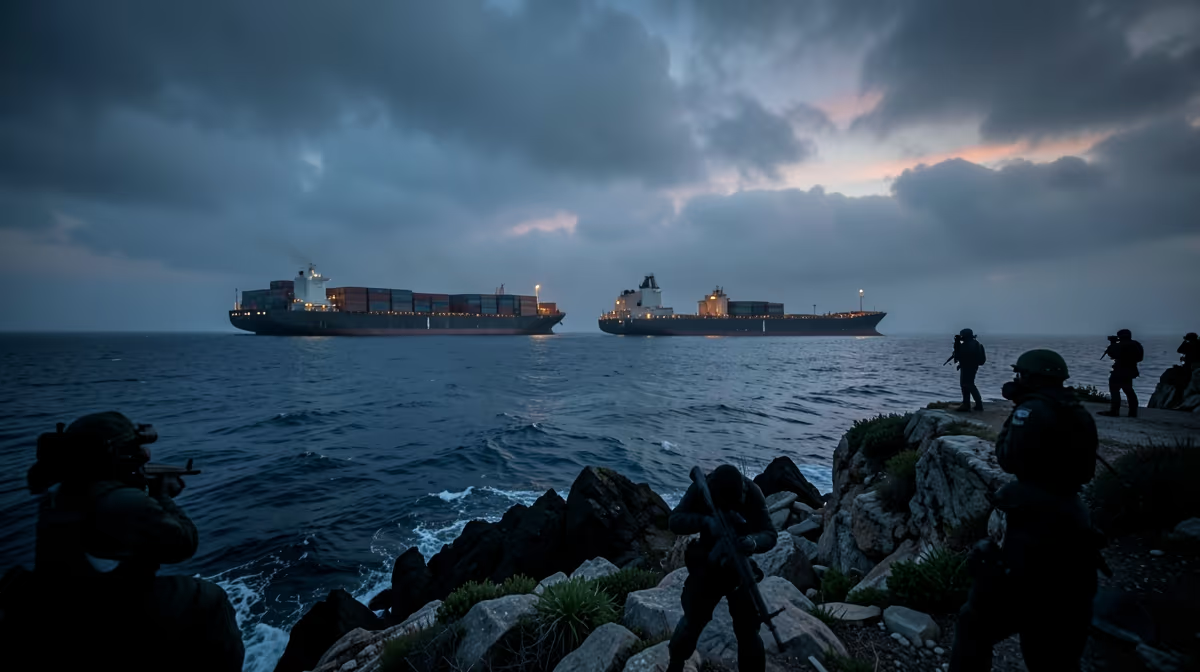
A narrow ribbon of water separating the Arabian Peninsula from the Horn of Africa has suddenly become the focal point of a high-stakes maritime standoff. As armed forces secure new high-ground positions overlooking this passage, the vulnerability of the global energy supply chain has never been more visible. The recent Houthi Red Sea advance has raised global alarm as militant forces approach a vital island near the Bab el-Mandeb Strait. This strategic push, marked by the movement of Iran-backed Houthi forces toward key maritime positions, has introduced severe complications into an already volatile region. By establishing a physical presence on these strategic islands, the group has significantly tightened its grip on a primary shipping corridor that facilitates billions of dollars in international trade daily. Alongside this tactical advance, a series of targeted strikes has successfully shut down a key Saudi oil pipeline, highlighting the severe vulnerabilities of the region's land-based energy bypass routes.
The Houthi advance to a key Red Sea island and the direct threats to close the Bab el-Mandeb Strait present a severe escalation in the Yemen conflict, directly targeting global shipping lanes and energy infrastructure.
Strategic implications of the Bab el-Mandeb Strait threat
The Bab el-Mandeb Strait sits between the Arabian Peninsula and the Horn of Africa, acting as a crucial maritime shortcut linking the Indian Ocean to the Suez Canal. For global trade, this passage is not merely an optional transit route but an indispensable lifeline. Any disruption or blockade here forces maritime traffic to divert around the entire continent of Africa, adding thousands of miles, weeks of travel time, and immense fuel costs to international shipping routes.
By advancing to a key Red Sea island, Houthi forces have positioned themselves to directly monitor and threaten vessels passing through this narrow waterway. This geographical position acts as a natural checkpoint, allowing the group to project power far beyond the mainland of Yemen. The Bab el-Mandeb Strait threat is no longer a theoretical risk; the physical presence of armed forces on adjacent land masses gives the Houthis a direct line of sight and operational capability over the channel. This maritime geography makes the strait highly susceptible to asymmetrical tactics, where relatively small forces on land or nearby islands can hold global commerce hostage by threatening a naval blockade.
Strikes target Saudi oil pipeline security
The tactical maneuvering in the Red Sea does not exist in a vacuum. It is accompanied by direct attacks on land-based energy infrastructure designed to bypass these exact maritime choke points. Recent strikes have forced the shutdown of a key Saudi pipeline, an infrastructure asset that has traditionally served as Saudi Arabia's oil escape route. This pipeline was designed to allow crude oil to bypass the volatile Persian Gulf and Red Sea shipping lanes, transporting energy safely across the peninsula.
With this pipeline now offline due to targeted strikes, the options for securing safe energy transit have narrowed. The shutdown emphasizes the high level of vulnerability facing regional energy infrastructure. Achieving Saudi oil pipeline security is heavily linked to the broader security landscape of the Yemen conflict escalation. When both the maritime lanes and the land-based pipeline bypasses are simultaneously compromised, global energy markets are left with few alternatives. This coordinated pressure on both sea and land routes demonstrates a sophisticated understanding of regional energy transit vulnerabilities, leaving regional energy managers scrambling to establish secure transport alternatives.
Chronology of the maritime escalation
The unfolding situation near the Bab el-Mandeb Strait has developed through a series of tactical movements and physical disruptions. The timeline below outlines how the current standoff escalated from initial territorial advances to direct threats of a total maritime blockade.
| Tactical Phase | Operational Event | Impact on Global Infrastructure |
|---|---|---|
| Island Movements | Houthi forces advance toward key Red Sea islands and strategic positions near the Bab el-Mandeb Strait. | Increased monitoring capability and physical presence along the shipping lane. |
| Infrastructure Attacks | Strategic infrastructure, including regional oil pipelines, faces strikes and shutdowns. | Shutdown of a key Saudi pipeline, cutting off primary land-based energy bypass routes. |
| Operational Threats | Houthis issue explicit threats to close the Bab el-Mandeb Strait entirely. | International markets and observers raise alarm over potential total closures of vital maritime chokepoints. |
The speed at which these positions were secured highlights the shifting dynamics of the conflict, transforming a localized dispute into an international security crisis that directly impacts how the Yemen conflict threatens global shipping.
Economic fallout and energy market risks
The economic consequences of the Houthis advance to key Red Sea island are felt immediately in the global energy markets. The Bab el-Mandeb Strait is one of the world's most critical maritime choke points, serving as the gateway for millions of barrels of oil transiting from the Middle East to Europe and North America daily. When the security of this channel is threatened, the direct economic impact is felt through a spike in transit and insurance costs.
Shipping operators are forced to weigh the immense risks of passing through a zone threatened by a potential naval blockade. This leads to several compounding economic issues:
- Skyrocketing maritime insurance premiums for vessels transiting the Red Sea.
- Higher freight rates as operators demand compensation for navigating high-risk zones.
- Delays in global supply chains as ships are diverted around the Cape of Good Hope.
- Widespread bottlenecks at ports due to unpredictable arrival schedules.
Any disruption or closure here can severely delay international shipping, drive up global energy prices, and cause widespread supply chain bottlenecks.
For global consumers, these added costs translate directly into higher prices at the pump and increased retail costs for imported goods, demonstrating the direct impact of Bab el-Mandeb Strait closure on oil and global commodity pricing.
Geopolitical instability and the regional balance
The root cause of this crisis lies in the strategic push by Iran-backed Houthi forces to control vital maritime choke points and strategic islands near the Bab el-Mandeb Strait. By doing so, the group seeks to exert maximum pressure on regional and global trade routes, transforming geographic positioning into political leverage.
On a domestic level, the advance serves the political angle of consolidating power within Yemen. It allows the Houthi movement to demonstrate its strength to local populations while posturing regionally against its principal adversaries, including Saudi Arabia and international coalitions. This regional posturing is designed to show that the Houthis possess the capability to disrupt the global economy at will, elevating their status from a regional rebel group to a major geopolitical player.
From a broader geopolitical angle, the escalation of security risks in the Red Sea directly threatens international naval freedom of navigation. This development has drawn heightened strategic concern from global powers that are heavily dependent on Middle Eastern energy transit. There is also a distinct hidden angle to these operations: the offensive may reflect a coordinated strategy to leverage maritime geography not just for immediate tactical gains, but as a long-term bargaining chip in broader regional diplomatic settlements. This strategy finds a historical parallel in the historical contestation of maritime straits and strategic choke points during periods of asymmetric regional conflict, such as historical disruptions in the Strait of Hormuz. By threatening a vital global artery, the group ensures it must be factored into any future security negotiations.
Future outlook and containment scenarios
As the situation continues to unfold, the immediate future remains highly volatile. Over the next 24 hours, international security organizations are maintaining continued tracking of Houthi movements near the key Red Sea island, alongside close monitoring of the Bab el-Mandeb Strait following recent threats and infrastructure disruptions. The next 72 hours are expected to see a heightened security posture and detailed diplomatic assessments regarding the safety of crucial oil choke points, shipping lanes, and regional pipeline networks.
Energy infrastructure managers and regional shipping operators are preparing for multiple operational scenarios:
- Under a best-case scenario, international and regional containment measures successfully secure the Bab el-Mandeb Strait, restoring stability to shipping lanes and minimizing disruptions to oil transport.
- Under a worst-case scenario, a successful blockade or prolonged disruption of the Bab el-Mandeb Strait by the Houthis severely constricts global oil supplies and international maritime trade, forcing systemic re-routing of global commerce.
According to analyst assessments, observers expect continued volatility and increased naval vigilance around critical Middle Eastern maritime choke points as Houthi movements threaten vital trade routes.
Frequently Asked Questions
What is the significance of the Bab el-Mandeb Strait?
The Bab el-Mandeb Strait is a critical maritime chokepoint connecting the Red Sea to the Gulf of Aden, serving as a vital shortcut for global shipping and oil transport between the Indian Ocean and the Suez Canal.
Which energy infrastructure has been affected by the recent escalation?
Recent strikes have shut down a key Saudi pipeline, which serves as a major land-based bypass route for oil transit across the Arabian Peninsula.
What are the main risks to global shipping from the Houthi Red Sea advance?
The primary risks include potential maritime blockades, physical attacks on cargo vessels, skyrocketing insurance premiums, and forced rerouting of ships around Africa, which delays supply chains and raises costs.
Conclusion
The advance of Houthi forces to a key Red Sea island and the shutdown of a key Saudi pipeline represent a critical threat to global maritime trade and energy security. With the Bab el-Mandeb Strait directly threatened, international shipping faces immediate risks of disruption, increased insurance premiums, and potential rerouting. Moving forward, the focus remains on whether regional and international security measures can contain the escalation, safeguard these critical choke points, and stabilize global energy supply chains.
Sources
- Houthis reportedly advance to key Red Sea island, further threatening crucial oil choke point — CNBC
- Strikes shut down key Saudi pipeline as Iran-backed Houthis tighten grip on crucial shipping lane — NBC News
- Houthis Threaten to Close Bab el-Mandeb Strait — MiGFlug
- Bab el-Mandeb Strait | Map, Chokepoint, Red Sea, Iran War, Yemen, Blockade, & Hormuz — Britannica
- The Houthis’ Next Target: Saudi Arabia’s Oil Escape Route — Open Magazine
- EXPLAINER - What is Bab el-Mandeb and why it matters? — aa.com.tr


.webp)

.webp)