
Houthis Seize Red Sea Island as Saudi Pipeline Crisis Escalates Deeply
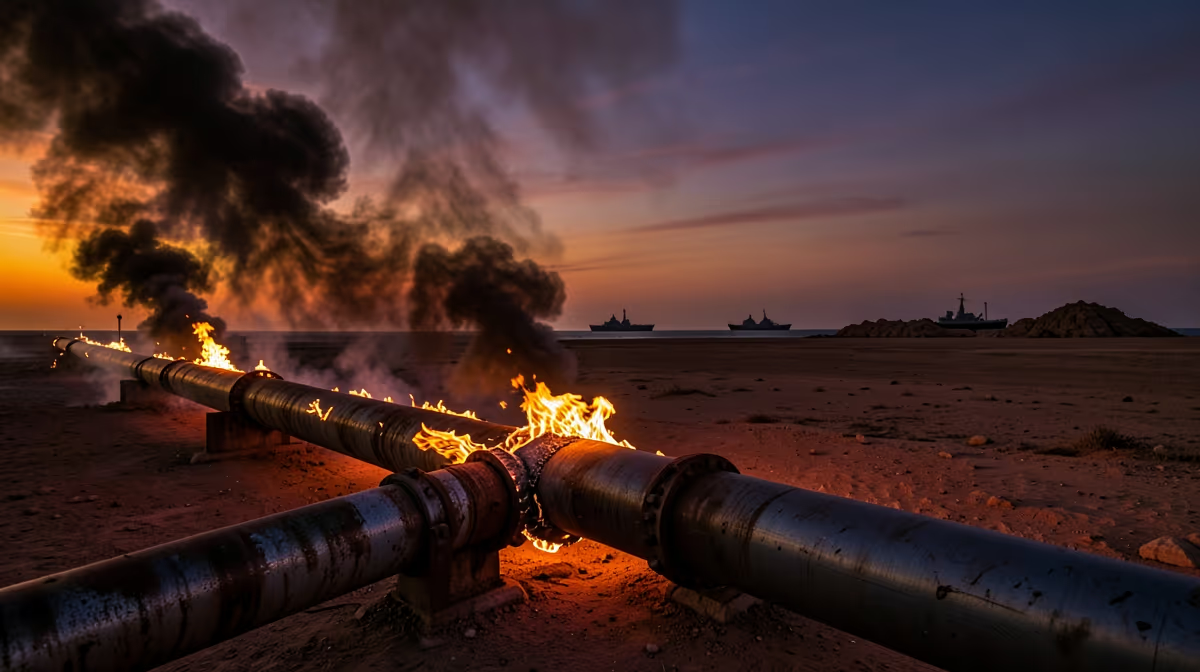
A sudden shift in Red Sea territorial control has combined with a devastating strike on critical energy infrastructure to push the Middle East toward a major regional escalation. This dual threat has forced international security analysts to rethink the stability of global energy corridors overnight. Recent developments in the Yemen conflict have triggered major international concern as reports confirm that Houthis seize island and Saudi pipeline shut down, marking a dangerous new phase in regional security. The advancing Iran-backed Houthi forces have opened a highly volatile maritime front, compounding regional instability and directly threatening critical global shipping lanes.
The convergence of a strategic maritime territorial grab and direct attacks on energy infrastructure represents a critical escalation that directly threatens global shipping lanes and OPEC oil production stability.
Strategic Implications of the Houthi Island Seizure
The seizure of a strategic island by Houthi forces marks a significant expansion of the ongoing Yemen conflict, opening a highly volatile new front in what security analysts increasingly view as a wider regional confrontation involving Iran. By establishing control over this offshore territorial position, the Houthi movement has directly threatened vital maritime choke points and Red Sea shipping lanes.
The primary concern for international maritime security is the group's ability to project power across critical trade routes. Geopolitical maritime security has been compromised as Houthi forces expand their physical footprint beyond the Yemeni mainland. This development suggests a shift in tactical capabilities, moving from localized coastal operations to the active occupation of offshore islands. The control of such territory allows the group to monitor, disrupt, or target commercial and military vessels, creating a persistent threat to international shipping lanes.
Global Energy Markets React to Saudi Pipeline Shutdown
Compounding the maritime crisis, a major Saudi Arabia oil pipeline was forced to shut down after a direct attack triggered significant fires along its infrastructure. Emergency response teams were quickly deployed to contain the extensive fires and secure the surrounding area, but the incident has already sent shockwaves through global markets. This disruption poses immediate risks to global energy supplies and market stability, exposing the acute vulnerability of critical Middle Eastern petroleum infrastructure.
Analysts draw immediate historical parallels between this event and the 2019 Abqaiq-Khurais drone and missile attacks on Saudi oil facilities. In 2019, those strikes temporarily halved the kingdom's oil production, highlighting the fragile nature of concentrated energy networks. While the full extent of the current damage is still being assessed, any prolonged disruption to Saudi Arabia's transit networks threatens to impact OPEC oil production capacity and cause immediate volatility in international oil prices.
| Conflict Phase | Tactical Development | Operational Status |
|---|---|---|
| Maritime Advance | Seizure of a strategic island | Active Houthi occupation |
| Infrastructure Strike | Pipeline attack and subsequent fires | Operations fully shut down |
| Diplomatic Escalation | Direct pressure on Western leadership | Under active bilateral review |
The Diplomatic Campaign: Riyadh Presses Washington
In the wake of these advancing threats, Saudi Arabia has rapidly escalated its diplomatic efforts. Saudi Crown Prince Mohammed bin Salman has reportedly made direct contact with the United States, pressing the Trump administration to transition from a policy of containment to direct military intervention.
Sources indicate that Saudi leadership has communicated to the United States that now is the time for direct military action against the advancing Houthis in Yemen. By directly lobbying Washington, Saudi officials are attempting to secure immediate military strikes to halt the Houthi advances. This high-level push increases the pressure on Western allies to actively intervene and re-establish regional deterrence against further aggressive territorial expansions.
Geopolitical Choke Points and Deterrence
The opening of this new front is not merely a localized clash but a significant test of international deterrence against Iran's regional proxy network. The Iran backed Houthi maritime attacks impact global supply chains, drawing international powers deeper into the security architecture of the Arabian Peninsula.
The conflict, which has locked the Houthis and a Saudi-led coalition in a prolonged war for years, has reached a critical bottleneck. Riyadh's plea to the Trump administration represents a pivotal moment where regional containment strategies appear to have reached their limits. If Western allies decline to launch direct military strikes, Saudi Arabia may face prolonged energy infrastructure threats, prompting a unilateral reassessment of its security posture.
The disruption of Saudi pipeline operations and the seizure of territory by Houthi forces threaten global energy security and economic stability.
Domestic Overtones and Political Windows
The timing of this regional escalation is highly notable, coinciding with the 25th anniversary of the September 11 terror attacks. This sensitive political window has been marked by domestic tension within the United States regarding its relationship with the Saudi kingdom.
During the annual September 11 memorial ceremony, Terry Strada, a prominent 9/11 widow, publicly criticized the United States government. Addressing her remarks directly to JD Vance, Strada accused the U.S. of protecting Saudi Arabia despite historical grievances. This domestic criticism highlighting US-Saudi relations adds an extra layer of political complexity. It suggests that while Saudi Arabia seeks urgent military protection from Washington, domestic political pressure within the U.S. could complicate the administration's decision-making process.
Security Assessment and Future Horizons
The outlook for the region remains highly volatile as international observers assess the dual impacts of the pipeline shutdown and the island seizure. Analysts and military planners are currently evaluating multiple divergent pathways for how the situation will develop.
- Next 24 hours: Continued assessment of the security situation following the Houthi seizure of an island and the shutdown of the Saudi Arabia oil pipeline due to attack-triggered fires.
- Next 72 hours: Potential diplomatic and military responses as Saudi leadership presses the Trump administration for action against the advancing Iran-backed Houthis.
The overall security assessment indicates that analysts expect heightened military readiness across the region and increased diplomatic pressure from Riyadh on Western allies to intervene against the advancing forces.
Best-Case and Worst-Case Scenarios
In a best-case scenario, emergency teams will achieve a rapid containment of the pipeline fires, leading to a swift restoration of energy flows. Simultaneously, secured diplomatic interventions would de-escalate the maritime and territorial advances without a broader military conflict.
Conversely, the worst-case scenario entails a further escalation of the military conflict, opening a severe and permanent new front in the region. This would result in prolonged energy infrastructure disruptions, repeated attacks on vital trade routes, and a widening of geopolitical instability across the entire Middle East.
Frequently Asked Questions
What happened with the Houthis and the Saudi Arabia pipeline?
Iran-backed Houthi forces seized a strategic island and attacked a Saudi oil pipeline, triggering fires that forced operations to be shut down. This aggressive advance marks a significant escalation in the ongoing regional conflict.
Why does the Houthi seizure of the island matter?
The seizure opens up a dangerous new front in the war involving Iran, threatening critical global shipping lanes and maritime security in the region. It demonstrates the growing tactical capabilities and reach of Houthi forces.
Who is affected by the Saudi Arabia pipeline shutdown?
Global energy markets, Saudi Arabia, and international consumers are directly affected by the sudden halt in oil transit capacity. The attack poses immediate risks to worldwide energy supply stability and infrastructure security.
What happens next regarding military action against the Houthis?
Saudi Arabia's Crown Prince Mohammed bin Salman has pressed former President Trump and urged the United States that now is the time for direct military action. Regional leaders are weighing potential military responses to counter the escalating Houthi threat.
What is the background of the conflict involving the Houthis and Saudi Arabia?
The Houthis are an Iran-backed group in Yemen that has been locked in a prolonged conflict with a Saudi-led coalition. Recent events represent a severe intensification of hostilities involving key regional and international players.
How did the pipeline shutdown occur?
The Saudi oil pipeline was forced to shut down after a direct attack triggered significant fires along the infrastructure. Emergency responses were deployed to contain the damage and secure the surrounding area.
Conclusion
In summary, the seizure of a strategic island and the shutdown of a major oil pipeline have marked a significant and dangerous escalation in the Middle East. These events have not only threatened global energy security but have also triggered intense diplomatic maneuvering. As Saudi Arabia's leadership presses the United States for direct military action against the advancing Houthis, the international community remains on high alert. The dual threat to maritime trade routes and onshore energy networks underscores the fragility of regional stability. Whether this crisis leads to a broader military intervention or a tense diplomatic resolution, the geopolitical landscape of the Middle East has entered a highly unpredictable and high-stakes chapter.
Sources
- Houthis seize an island, opening a new front in the Iran war, as Saudi Arabia shuts down a pipeline — AP News
- Saudi Arabia tells Trump now is the time for military action as Iran-backed Houthis advance — Fox News
- Saudi Arabia's MBS pressed Trump to strike Houthis in Yemen, sources say — CBS News
- Saudi oil pipeline shut down after attack triggers fires — CNN
- 9/11 widow blasts Saudi Arabia during annual ceremony — Axios
- 9/11 widow Terry Strada accuses US of protecting Saudi Arabia 25 years after terror attacks, addresses Vance — Fox News


.webp)


.webp)