
Jaguar Land Rover job cuts signal a massive shift in British industry
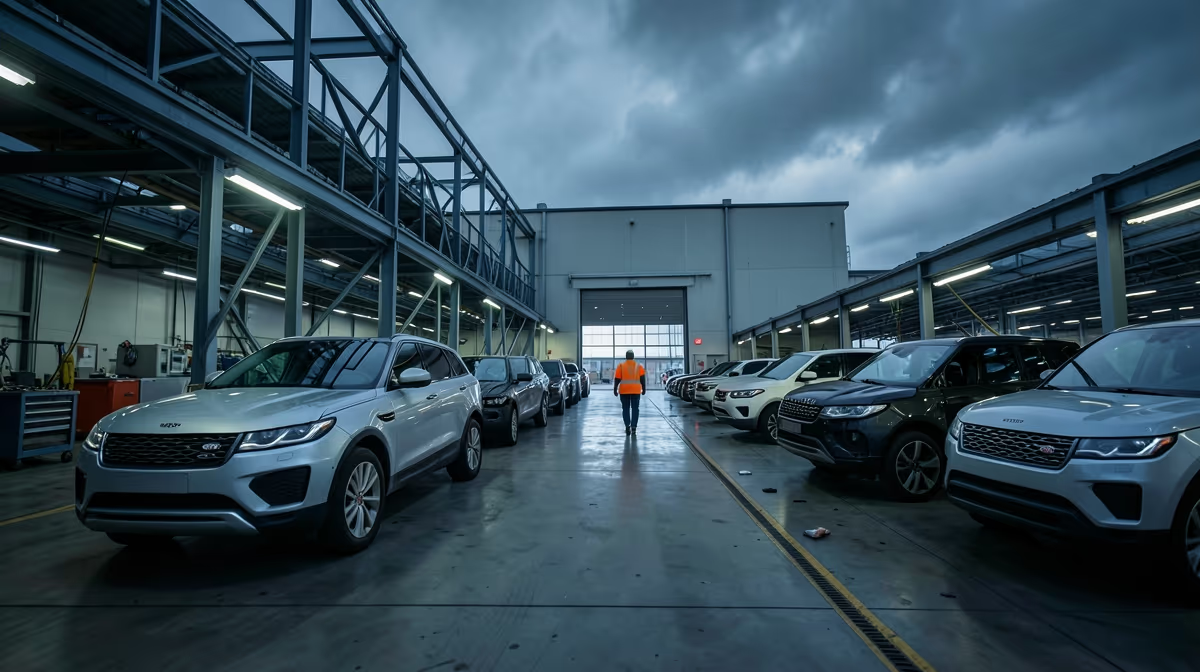
The quiet anxiety vibrating through the British manufacturing sector has finally crystallized into hard numbers as one of its most iconic brands initiates a high-stakes survival plan. With a massive financial target hanging in the balance, the structural integrity of a legendary automotive supply chain is about to face its most severe test in decades. Jaguar Land Rover job cuts have been officially confirmed as the iconic British car manufacturer announces a sweeping restructuring plan to secure its financial future. Facing intense market pressures and growing competition in the global automotive market, the company is embarking on its second major reorganization to realize a total of £1.7 billion in car manufacturer savings. This aggressive cost-reduction strategy involves eliminating thousands of positions, directly threatening approximately 4,000 jobs across the organization.
The necessity to eliminate approximately 4,000 jobs highlights deep margin compression within legacy automotive manufacturing, sending severe shockwaves through tier-1 and tier-2 supply chains.
Details behind the latest Jaguar Land Rover job cuts
The latest announcement marks a highly significant restructuring phase for Jaguar Land Rover (JLR). As the company moves forward with its plans to save £1.7 billion, reports confirm that the organization is targeting the elimination of roughly 4,000 positions. This represents the second major restructuring effort in recent history, indicating that previous cost-cutting measures were insufficient to offset the rapid economic shifts impacting the sector. The confirmed job cuts are not isolated operational adjustments; rather, they form the cornerstone of a comprehensive capital preservation strategy designed to optimize fiscal efficiency and streamline a legacy operational structure that has become increasingly expensive to maintain.
This structural overhaul comes at a time when JLR is struggling to balance high operational expenditures against fluctuating global demand. The decision to implement workforce reductions of this scale is aimed at stabilizing the brand’s financial standing, but it has generated immediate, widespread concern. Affected employees and their families face direct financial uncertainty, while labor groups and industry representatives prepare to navigate the fallout of these widespread reductions.
What the JLR restructuring means for the UK automotive industry
The impact of the JLR restructuring on the broader UK automotive industry extends far beyond the company’s immediate corporate boundaries. The domestic automotive sector relies heavily on a highly integrated, localized network of parts, components, and material suppliers. When an original equipment manufacturer (OEM) of JLR's scale implements sudden and aggressive cutbacks, it immediately disrupts the financial predictability of these smaller entities.
"Everything is against us" — JLR suppliers voice fears amid carmaker's sudden cutbacks.
Suppliers connected to the vehicle manufacturer have openly voiced profound fears. Many tier-1 and tier-2 operators have warned that they feel highly vulnerable to these sudden changes, citing falling order volumes and rising baseline operational costs. The current climate of the British manufacturing sector is already strained, and many business leaders within the supply chain feel that the odds are heavily stacked against their survival.
| Stage | Event |
|---|---|
| Stage 1 | Car manufacturers face escalating margin pressures and supply chain anxieties |
| Stage 2 | Suppliers voice severe fears regarding looming cutbacks amid falling order volumes |
| Stage 3 | Jaguar Land Rover formally confirms major job cuts and a £1.7bn cost-saving restructuring plan |
Root causes driving the electric vehicle transition and savings target
To understand why JLR requires a second major restructuring, analysts point to several compounding structural and market pressures. At the heart of the crisis is the aggressive pivot toward electrification. The electric vehicle transition represents one of the most capital-intensive eras in automotive history, demanding billions in upfront research and development while legacy internal combustion engine margins are squeezed.
This transition is occurring alongside a severe supply chain crisis and mounting competitive pressures from low-cost international market entrants. Traditional luxury brands are increasingly threatened by budget imports and alternative-market vehicles—a phenomenon exemplified by the rising competitive threat of the so-called "Temu Range Rover" and other low-cost models. Furthermore, to combat rising design and manufacturing complexities, the company is simplifying its product offerings. This is reflected in strategic choices such as saying no to bigger dashboard screens in Range Rover models, a move aimed at reducing electronics complexity and controlling parts costs.
At the same time, the brand’s cultural presence remains highly visible. Strange local phenomena—such as a member of the public successfully swapping a horse for a Range Rover on Facebook—highlight the high perceived value of the brand's vehicles in popular culture. However, the stark corporate reality is that high cultural cachet cannot offset deep margin compression and rising supply chain expenses.
Economic and geopolitical fallout of the restructuring
The economic angle of this restructuring highlights deep margin compression within traditional automotive manufacturing. As manufacturing costs rise, legacy brands are forced to consolidate their supplier networks to survive. This consolidation presents a hidden danger: it may inadvertently bankrupt smaller domestic component makers who cannot absorb sudden cuts in contract values. Such a wave of supplier bankruptcies would permanently alter the UK's automotive industrial ecosystem, rendering it less self-sufficient and more reliant on foreign imports.
Geopolitically, JLR's struggles are not unique; they mirror a broader European automotive retreat. European car manufacturers are struggling to compete against hyper-competitive, lower-cost international manufacturing ecosystems, particularly those in Asia. Traditional manufacturers are finding it increasingly difficult to match the cost efficiencies of these external markets, leading to structural retreats across the continent.
Historically, this situation echoes the early 1980s restructuring of British Leyland under government intervention. During that era, the state attempted to salvage legacy British automotive manufacturing through massive job losses and operational streamlining. Decades later, the industry is once again facing a similar reckoning, trying to survive a technological leap through workforce reductions.
Political dimension and regional impact
The political dimension of JLR’s cost-cutting plan is highly sensitive. UK policymakers are facing intense pressure as thousands of high-skilled manufacturing jobs hang in the balance. The situation directly tests the government's industrial strategy and its commitment to meeting ambitious green transition targets without destabilizing regional economies that depend on automotive manufacturing hubs.
If the government cannot support the transition or mitigate the regional economic damage of these layoffs, it risks severe political backlash in manufacturing-heavy constituencies. Policymakers must walk a thin line between pushing for a greener economy and protecting the immediate livelihoods of thousands of industrial workers.
Future outlook and risk assessment
Looking ahead, the next 24 hours are expected to bring continued intense scrutiny from national media and industry observers as they digest the details of the £1.7 billion savings target. Over the next 72 hours, suppliers and labor representatives will likely formulate formal reactions to the cutbacks, while market discussions pivot toward the competitive threat of alternative-market imports.
Industry analysts expect heightened friction within the supply chain as tier suppliers vocalize their vulnerability to JLR's aggressive cost-cutting. The restructuring represents a high-stakes gamble with two distinct possible outcomes:
- Best-Case Scenario: Jaguar Land Rover successfully navigates its restructuring phase, achieving its full £1.7 billion savings target while maintaining critical supplier relationships and mitigating further long-term job losses.
- Worst-Case Scenario: Deepening supplier anxiety and intense market pressures trigger severe operational disruptions, causing bankruptcies across the supply chain and threatening the broader manufacturing ecosystem that depends on the carmaker.
Frequently Asked Questions
How many jobs is Jaguar Land Rover cutting in its restructuring?
Jaguar Land Rover has confirmed plans to cut approximately 4,000 jobs as part of a major second restructuring phase. The car manufacturer is implementing these workforce reductions alongside broader measures to save around £1.7 billion.
Why is Jaguar Land Rover implementing these job cuts and restructuring?
The automaker is undertaking this substantial cost-saving initiative to streamline operations and secure £1.7 billion in savings. Facing intense market pressures and financial headwinds, the company aims to stabilize its long-term business model.
How are suppliers reacting to the Jaguar Land Rover cutbacks?
Suppliers connected to Jaguar Land Rover have voiced significant fears and concerns regarding the carmaker's aggressive cutbacks. Many in the supply chain feel the immense pressure, noting that the difficult climate leaves them feeling vulnerable as everything seems against them.
What role does increased competition play in JLR's restructuring?
Growing competition from alternative market entrants, sometimes informally referenced alongside budget imports like the 'Temu Range Rover,' highlights the intense pressure traditional luxury brands face. These market shifts contribute to the urgent need for structural cost-cutting.
What is the financial target of the latest JLR cost-saving plan?
The primary financial target of the manufacturer's sweeping restructuring program is to achieve £1.7 billion in savings. This capital preservation strategy involves eliminating thousands of positions to optimize fiscal efficiency.
What happens next for Jaguar Land Rover and its workforce?
Following the confirmation of the job cuts, the company will proceed with its second major restructuring phase to meet its £1.7 billion savings goal. Meanwhile, affected employees and anxious suppliers will closely monitor how these operational changes unfold across the supply chain.
Conclusion
The confirmed job cuts and restructuring at Jaguar Land Rover mark a defining moment for the British manufacturing sector. By targeting £1.7 billion in savings and cutting approximately 4,000 jobs, the carmaker is making a drastic bid to stabilize its finances in the face of deep margin compression, a highly complex electric vehicle transition, and fierce competition from low-cost international competitors. While the company aims to secure its long-term viability, the immediate future will be defined by how its fragile supply chain absorbs these severe cutbacks, and whether UK policymakers can successfully navigate the regional economic fallout of this industrial restructuring.
Sources
- Why the ‘Temu Range Rover’ is such a threat to Jaguar Land Rover — BBC
- Range Rover is now saying no to bigger dashboard screens — The Supercar Blog
- ‘Everything is against us’: Jaguar Land Rover suppliers voice fears amid carmaker’s cutbacks — The Guardian
- Jaguar Land Rover confirms job cuts as manufacturer looks to save £1.7bn — Sky News
- Why Jaguar Land Rover needs to ax 4,000 jobs in second major restructuring — Automotive News
- I got a free Range Rover after offering to swap my horse on Facebook — Manchester Evening News


