
Trump Crypto Clarity Act Ethics Move Shakes the Decisive Senate Vote
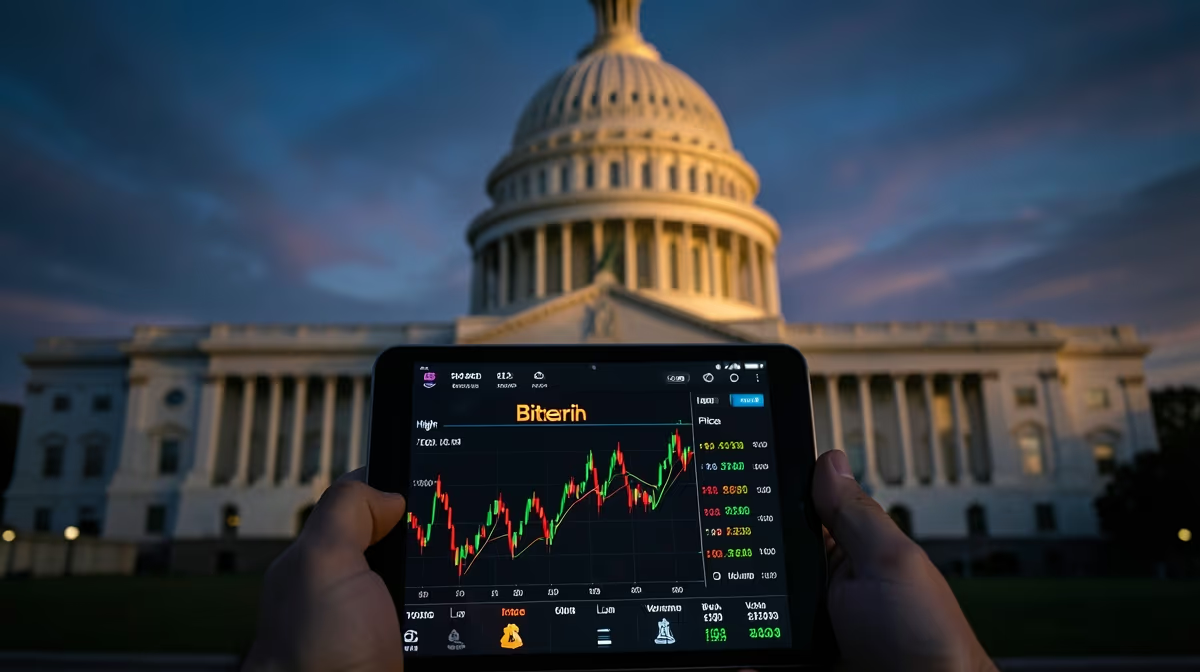
The delicate balance between political survival and regulatory control is currently reshaping the future of digital assets in the United States. As Congress prepares for a defining legislative showdown, a surprising concession has completely shifted the power dynamics on Capitol Hill. President Trump has officially agreed to new Crypto Clarity Act ethics requirements, marking a major turning point for digital asset regulation in the United States. This strategic pivot comes as the GOP actively seeks Democratic votes to pass the major regulatory framework through a tightly divided Congress. The imminent Bitcoin Senate vote has already sent shockwaves through the financial sector, triggering immediate market corrections and bringing long-term federal policy to the forefront. This critical realignment of White House crypto policy and legislative bargaining represents a watershed moment for blockchain policy and global financial markets.
The strategic integration of ethics requirements into the Clarity Act represents a major bipartisan compromise, testing whether regulatory certainty will stabilize digital assets or if stricter federal oversight will trigger broader institutional liquidity pullbacks.
The Legislative High-Stakes of the Clarity Act
In a notable shift, Donald Trump agreed to the inclusion of specific ethics requirements within the crypto Clarity Act. This decision is aimed directly at securing the essential Democratic votes required to push the legislation through the Senate. The move underscores the high-stakes legislative bargaining currently taking place, where the GOP is attempting to marshal a sufficient majority ahead of the decisive Senate vote. Despite the political friction, administration officials have maintained a highly optimistic public posture. A White House crypto adviser recently expressed that they feel "very good" about the legislative path forward ahead of the scheduled Tuesday vote, signaling internal confidence that these bipartisan concessions will pave the way for a successful legislative outcome.
A Timeline of Regulatory and Market Shifts
| Date | Legislative and Market Events |
|---|---|
| September 14, 2026 | Trump agrees to ethics requirements in the Clarity Act to court Democratic votes; White House crypto advisers express confidence ahead of the vote. |
| September 15, 2026 | Bitcoin slides from near $80,000 and crypto stocks drop sharply as the Senate prepares for the decisive Clarity Act vote alongside impending Federal Reserve decisions. |
| Present | Markets evaluate the long-term economic fallout and compliance hurdles introduced by the impending legislative framework. |
Market Impact: Bitcoin Correction and Institutional Liquidity
Bitcoin slides from nearly $80,000 as Senate votes on Clarity Act
This market movement has been compounded by simultaneous macroeconomic developments, specifically an upcoming Federal Reserve policy decision. The dual pressure of impending federal regulation and monetary policy signals has triggered widespread selling. Beyond the headline price drops, institutional activity reveals deeper anxieties. High-profile institutional figures, including Cathie Wood, have been observed dumping crypto stocks ahead of the vote. This sell-off may reflect an underlying anxiety over how stricter federal ethics and compliance mandates will affect institutional liquidity. Rather than viewing the legislative compromise as a purely positive step toward regulatory clarity, some institutional market participants appear to be bracing for the compliance hurdles and operational restrictions that the new ethics requirements might introduce.
Why This Matters: Bipartisan Realities and Dodd-Frank Parallels
For crypto investors, policymakers, and industry operators, this legislation represents a fundamental shift in how the United States governs digital assets. When high-profile regulatory bills move through Congress, they directly influence investor confidence and market stability. If passed, the Clarity Act will establish a standardized federal regulatory posture, removing the ad-hoc enforcement model that has characterized the digital asset space for years. However, the requirement to integrate strict ethics provisions highlights that regulatory certainty comes at the cost of increased federal oversight, a compromise that continues to polarize the financial community.
Geopolitical and Macroeconomic Horizons
Simultaneously, the impending Federal Reserve policy decisions are acting as an economic multiplier for current market volatility. The digital asset market remains highly sensitive to macroeconomic signals, particularly interest rate decisions and liquidity projections from the central bank. The convergence of a major legislative vote on the digital asset act and the Federal Reserve’s monetary policy announcement has created a highly volatile trading environment, leaving investors to navigate a complex landscape of political, regulatory, and macroeconomic risks.
Future Outlook: Best-Case and Worst-Case Scenarios
Over the next 72 hours, the focus will shift to how the market digests the final legislative outcome. Market participants will evaluate the long-term impact of the newly agreed ethics requirements, potential regulatory shifts, and broader macroeconomic factors.
The Best-Case Scenario
The Worst-Case Scenario
Ultimately, financial experts predict that market volatility will remain elevated in the immediate aftermath of the Senate vote. Whether the Clarity Act passes or fails, the final terms of the legislation—and the Federal Reserve's monetary signals—will dictate the trajectory of digital assets for the foreseeable future.
Frequently Asked Questions
What happens next as the Senate considers the crypto Clarity Act?
The Senate is moving forward with debates and scheduled votes on the Clarity Act following the recent inclusion of ethics requirements. Market participants will continue to track the legislative outcome and subsequent regulatory implications for the digital asset industry.
Conclusion
The political compromise surrounding the Crypto Clarity Act has brought federal digital asset regulation to a historic juncture. By agreeing to strict ethics requirements, Donald Trump and GOP lawmakers have actively sought the Democratic votes necessary to pass this sweeping framework through the Senate. While White House advisers maintain strong confidence ahead of the vote, the immediate market reaction has been marked by volatility, with Bitcoin sliding from near $80,000 and institutional investors adjusting their portfolios. As the Senate vote and the Federal Reserve's economic decisions unfold, the coming days will determine whether this bipartisan legislative effort succeeds in bringing regulatory stability to the digital asset market or leaves it facing further political uncertainty.
Sources
- Trump agrees to ethics requirements in crypto Clarity Act as GOP seeks Democratic votes — CNBC
- Live updates: Bitcoin slides from nearly $80,000 as Senate votes on Clarity Act — CoinDesk
- Has the Bitcoin Rally Fizzled Out? — WSJ
- Bitcoin Drops Ahead of Clarity Act Vote. Why Cathie Wood’s Dumping Crypto Stocks. — Barron's
- Crypto Stocks Fall as Bitcoin Drops Ahead of Clarity Act Vote and Fed Decision — finance.yahoo.com
- White House crypto adviser feels 'very good' ahead of Senate Clarity Act vote on Tuesday — The Block


.webp)

.webp)