
Warrantless immigration arrests restricted in Southern California
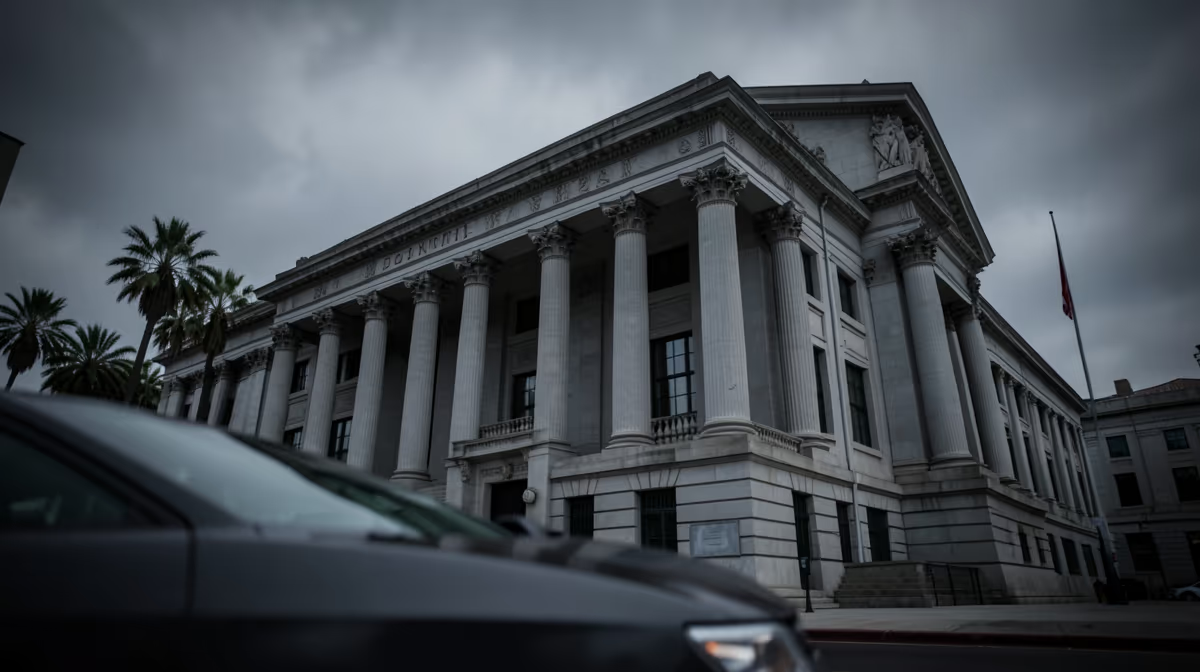
The boundary where federal executive authority intersects with constitutional protections has encountered a decisive judicial line in the American West. How far immigration enforcement officers can extend their field authority without prior judicial authorization is no longer a matter of unexamined administrative discretion in one of the nation's most populous federal jurisdictions.
A federal judge has issued a ruling restricting warrantless immigration arrests across Southern California, setting strict constitutional parameters on how federal agents detain individuals suspected of legal violations. The court's order alters day-to-day operations for federal personnel, addressing long-standing civil liberties concerns and reshaping the legal framework governing field detentions throughout the region.
A federal judge has restricted immigration officers from conducting warrantless arrests across Southern California, establishing strict judicial limits on federal enforcement authority.
Constitutional Boundaries and the Judicial Order
The legal development places major restrictions on how immigration enforcement agencies conduct field operations across Southern California. Under the federal judge's order, agents are largely blocked from making arrests without obtaining proper judicial warrants, tackling practices that civil rights organizations have repeatedly challenged as unlawful.
The case emerged from persistent legal challenges against existing enforcement protocols. Legal advocacy groups, led by the ACLU of Southern California, brought critical attention to the federal court's decision, emphasizing that the injunction halts enforcement practices that bypass established constitutional safeguards. Major news outlets—including the Los Angeles Times, ABC News, The Hill, Law Commentary, and Fox News—have verified the issuing of the court order and its sweeping geographic scope across Southern California.
| Timeline Stage | Operational and Legal Progression |
|---|---|
| Initial Challenge | Civil rights and legal advocacy groups challenge existing ICE operational protocols in court |
| Judicial Review | Federal court evaluates the constitutionality of warrantless immigration arrest practices in Southern California |
| Binding Injunction | Federal judge issues a ruling placing strict restrictions on warrantless immigration arrests |
The court decision centers on constitutional protections against unlawful searches and seizures, reinforcing the legal necessity of administrative and judicial oversight before federal agents execute detentions. By limiting warrantless enforcement, the court mandates that federal authorities meet heightened evidentiary and procedural thresholds before taking individuals into custody.
Operational Impacts on Field Enforcement Practices
The judge's order directly alters how federal agencies, including Immigration and Customs Enforcement (ICE), execute field operations throughout Southern California communities. Previously, administrative protocols permitted officers greater latitude when encountering individuals suspected of civil immigration violations in public or workplace settings. Under the new judicial restrictions, enforcement personnel must adapt their operational procedures to comply with warrant requirements.
By requiring proper warrants in field operations, the court aims to curb practices that bypass standard legal safeguards and due process rights.
This operational shift directly affects federal immigration enforcement personnel, who must now re-evaluate field encounter guidelines and administrative workflows. While civil rights advocates view the decision as a essential safeguard for Fourth Amendment rights, federal enforcement officials and representatives from the Department of Homeland Security may issue statements detailing the practical and administrative hurdles created by the ruling.
- Officers must adhere to stricter judicial standards before initiating detentions without prior warrants.
- Field agents must adjust daily enforcement protocols across all Southern California jurisdictions.
- Federal agencies must establish enhanced administrative reviews to satisfy constitutional warrant requirements.
Political, Economic, and Historical Dimensions
At its core, the ruling stems from persistent legal disputes regarding the scope of federal enforcement authority and concerns over administrative overreach within domestic jurisdictions. The decision illustrates an intense political clash between federal judicial oversight and executive branch immigration enforcement policies, serving as a primary flashpoint in ongoing debates over state and federal jurisdictional boundaries.
From an economic perspective, restrictions on rapid workforce removals and localized detentions carry measurable consequences for regional labor markets. The ruling impacts operational compliance costs for local businesses that navigate immigration-related labor checks, while simultaneously altering municipal resource allocations for local legal support networks and social service infrastructure.
On an international level, domestic judicial constraints on federal immigration enforcement signal to international partners the rigorous internal checks and balances inherent in U.S. governance. Legally, the decision mirrors landmark late 20th-century civil liberties rulings that placed constitutional guardrails on domestic law enforcement and investigative detentions, reaffirming that administrative convenience cannot override constitutional due process.
Regional Effects Across Southern California
The immediate impact of the judge's order touches multiple sectors across Southern California, affecting immigrants residing in the region, local communities, and the legal networks that serve them. By curtailing warrantless detentions, the ruling creates a more predictable legal environment for residents while placing an operational burden on local law enforcement agencies and community legal aid organizations tasked with monitoring compliance.
Key entities navigating this transition include:
- The Federal Judge issuing the binding regional restriction
- Federal Immigration Enforcement Authorities, including ICE agents operating in the field
- The ACLU of Southern California and regional legal advocacy organizations
- Local municipalities and legal aid support networks evaluating community impacts
By restricting warrantless actions, the court forces federal authorities to balance federal statutory enforcement mandates with individual constitutional protections, ensuring that enforcement operations within Southern California remain accountable to federal judicial oversight.
Projections and Potential Legal Pathways
Over the next 24 hours, legal analysts and immigration advocacy groups are expected to complete comprehensive reviews of the ruling's full text, while immigration enforcement agencies evaluate their internal operational procedures across Southern California. Within the next 72 hours, further legal responses or formal appeals from government attorneys may emerge as the executive branch digests the operational restrictions imposed by the court.
Legal experts anticipate heightened legal scrutiny and necessary administrative adjustments for all regional enforcement practices. The ultimate impact of the court's decision will likely depend on two distinct operational pathways:
- Best-Case Scenario: Clear compliance with judicial restrictions leads to strengthened civil rights protections, enhanced transparency, and a structured, legally sound framework for regional immigration enforcement.
- Worst-Case Scenario: Operational friction and unresolved legal disputes escalate between enforcement agencies and civil rights organizations over the daily execution and enforcement of the judicial restrictions.
As legal teams digest the order, the ruling stands as a major legal precedent governing the balance between immigration enforcement power and constitutional due process across Southern California.
Frequently Asked Questions
What did the federal judge decide regarding immigration arrests in Southern California?
A federal judge issued a ruling restricting immigration officers from making warrantless arrests across Southern California. This legal decision places significant limitations on how federal agents can detain individuals without proper judicial warrants.
Why does this federal court ruling matter?
The ruling is a major development in immigration enforcement, setting strict boundaries on federal agency practices within the region. It addresses long-standing concerns regarding civil liberties and the lawful authority of officers during field operations.
Who is affected by the restriction on warrantless arrests?
The decision directly impacts immigration enforcement agencies operating in Southern California, such as ICE, as well as immigrant communities residing in the area. Agents must now adhere to stricter judicial standards when considering arrests without warrants.
What happens next following the judge's order?
Immigration enforcement agencies in Southern California will need to adjust their operational procedures to comply with the new judicial restrictions. Legal experts anticipate potential appeals or further clarifications from the courts regarding the exact enforcement protocols.
What is the background behind the crackdown on warrantless immigration arrests?
Civil rights organizations, including the ACLU of Southern California, have actively challenged immigration practices that bypass traditional warrant requirements. This ruling follows ongoing legal scrutiny over the constitutional rights of individuals during enforcement actions.
Which specific organization brought attention to the Southern California ruling?
Organizations like the ACLU of Southern California highlighted the federal court's decision, emphasizing its importance in blocking unlawful enforcement practices. Major news outlets, including the Los Angeles Times and ABC News, also extensively covered the legal restrictions.
Conclusion
The federal court's decision restricting warrantless immigration arrests in Southern California establishes a clear judicial boundary on executive branch enforcement in the region. By requiring federal officers to adhere to stricter warrant requirements, the ruling directly impacts field operations conducted by ICE and alters the legal environment for local communities. Realistic next steps involve internal operational evaluations by federal enforcement agencies, heightened monitoring by legal advocacy groups such as the ACLU of Southern California, and potential legal appeals by government attorneys as the region adapts to the restricted enforcement framework.
Sources
- Federal judge restricts warrantless immigration arrests in Southern California — ABC News - Breaking News, Latest News and Videos
- Breaking: Federal Court Blocks Unlawful Warrantless Immigration Arrests in Southern California — ACLU of Southern California
- Federal judge limits immigration arrests without a warrant in Southern California — Los Angeles Times
- Judge restricts immigration officers from making warrantless arrests in Southern California — The Hill
- Federal Judge Blocks Warrantless Immigration Arrests Across Southern California — Law Commentary
- Federal judge ties ICE agents' hands with ruling on warrantless Southern California arrests — Fox News


.webp)


