
El Nino and Polar Vortex Threaten Severe Winter Snow Across the UK
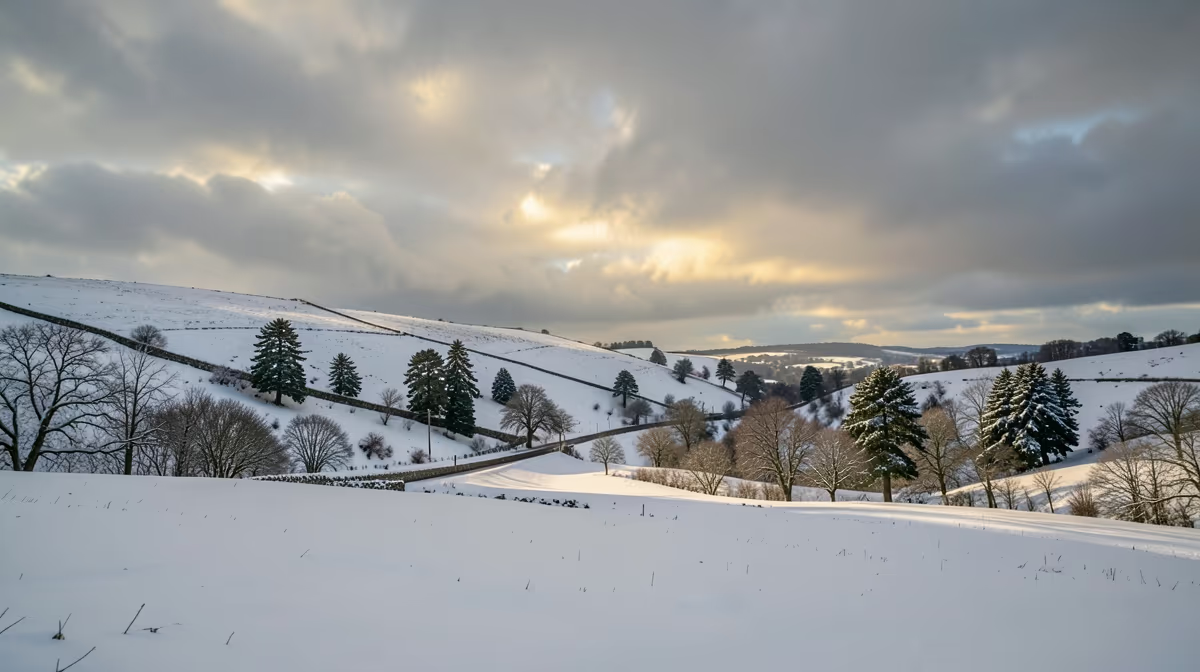
The stability of the Arctic’s most potent weather engine is currently under intense scientific scrutiny as global temperature anomalies converge. For millions across Northern Europe, the alignment of high-altitude wind patterns and Pacific Ocean heating could dictate the difference between a mild season and a catastrophic freeze. As meteorologists monitor shifting global climate patterns, experts are analyzing how El Nino and polar vortex winter snow UK conditions might unfold in the coming months.
The interaction between a weakening stratospheric polar vortex and an active El Niño phase is creating a high-probability window for severe Arctic air outbreaks across the UK and Europe this winter.
The Mechanics of Atmospheric Instability
The upcoming winter season is being shaped by two dominant climate drivers: El Niño and the polar vortex. Understanding the relationship between these phenomena is essential for interpreting current meteorological projections. The polar vortex is a large area of low pressure and cold air surrounding the Earth’s poles. Under normal conditions, a strong vortex acts as a barrier, keeping freezing Arctic air contained at high latitudes. However, when this system is disrupted, that cold air can spill southward, reaching the mid-latitudes of Europe and the British Isles.
Meteorologists explain that an active El Niño—the warming of surface waters in the eastern Pacific—can influence global atmospheric pressure patterns. This shift often ripples through the atmosphere, potentially triggering a sudden stratospheric warming event. Such events weaken the polar vortex, destabilizing the jet stream and increasing the likelihood of winter snow and prolonged cold snaps. Recent analysis indicates that these atmospheric shifts are already being monitored for their potential to trigger severe weather and significant economic impacts.
The Met Office Verdict and Regional Projections
Official meteorological agencies, including the Met Office, have begun releasing seasonal verdicts to address growing public concern. These projections are critical for regional authorities and infrastructure managers who must prepare for the possibility of heavy snowfall and temperatures well below seasonal averages. While long-range forecasts are subject to change, the current data highlights a heightened risk of Arctic air intrusion as the season progresses.
UK and Ireland Outlook
The focus on British and Irish weather patterns has intensified following reports from major outlets like the BBC and The Irish Times. These reports evaluate whether the combined influence of global climate drivers will lead to the kind of snowy conditions that paralyze transportation and strain local resources. In Ireland, forecasters are specifically tracking how these large-scale movements will interact with Atlantic moisture to produce significant precipitation.
Continental Europe Disruption
Beyond the UK, the implications for mainland Europe are equally significant. Scientific projections suggest that if El Niño successfully weakens the polar vortex, the entire continent could face widespread weather disruption. This could manifest as a series of winter storms or a "blocked" weather pattern where freezing air becomes trapped over Europe for weeks at a time. The potential for a weakened vortex to alter standard wind patterns is a primary concern for climatologists monitoring European stability.
Economic Fallout and Energy Security
The intersection of extreme weather and economic vulnerability is a major focus for analysts this year. A disrupted polar vortex does more than just change the scenery; it places immediate and severe pressure on household budgets and national energy grids. The prospect of a harsh winter has already led to warnings about spikes in energy bills, as the demand for domestic heating rises in tandem with falling temperatures.
| Scenario | Atmospheric Condition | Expected Outcome |
|---|---|---|
| Best-case | Stable polar vortex | Milder winter, manageable energy demand, stable utility costs |
| Worst-case | Weakened polar vortex | Severe cold waves, heavy snowfall, strained energy infrastructure |
Energy market regulators and household advocates are closely watching these developments. If a worst-case scenario unfolds, the strain on power grids could be substantial. Beyond heating, severe cold snaps threaten to disrupt retail supply chains and transportation networks, adding further inflationary pressure to an already sensitive economic landscape. Property owners are being advised to consider early preparations to mitigate the financial impact of prolonged freeze events.
Historical Parallels and the Prep Debate
Current atmospheric conditions have prompted comparisons to the winter of 2010-2011. During that period, a disrupted polar vortex was the primary driver behind severe cold waves and heavy snowfall that gripped the UK and Europe. That season serves as a historical parallel for the potential scale of transport paralysis and economic strain that can occur when Arctic air is unleashed southward.
Projections indicate that the confluence of El Niño and a destabilized polar vortex mirrors patterns seen during previous periods of extreme European winter volatility.
Environmental writers and meteorologists are also addressing the question of whether current warnings constitute "hype." While some public skepticism exists regarding long-range forecasts, experts emphasize that the science behind these climate drivers is grounded in decades of data. While these phenomena shift the probabilities toward more severe outcomes, the exact local impact—such as specific snow accumulation in a single city—remains a developing variable that requires constant monitoring.
Political and Geopolitical Dimensions
The threat of a severe winter is not merely a meteorological concern; it is a political one. Governments are facing intense scrutiny regarding their preparedness for extreme weather. Opposition parties and constituents are demanding transparency on whether energy and transport networks possess the necessary resilience to avoid the total shutdowns seen in previous decades.
- Autumn 2026: Meteorological agencies issue early outlooks analyzing El Niño and polar vortex dynamics.
- Late 2026: Public debate intensifies over winter energy costs and infrastructure readiness.
- Winter 2026/2027: Actual weather patterns test the resilience of European energy grids and transport networks.
On a geopolitical level, the situation places a spotlight on continental energy security. Harsh winters emphasize the importance of gas storage levels and cross-border grid interconnections. Domestic energy vulnerability during these periods can force a reassessment of global supply dynamics and the reliability of international energy partners.
Hidden Impacts and Long-Term Adaptation
While the immediate focus remains on heating bills and snow shovels, a prolonged cold spell could have quieter, more structural effects on the economy. Analysts suggest that a severe winter could accelerate shifts in corporate energy-efficiency mandates. If businesses face significantly higher costs to maintain operations during a freeze, it may force a rapid reassessment of long-term climate adaptation budgets at both the corporate and municipal levels.
Furthermore, these extreme weather events often serve as a catalyst for local governments to rethink their infrastructure resilience. Prolonged cold can expose weaknesses in everything from water pipe insulation to the durability of road surfaces, necessitating a shift in how long-term maintenance is funded and prioritized.
Frequently Asked Questions
Will El Niño and the polar vortex bring snow to the UK this winter?
Meteorological discussions and reports have evaluated whether combined weather patterns will lead to snowy conditions across the UK. Forecasters monitor how these large-scale atmospheric phenomena interact to influence cold spells and winter precipitation.
How could El Niño impact the polar vortex in Europe?
According to reports, El Niño has the potential to influence or weaken the polar vortex during the winter months. Such disruptions can alter standard wind and pressure patterns, increasing the likelihood of sudden stratospheric warmings that affect European weather.
What does a weakened polar vortex mean for UK and European weather?
A destabilized or weakened polar vortex often allows frigid arctic air to spill southward into mid-latitudes, impacting regions across the UK and mainland Europe. This shift frequently results in significantly colder temperatures and heightened chances of winter storms.
Who is most affected by severe winter weather linked to the polar vortex?
Households across the UK and Europe face direct impacts from extreme cold, particularly regarding rising domestic energy consumption and heating bills. Property owners and energy consumers must prepare for potential spikes in utility costs during prolonged freeze events.
What is the Met Office verdict on snow and the polar vortex for Winter 2026?
The Met Office regularly issues seasonal outlooks analyzing the state of the polar vortex and its implications for winter snow in the UK. While long-range forecasts highlight potential risks of cold snaps, specific snow accumulations remain difficult to predict far in advance.
Are current winter weather warnings about El Niño considered hype?
Environmental writers and meteorologists have addressed public skepticism by explaining the science behind climate drivers like El Niño. While these phenomena reliably shift climate probabilities, experts emphasize that exact local impacts vary and should be monitored through official updates.
Conclusion
The approaching winter of 2026 stands at a meteorological crossroads, with the potential for El Niño to trigger a significant disruption of the polar vortex. Verified reports from the Met Office and other global agencies confirm that the risk of severe cold snaps and heavy snowfall is a primary concern for the UK, Ireland, and mainland Europe. While the exact severity of the season will depend on the stability of Arctic air currents in the coming months, the economic and political stakes are already clear. Preparedness—from household budgeting for energy bills to national grid resilience—will be the defining factor in how the region weathers these atmospheric shifts. As the timeline progresses from autumn outlooks to winter reality, the resilience of European infrastructure faces its most significant test in years.
Sources
- Will El Niño and the polar vortex bring snow to the UK this winter? — BBC
- Will El Niño and the polar vortex bring snow to Ireland this winter? — The Irish Times
- El Niño could weaken the polar vortex. What does that mean for Europe? — Euronews.com
- Will the polar vortex spike your energy bills? How to protect your wallet this winter — London Evening Standard
- Met Office issues polar vortex verdict for Winter 2026 - including snow — Daily Express
- Q&A: ‘Are the warnings all hype?’ – our environment writers answered your El Niño questions — The Guardian


.webp)
