
France protests and unrest reach a critical tipping point nationwide
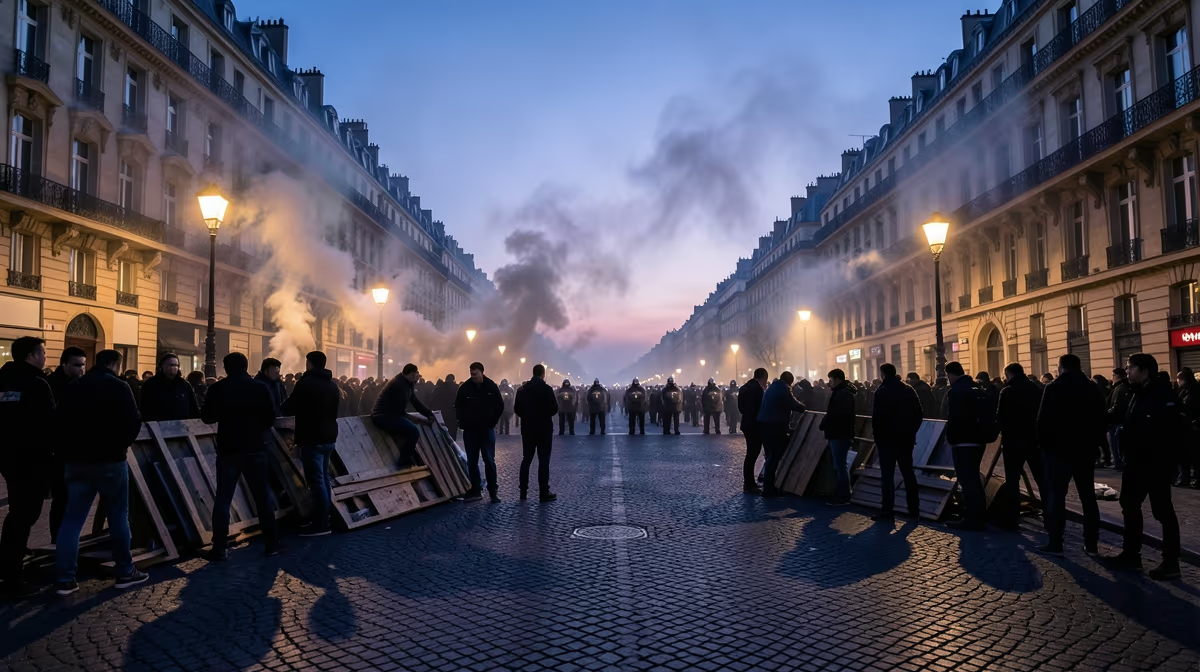
Plumes of smoke rising over French boulevards have laid bare a volatile convergence of student mobilization and deep-seated economic resentment. Across major urban centers, France protests and unrest have escalated to a critical tipping point as broad segments of the public abandon routine life to challenge the state's handling of the cost of living and domestic order. What began as campus-focused dissent against financial precarity has transformed into a sweeping national crisis, marked by direct confrontations, property destruction, and profound questions regarding the limits of state force.
The convergence of four weeks of student-led mobilization with widespread anger over surging living costs has pushed French urban centers into nationwide unrest and heightened scrutiny over police weapons.
As crowds mobilized throughout the country, demonstrations quickly expanded beyond peaceful assemblies into intense friction between citizens and security personnel. Nationwide reports detail widespread scuffles, fires, property destruction, and episodes of looting. The participation of broader labor segments and ordinary residents alongside organized youth has transformed localized grievances into a comprehensive test of national social cohesion and public governance.
The Spark and the Escalation
The current wave of disruption represents the climax of a gradual buildup. Student-led protests had been underway for four consecutive weeks, primarily centering on the economic precarity faced by young people and the surging cost of day-to-day survival. However, those focused academic demonstrations rapidly merged with a wider collective fury over rising living costs, drawing everyday citizens into the thoroughfares.
As these separate streams of discontent coalesced, rallies transformed into active street confrontations. Major demonstrations spread across regional hubs and the capital, resulting in significant physical damage. Blazes were ignited in public spaces, commercial properties faced looting, and widespread scuffles broke out between assembly participants and law enforcement units dispatched to restore order.
The presence of younger demonstrators across the front lines of the movement dramatically shifted the operational landscape. As teenagers joined ranks with veteran demonstrators and union members, the volatility of street actions mounted, producing chaotic scenes that overwhelmed local infrastructure and commercial districts.
Scrutiny Mounts Over Police Tactics and Weapons
The intensity of recent street clashes has brought intense focus onto law enforcement methods and the specific crowd control tools deployed during operations. Public and regional attention sharpened dramatically after multiple teenagers sustained injuries during demonstrations, raising urgent questions over the deployment of controversial police weapons against assemblies containing high proportions of youth.
The injury of teenagers following four weeks of sustained student demonstrations has ignited severe public scrutiny over police weaponry and operational crowd control.
Authorities and law enforcement agencies face growing pressure to release formal statements clarifying the parameters governing the use of force. While security units were assigned to halt vandalism, looting, and fires, the resulting physical toll on young demonstrators has led civil groups to question whether standard crowd control protocols remain appropriate when handling youth-led gatherings.
- Nationwide demonstrations have resulted in direct clashes between police forces and civilians.
- Public infrastructure and commercial areas have suffered damage from blazes and looting.
- Four weeks of student mobilization served as the foundation for the wider economic protests.
- Multiple injuries among teenage demonstrators have shifted public focus onto security weapons.
Economic Strain and the Cost of Living Crisis
At the core of the nationwide upheaval lies systemic economic exhaustion. Persistent inflation and the soaring cost of living have severely strained household finances throughout France, eroding basic purchasing power and leaving young demographics particularly vulnerable. These economic pressures acted as the primary catalyst that united previously separate demographics into a singular, coordinated movement.
For students, everyday subsistence costs had already reached untenable thresholds, generating the four-week wave of demonstrations that preceded the national escalation. When broader public segments recognized identical economic pressures eroding their own standards of living, the student mobilization provided an immediate vehicle for widespread civil resistance.
The resulting disruptions have directly affected general residents navigating unrest in residential zones, local business owners whose storefronts and inventories sustained damage, and municipal authorities attempting to manage damaged public spaces. The economic demands driving the rallies pose a direct challenge to national authorities, who must navigate fiscal credibility while addressing rampant domestic precarity.
Historical Context and Political Dynamics
Public demonstrations and street mobilizations have long served as primary vehicles for voicing political and economic grievances in France. The current convergence of student demands and broader labor frustration draws direct historical parallels to the pivotal events of 1968, when campus-based grievances similarly broadened into a national standoff over state authority and economic security.
| Phase | Core Development | Primary Dynamics |
|---|---|---|
| Initial Mobilization | Weeks 1 to 4 | Student demonstrations against economic precarity and living costs |
| National Convergence | Current Period | General public joins youth movement; widespread cost of living unrest |
| Clashes and Escalation | Ongoing | Scuffles, fires, looting, and injuries leading to scrutiny of police weapons |
From a political standpoint, the French government finds itself caught in an exacting balancing act. State leadership must maintain public safety, protect commercial corridors, and enforce legal boundaries against rioting, all while facing intense scrutiny over state security measures and social equity. Beyond domestic borders, prolonged civil instability in a key European Union member state invites international evaluation regarding European social stability, structural cohesion, and the capacity of democratic institutions to absorb sustained internal dissent.
Analysts observe that the protracted duration of these youth-led demonstrations points toward a deeper structural shift in how domestic policies, economic equity, and law enforcement accountability are contested within modern Western democracies.
Outlook: Potential Scenarios for the Days Ahead
The immediate future of the movement hinges on how national authorities respond to both economic grievances and the fallout from controversial crowd control measures. In the next 24 hours, ongoing demonstrations, student-led assemblies, and isolated clashes with police forces are expected to persist across primary French cities as public momentum remains strong.
Over the next 72 hours, overall social tensions are anticipated to remain elevated while authorities evaluate strategies to manage street friction, address public alarm regarding injured teens, and formulate responses to the four-week-long wave of youth mobilization.
Security analysts emphasize that sustained friction between demonstrators and police forces will likely continue unless formal channels address the core economic demands and the deployment of tactical weapons.
In a best-case trajectory, constructive dialogue will open between student leaders, demonstrator representatives, and government officials, resulting in de-escalation, peaceful assemblies, and an immediate end to street fires and property damage. Conversely, a worst-case trajectory could see intensified street clashes, further civilian and police injuries, and expanding property damage as the unresolved deployment of tactical police weapons continually re-energizes public outrage across the country.
Frequently Asked Questions
What caused the recent protests and unrest across France?
The nationwide demonstrations erupted primarily in response to rising living costs and in solidarity with ongoing student protests. Demonstrators have taken to the streets to voice their economic frustrations and join forces with student groups.
Why are these French protests causing significant concern?
The unrest has raised serious questions regarding police tactics and the use of weapons during crowd control. Incidents involving injured teenagers after weeks of student demonstrations have intensified public scrutiny over law enforcement methods.
Who is primarily affected by the unrest in France?
Students, local businesses, and everyday citizens participating in or living near the demonstrations are directly impacted. The widespread scuffles, fires, and looting have disrupted local communities and drawn national attention.
What is the background behind the student demonstrations in France?
The current unrest follows weeks of student-led mobilization that gradually escalated and gained broader support from the general public. These student grievances eventually merged with wider economic discontent across the country.
What specific incidents have been reported during the demonstrations?
Reports from various cities highlight widespread scuffles, fires, blazes, and instances of looting alongside police clashes. These chaotic scenes unfolded as protesters rallied across multiple regions to support students and decry economic conditions.
What happens next as the unrest in France continues to spread?
Authorities face mounting pressure to address both the underlying economic grievances and the controversies surrounding police weapon use. Public officials will likely need to engage with student leaders and protesters to de-escalate the widespread tensions.
Conclusion
The nationwide unrest spreading across France represents a critical juncture where persistent economic precarity has fused with youth-driven civil mobilization. Verified accounts confirm extensive street scuffles, fires, looting, and significant clashes between security units and demonstrators in multiple metropolitan hubs, compounded by serious injuries to teenage protesters that have placed state crowd-control tactics under intense scrutiny. As the demonstrations persist following four weeks of initial student actions, public officials face the urgent necessity of addressing systemic cost-of-living concerns and reviewing police weapon protocols to prevent prolonged disruption and achieve civic de-escalation.
Sources
- Police clash with protesters during huge demonstrations across France — CNN
- After four weeks of student protests, teens injured at French protests raise questions over police weapons — CNN
- Scuffles and fires break out as protesters rally across France, joining students — NPR
- Looting, blazes and clashes in France amid nationwide protests — AFP.com
- Protests and Unrest Spread in France: What to Know — The New York Times
- Protests erupt across France against rising living costs and in support of students — CBS News


.webp)