
Limoges Town Hall Fire Marks a Shocking Escalation in France
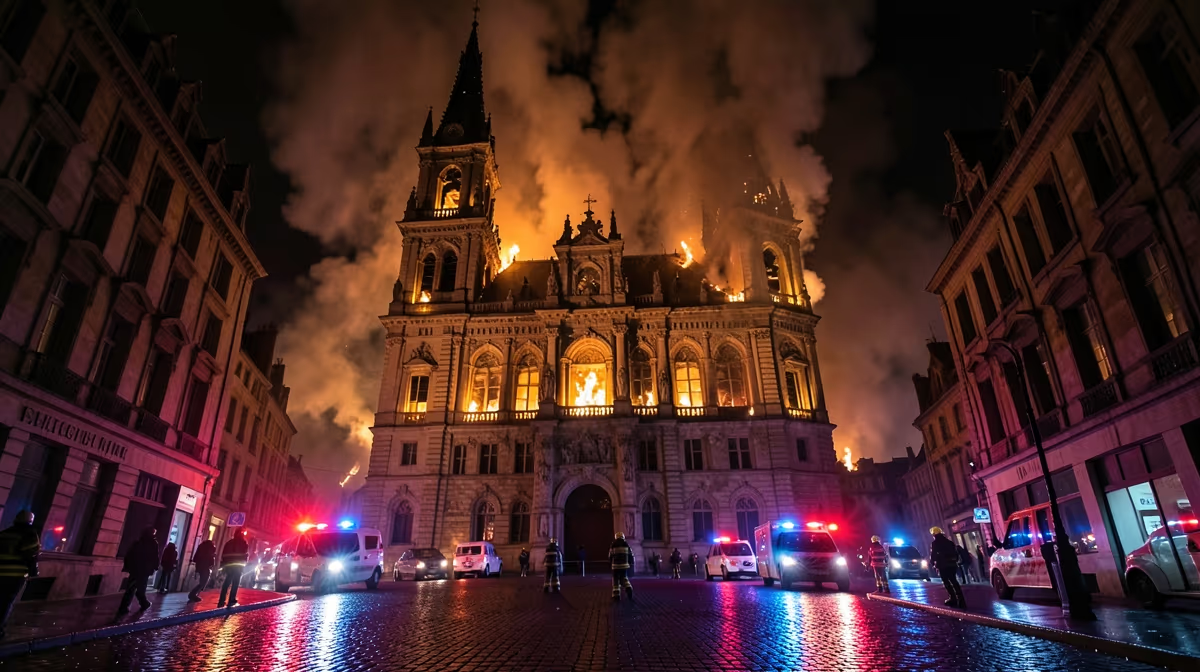
Centuries of architectural heritage can vanish in an evening when civil unrest turns its fury toward municipal institutions. In central France, a landmark that endured wars and societal upheavals for 143 years has been reduced to smoldering ruins. The catastrophic Limoges town hall fire erupted as nationwide France protests mobilized more than half a million demonstrators across the country, fundamentally altering the trajectory of the ongoing civil demonstrations.
The 143-year-old municipal landmark in Limoges was largely lost after being set ablaze during widespread nationwide protests involving more than half a million citizens.
The Night Limoges Lost Its 1883 Landmark
The municipal headquarters in Limoges, originally erected in 1883, stood as a centerpiece of local governance and regional identity. During intense demonstrations that swept through French urban centers, the historic city hall was targeted and set on fire. The blaze quickly spread throughout the interior, culminating in significant structural collapse as flames engulfed the roof and internal architecture.
Eyewitness footage documented the century-old municipal building being consumed by severe flames while emergency responders confronted extreme operational hurdles. The municipal landmark was not the only target of destruction during the unrest; demonstrators across multiple locations also torched vehicles and other public properties, severely straining regional emergency services.
You can rebuild the walls, but you can't bring back the original building that's been standing for over a century.
Heritage preservation advocates and municipal officials have expressed profound heartbreak over the architectural devastation. While physical structures can theoretically be reconstructed over time, the authentic historical fabric that defined the municipal center for nearly a century and a half has been permanently erased.
Scale of the Unrest and Public Infrastructure Damage
The destruction in Limoges unfolded against a backdrop of sweeping public mobilization. Official estimates indicated that more than half a million people took to the streets nationwide, driven by intense grievances linked to cost of living protests in France and broader socio-economic dissatisfaction.
- More than 500,000 citizens mobilized across French urban centers to join public demonstrations.
- The 1883-built Limoges town hall suffered a major structural collapse and was largely lost to the fire.
- Multiple vehicles and segments of civic infrastructure were set ablaze across different municipalities.
- Law enforcement and emergency response networks faced severe operational challenges managing widespread disorder.
| Event Factor | Details and Verified Observations |
|---|---|
| Landmark Lost | Town Hall of Limoges (Hôtel de Ville) |
| Construction Era | 1883 (143 years of standing heritage) |
| Core Catalyst | Fire set amid nationwide cost of living riots and civil unrest |
| National Mobilization | Over half a million demonstrators across France |
| Infrastructure Impact | Town hall collapse, multiple vehicle burnings, disrupted public services |
Root Causes and the Alienation of Public Institutions
The targeting of historical civic infrastructure signals a profound escalation beyond standard demonstration tactics. Widespread public discontent across France provided the momentum for massive street turnouts, during which localized agitators capitalized on crowd density to strike directly at prominent symbols of state authority.
Public buildings and municipal offices frequently represent the interface between central state governance and local populations. When socio-political polarization deepens, these institutions become vulnerable to direct attacks by alienated factions seeking to project hostility against systemic conditions. The deliberate targeting of the Limoges municipal headquarters demonstrates how grievances over daily economic pressures can manifest in destructive hostility against long-standing public institutions.
Historical Parallels and Civil Unrest in France
Large-scale demonstrations, labor actions, and civil friction form a well-documented part of modern French political history. The scenes of blazing public infrastructure and burning vehicles echo previous intense flare-ups of civil disorder, including the widespread 2005 French riots, during which municipal buildings, schools, and transit assets were repeatedly set alight.
Historically, such waves of unrest highlight how underlying domestic friction can rapidly transform peaceful labor marches into localized riots. The severe damage inflicted on the Limoges civic center illustrates that when crowds swell into the hundreds of thousands, containment strategies often struggle to insulate historic landmarks from opportunistic sabotage.
Political Pressures and the Shift in Public Discourse
The architectural loss of a major municipal landmark immediately shifts the political stakes for regional and national authorities. Rather than remaining focused strictly on the economic grievances that drew hundreds of thousands to the streets, official discourse is pressured to pivot toward public safety, order enforcement, and criminal accountability.
- The central government faces heightened demands to re-establish public order and prevent further destruction of civic infrastructure.
- Political leadership must navigate the underlying socio-economic discontent that motivated more than half a million people to mobilize.
- Regional municipal officials face the immediate challenge of re-establishing basic civic administration without their primary headquarters.
- Heritage authorities are forced to redirect resources toward emergency structural shoring and disaster assessments.
The psychological impact of seeing a 143-year-old civic symbol destroyed may also alter public sympathy for the broader movement. When protests result in the visible destruction of community heritage, broader public sentiment often shifts away from policy debates and toward calls for hardline security responses.
Economic Fallout and Local Governance Disruption
Beyond the immediate cultural catastrophe, the destruction of the Limoges town hall introduces severe logistical and financial burdens. Rebuilding or stabilizing a collapsed 19th-century public building requires substantial capital expenditure from local and national public funds, redirecting municipal budgets away from civic improvements toward basic restoration.
The loss of the municipal center disrupts everyday local administrative services for the residents of Limoges. Civic registries, local council functions, and community operations that operated from the historic site must now be reorganized across temporary locations. Furthermore, the localized riots and destruction of property create lingering disruptions for nearby commercial districts, adding municipal recovery costs to an already strained economic environment.
Geopolitical Repercussions and Internal Stability
On an international level, the collapse of historic municipal infrastructure during broad domestic unrest draws intense global scrutiny toward internal governance stability in Europe. France's recurring vulnerability to severe urban property damage during labor and cost-of-living demonstrations highlights the ongoing friction between state authorities and polarized civil segments.
The visible inability to protect historic civic institutions during major demonstrations serves as a point of concern for international observers tracking European security, civic governance, and emergency preparedness. The incident exposes the persistent operational vulnerability of European civic heritage when mass protests reach critical mass.
Predictive Assessment: The Immediate Outlook
In the coming 24 hours, emergency services and local authorities will maintain high-alert operations around the devastated Limoges site, conducting structural safety assessments to prevent secondary collapses. Regional law enforcement agencies are anticipated to maintain tight cordons around vulnerable public installations to prevent additional strikes against municipal assets as national demonstrations persist.
Over the next 72 hours, cultural heritage teams will begin cataloging the extent of irreversible architectural losses, while regional and national officials formulate policy responses to the unrest. Political analysts anticipate that the destruction of the 1883 civic landmark will significantly intensify national debates regarding crowd control methodologies, legal consequences for property destruction, and the overall management of mass demonstrations.
In a best-case trajectory, demonstrations will de-escalate without further structural destruction, allowing authorities to secure civic centers and initiate long-term restoration planning. Conversely, in a worst-case scenario, ongoing civil unrest could lead to renewed clashes with security personnel, targeting additional public buildings and cultural heritage assets across the country.
Frequently Asked Questions
What caused the fire at the Limoges town hall?
The blaze was set during widespread civil unrest and protests in France, which saw demonstrator clashes, vehicle burnings, and property destruction.
How old was the Limoges town hall?
The historic municipal building had stood since 1883, representing roughly 143 years of local history and architectural heritage.
How many people participated in the nationwide protests?
Reports indicate that more than half a million people took to the streets across France during the demonstrations.
What was the extent of the damage to the town hall?
The municipal headquarters was largely lost to the blaze, with reports and footage documenting structural collapse and severe internal destruction.
Conclusion
The destruction of the Limoges town hall marks a devastating turning point in France's recent wave of public protests. With over half a million citizens mobilizing across the country, the escalation from economic demonstration to the loss of a 143-year-old municipal landmark demonstrates the volatile nature of contemporary civil unrest. As emergency services secure the collapsed site and assess the structural fallout, regional authorities must now manage the dual challenge of restoring disrupted municipal governance and addressing the deep-seated grievances fueling civil discord across the nation.
Sources
- 🇫🇷 This is heartbreaking to watch. The town hall in Limoges, France, has stood since 1883. That's 143 years of history, and now it's going up in flames. You can rebuild the walls, but you can't bring back the original building that's been standing for over a centu — X
- Town hall in Limoges 'largely lost' to blaze set during French protests — France 24
- Video. Historic Limoges town hall engulfed in flames amid protests in France — Euronews.com
- More than half a million people took to the streets in protests in France — cars and a town hall were set on fire — Українські Національні Новини (УНН)
- France in flames: Historic city hall collapses as riots spread | Watch — Ynetnews
- Fire Rages At Town Hall In France's Limoges After Protests — Deccan Chronicle


.webp)