
Midtown subway shooting sparks urgent safety alarms across New York City
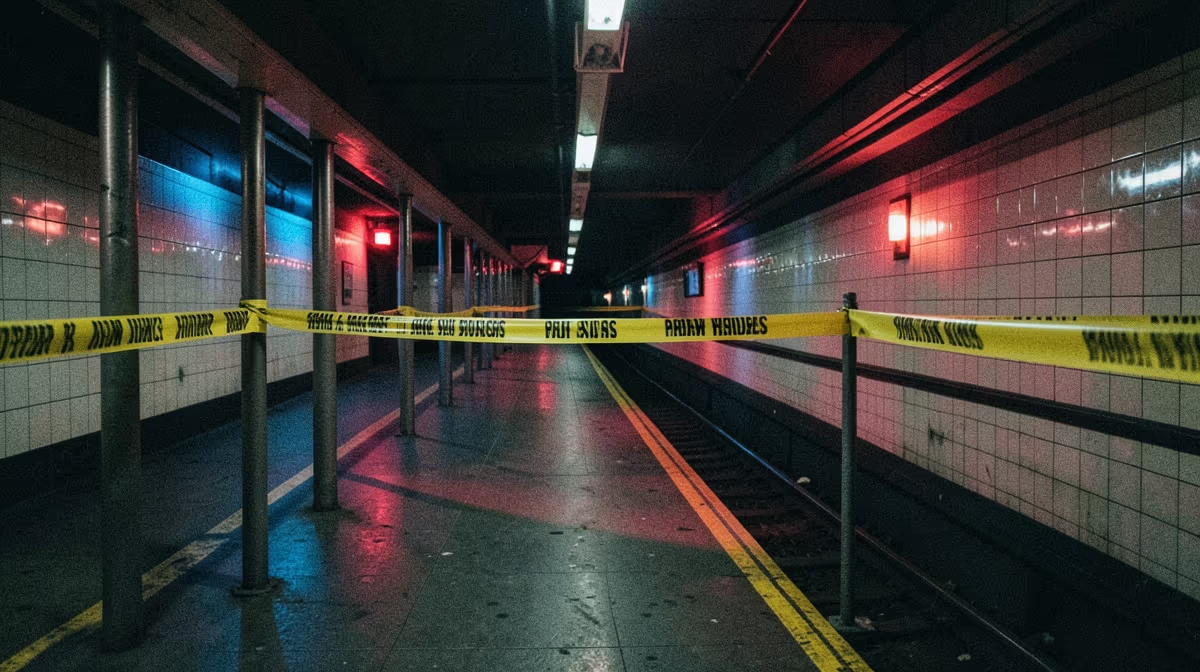
Beneath the bustling streets of New York City, a sudden underground confrontation shattered the weekend transit routine and left an active crime scene in its wake. A tragic Midtown Manhattan subway station shooting left one man dead, sparking renewed concerns over public safety and NYC transit violence across the world's most recognizable metropolitan rail network.
A fatal dispute inside a Midtown Manhattan subway station has intensified municipal scrutiny over transit security and commuter safety across New York City.
The fatal altercation unfolded underground on Saturday, October 17, 2026, when an argument escalated into gunfire, claiming the life of an adult male. Emergency services and officers from the New York City Police Department rushed to the subterranean platform, cordoning off portions of the transit facility to secure evidence, interview witnesses, and manage disrupted passenger flow. Reported in real time by major media outlets including The New York Times, CBS News, NBC News, ABC News, and the New York Post, the shooting immediately reignited debates regarding law enforcement presence and passenger welfare within the public transit system.
Details of the Fatal Midtown Altercation
The fatal incident occurred inside one of Manhattan’s key transit facilities, where thousands of commuters, regional workers, and visitors converge at all hours. According to police officials and verified reporting, the gunfire erupted directly from a personal dispute between individuals that rapidly turned lethal on the station platform.
Emergency medical personnel arrived alongside patrol units to render assistance, but the victim succumbed to his injuries sustained during the altercation. Authorities immediately secured the perimeter, restricting platform access to preserve critical ballistic and physical evidence. As forensic technicians and detectives combed the station environment, passenger movements were disrupted across sections of the terminal while investigators worked to piece together the sequence of events.
The Midtown Manhattan subway station shooting represents an acute manifestation of interpersonal conflicts turning deadly within confined public spaces. Law enforcement officials have not indicated that any other passengers sustained physical injuries during the gunfire, yet the panic caused by live rounds in an underground concourse sent shockwaves through the immediate vicinity.
A Spate of Violence Across the Transit Network
This fatal encounter in Midtown did not occur in isolation. Around the same timeframe, a separate act of violence underscored the volatile environment facing transit authorities: a 68-year-old woman was cut in the face in an unprovoked NYC subway assault.
The occurrence of severe violence in separate corners of the network within hours of each other highlights a broader spike in transit-related security incidents that police are actively working to address. While municipal leadership has consistently promoted subway revitalization and commuter re-engagement, consecutive high-profile attacks severely challenge public sentiment.
- A fatal shooting triggered by a dispute inside a Midtown Manhattan subway station on Saturday, October 17, 2026.
- Immediate response by the New York Police Department and local emergency personnel to secure the scene.
- A severe slashing incident involving a 68-year-old woman injured in another subway station within the same operational timeframe.
- Active transit disruptions and cordoned platforms as forensic teams document ballistic evidence.
The intersection of these violent events has amplified public anxiety among everyday riders who depend entirely on the rails for daily mobility.
The Broader Impact on Commuters and City Life
The New York City subway system serves as the undisputed circulatory system of the metropolis, carrying millions of daily riders across hundreds of stations. When lethal violence occurs in Midtown Manhattan—the commercial and cultural anchor of the city—the repercussions extend far beyond the immediate transit platform.
Commuter Confidence and Daily Mobility
For daily commuters, subway platforms are not optional amenities but essential thoroughfares. High-profile transit violence introduces a persistent layer of apprehension into the simple act of navigating the city. Each report of gunfire or slashing deepens rider hesitation, particularly during evening hours or within less populated corridors of large multi-level stations. Daily commuters, city residents, and transit staff navigating the Midtown complex find their routines directly altered by police cordons and heightened safety anxiety.
Economic Fallout and Tourism Perceptions
Beyond daily mobility, perceived transit security exerts a direct economic influence over the municipal ecosystem:
- Rider confidence dictates subway farebox revenue and ridership volume across off-peak and weekend transit hours.
- Tourism and commercial vitality in Midtown Manhattan rely heavily on visitors feeling entirely secure while riding underground lines.
- Municipal budget allocations face renewed friction regarding investments in law enforcement deployment versus broader social support systems.
- International and domestic business confidence remains tied to the reputation of New York City as a stable, secure global financial hub.
When safety underground is called into question, the hesitation felt by tourists and domestic consumers directly affects Midtown retailers, theaters, and hospitality venues that rely on open transit access.
Underlying Pressures: Causes and Policy Friction
The root cause of these transit crises lies in persistent urban security challenges where volatile disputes rapidly escalate into lethal violence inside critical infrastructure. Station platforms, characterized by high foot traffic, tight enclosures, and limited egress routes, create environments where unchecked frictions can quickly turn catastrophic.
Persistent urban security challenges and disputes escalating into lethal violence within critical public transit infrastructure continue to test municipal governance.
Frontline transit workers and patrolling police officers increasingly operate under compounding strain. Law enforcement personnel are frequently tasked with managing volatile urban disputes, heightened tensions, and intersecting mental health issues in subterranean environments without comprehensive structural safety nets.
This dynamic places intense electoral and political pressure on municipal administrators and state officials. Urban crime rates and public safety management within metropolitan transit networks consistently dominate municipal political discourse. City leaders face rigorous debate over whether subway safety is best preserved through heavier uniformed policing, modern infrastructure barriers, or redirected municipal resources aimed at resolving systemic street-level crises.
Historically, this tension evokes memories of the 1980s and 1990s New York City transit crime crises. During those decades, elevated platform crime fundamentally reshaped policing doctrines, altered transit funding models, and redefined public attitudes toward metropolitan life. The current wave of scrutiny brings those historical lessons back to the forefront of municipal administration.
Investigative Trajectory and Strategic Outlook
As the investigation into the Midtown shooting advances, authorities face immediate operational milestones and high-stakes law enforcement imperatives. The primary focus remains identifying, locating, and arresting the individual responsible for the fatal shooting.
- Forensic evaluation: Detectives are actively reviewing physical ballistics, crime scene markers, and high-resolution platform surveillance feeds.
- Witness engagement: Investigators continue gathering statements from riders and transit personnel who were present during the initial dispute.
- Official updates: Law enforcement leadership and city administrators are preparing formal briefings to apprise the public of suspect profiles and transit safety countermeasures.
Over the coming 24 to 72 hours, law enforcement agencies are expected to disclose whether arrests have been executed and provide clarity regarding the exact circumstances that led up to the confrontation.
From a strategic perspective, analysts anticipate renewed calls for elevated NYPD subway safety measures and an increased uniformed presence throughout key transit hubs. The best-case trajectory envisions the swift apprehension of the perpetrator without additional incident, accompanied by targeted safety interventions in high-traffic hubs to restore commuter assurance. Conversely, should the perpetrator remain at large, prolonged anxiety among daily commuters and intensified political scrutiny over transit security protocols are likely to persist.
Frequently Asked Questions
What happened at the Midtown Manhattan subway station?
A man was fatally shot during a dispute inside a Midtown Manhattan subway station. Police and local officials responded to the scene following the incident, which temporarily disrupted transit operations.
Why does this subway shooting matter for NYC commuters?
Incidents of gun violence in major transit hubs heighten concerns about public safety and security within the New York City subway system. The shooting adds to ongoing discussions surrounding crime rates and policing measures across public transit.
Who is affected by the Midtown subway station shooting?
The victim and his family are directly impacted by the fatal violence, alongside daily commuters who navigate the Midtown station. Riders and local residents often experience increased anxiety and scrutiny regarding transit security following such high-profile events.
What happens next in the police investigation?
The NYPD and local law enforcement will continue gathering evidence, reviewing surveillance footage, and searching for any suspects involved in the dispute. Officials are expected to provide further updates as the homicide investigation unfolds.
What is the background of recent safety concerns in the NYC subway?
The New York City subway system has frequently faced public scrutiny regarding safety, following various reports of assaults and violent incidents underground. City officials and transit authorities continually debate effective strategies to enhance police presence and protect riders.
Was anyone else injured in the Manhattan subway station incident?
Current reports from officials indicate that the man who was shot died from his injuries during the altercation. Authorities have not released widespread details regarding additional injuries to other passengers from this specific shooting.
Conclusion
The fatal shooting inside a Midtown Manhattan subway station on October 17, 2026, alongside a concurrent subway slashing, has brought New York City's transit environment under immediate scrutiny. With one man confirmed dead following an underground dispute, the New York City Police Department and transit officials remain focused on processing evidence, identifying suspects, and maintaining operational control over the transit system. As the homicide investigation progresses over the coming days, the incident underscores the continuing balance municipal leaders must strike between aggressive transit policing, rider protection, and sustaining commuter trust in the city's vital subterranean infrastructure.
Sources
- Man Fatally Shot in Midtown Manhattan Subway Station — The New York Times
- 68-year-old woman cut in face in NYC subway as assaults spike: cops — New York Post
- Man killed in NYC subway station shooting, officials say — CBS News
- Man fatally shot during dispute at Midtown Manhattan subway station, police say — NBC News
- Man shot and killed inside Midtown subway station — New York Post
- Man killed in shooting at Midtown Manhattan subway station: NYPD — ABC News - Breaking News, Latest News and Videos


.webp)