
Houthi Attacks on Saudi Airports Trigger Major Regional Crisis
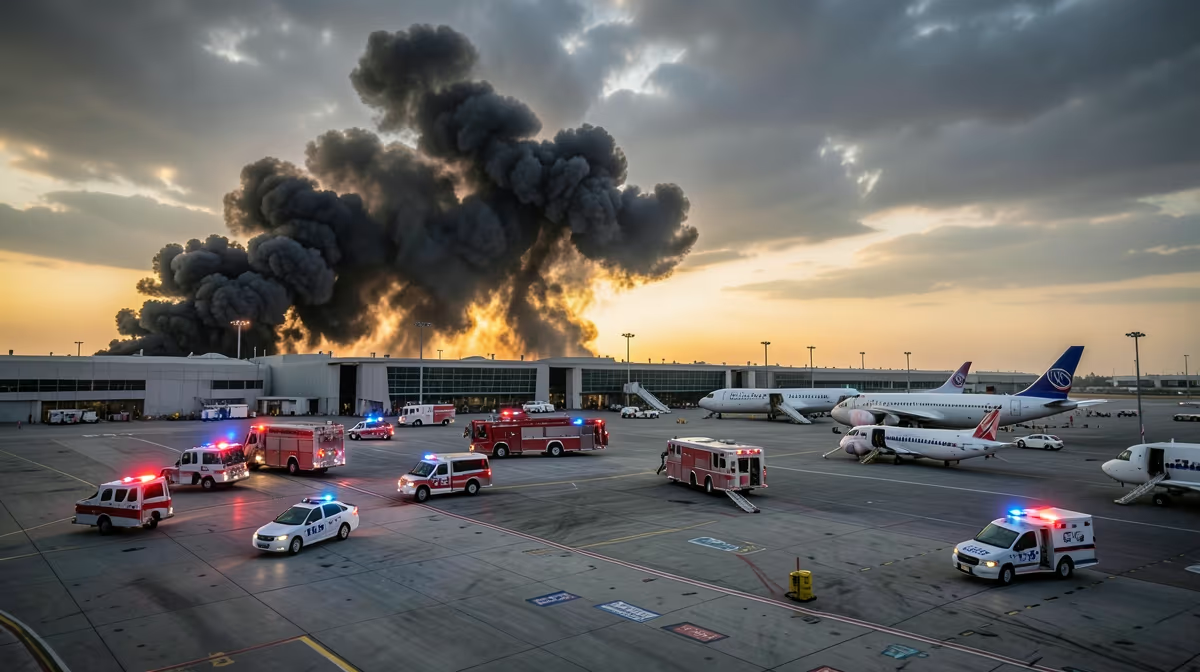
The rhythmic hum of one of the world's most critical aviation hubs was shattered by a series of high-altitude detonations that have sent shockwaves through the global travel industry. Recent escalation involving Houthi attacks on Saudi airports has raised serious global security concerns, impacting international carriers and regional stability. As plumes of smoke were reported near the kingdom's primary transit gateways, the international community has been forced to confront the extreme vulnerability of civilian infrastructure to asymmetric aerial threats.
The incidents, which centered on the capital’s main aviation facility, have not only resulted in significant physical damage but have also triggered a cascading crisis for global airlines that rely on Gulf airspace. This sudden surge in kinetic activity marks a pivot in the regional conflict, shifting the focus from military frontlines to the very heart of Saudi Arabia’s civilian and commercial operations.
The coordinated targeting of Riyadh’s aviation infrastructure marks a severe breach of civilian transit corridors, forcing major global airlines to re-evaluate the safety of Gulf airspace.
The Afternoon the Skies Closed over Riyadh
Explosions were heard clearly across the Saudi capital as Houthi forces launched a coordinated series of strikes that specifically targeted the infrastructure of Riyadh’s airport. The scale of the assault was immediate and visible, prompting authorities to move swiftly to protect passengers and personnel. According to verified reports, the strikes were not merely symbolic but resulted in significant human cost, with Riyadh confirming three fatalities and at least 36 injuries following the blasts.
The immediate aftermath saw the reported closure of Riyadh airport, an action that effectively severed one of the Middle East's most vital air links. Emergency services were deployed to the site as authorities worked to contain the fallout from the projectiles. The Houthi movement, based in Yemen, has since claimed responsibility for the strike, stating that the operation was part of their ongoing campaign against the Saudi-led coalition. This claim underscores the persistent reach of drone and missile technology in the hands of regional actors, capable of bypassing sophisticated defensive perimeters to strike at the heart of a sovereign capital.
Aviation in the Crosshairs: Global Carriers React
The ripple effects of the Houthi attacks on Saudi airports were felt almost instantly in operations centers thousands of miles away. International carriers, prioritizing the safety of their passengers and crew, initiated emergency protocols as news of the Riyadh airport closure broke. Indian aviation, in particular, faced immediate disruption due to the high volume of traffic between the subcontinent and the Saudi capital.
- Air India was forced to make a dramatic mid-air decision when its Delhi-Riyadh flight was ordered to return to India. The aircraft, already well into its journey, turned back to ensure it did not enter an active conflict zone or find itself unable to land at a closed facility.
- IndiGo, another major player in the region, moved to cancel or divert multiple flights scheduled for Riyadh, leaving thousands of passengers stranded or rerouted.
- Regional transit hubs also saw a surge in diversions as aircraft originally destined for the capital were forced to seek alternative landing sites across the Gulf.
The suspension of flight operations is not merely a logistical headache; it represents a significant security evaluation period. Aviation authorities are currently assessing the ongoing risks of further drone or missile activity, with many flights remaining suspended until a guaranteed safety corridor can be established.
The Human and Economic Cost of Aerial Escalation
The toll of these attacks is best understood through the lens of both immediate casualties and the broader economic paralysis they threaten to induce. The loss of life and the dozens of injuries reported at the airport sites highlight the indiscriminate nature of targeting civilian transit points.
| Category | Impact Details |
|---|---|
| Fatalities | 3 confirmed deaths following the strikes |
| Injuries | 36 individuals reported injured |
| Infrastructure | Riyadh airport reported closed; explosions in the capital |
| Airline Response | Air India and IndiGo cancellations and diversions |
| Operational Status | Flight operations suspended pending security review |
The economic angle of this escalation is equally pressing. The closure of Riyadh airport and the subsequent flight cancellations by major international carriers highlight the immediate vulnerability of regional aviation hubs. These hubs are central to global trade and tourism, and any prolonged disruption causes significant operational and financial losses for airlines and the Saudi state alike. The vulnerability of these trade routes raises questions about the long-term viability of current defense architectures when faced with persistent asymmetric airborne threats.
Strategic Roots and Geopolitical Consequences
Analysts point to the ongoing civil conflict in Yemen and deep-seated regional proxy rivalries as the root cause of this latest escalation. The Houthi movement has increasingly leveraged aerial drone and missile capabilities to target critical infrastructure within Saudi Arabia, a strategy designed to exert maximum pressure on the Saudi leadership.
The Political Balancing Act
Geopolitical Instability
Beyond the immediate security fallout, these recurrent strikes may be strategically timed by regional actors to leverage economic disruption as a direct counter-weight to diplomatic normalization or peace talks.
A Shifting Landscape for Regional Security
The safety of Middle East aviation has become a primary concern for international transport ministries. The ability of the Houthi forces to reach the capital and strike at a major airport suggests a sophisticated level of coordination and a persistent threat that traditional air defenses struggle to neutralize entirely.
- Houthi forces launch coordinated aerial strikes targeting Saudi airports, resulting in casualties and infrastructural damage.
- Major international and regional airlines, including Air India and IndiGo, urgently divert or cancel flights to Riyadh as airports close.
- Authorities suspend airport operations and flight schedules as security evaluations and emergency responses unfold.
This timeline illustrates how quickly a localized conflict can transform into a global transit crisis. The use of civilian airports as targets is a tactic aimed at achieving high visibility and maximum psychological impact, regardless of the physical damage to the infrastructure itself.
Future Outlook: The Next 72 Hours
The situation remains fluid, with security experts and aviation analysts watching the next few days closely. The immediate 24-hour window is expected to be dominated by continued flight disruptions, cancellations, and diversions as airlines wait for definitive safety clearances from Saudi authorities.
Predicting the Short-Term Response
Best-Case vs. Worst-Case Scenarios
Frequently Asked Questions
What happened during the recent Houthi attacks on Saudi airports?
Houthi forces launched strikes targeting Saudi airports, including Riyadh's airport, resulting in explosions, reported closures, and three deaths alongside dozens of injuries. The attack led to immediate disruptions and safety concerns across the Saudi capital.
Why do the Houthi attacks on Saudi airports matter?
These attacks represent a significant escalation in regional security tensions, directly threatening critical civilian infrastructure and international aviation hubs in the Middle East. Such strikes disrupt vital transport corridors and heighten geopolitical instability in the region.
Who is affected by the flight suspensions following the airport attacks?
International travelers and major airlines operating routes to Riyadh, such as IndiGo and Air India, have been directly impacted. Passengers experienced sudden flight diversions, cancellations, and aircraft turning back mid-route as operations were suspended.
What happens next for flights and security after the strikes?
Aviation authorities and airlines have suspended flight operations to Riyadh temporarily while assessing safety risks and security protocols. Normal schedules will likely remain paused until authorities determine that the airports are secure for civilian travel.
What is the background of the Houthi conflict involving Saudi infrastructure?
The Houthi movement in Yemen has frequently targeted Saudi Arabian infrastructure using drones and missiles amid a prolonged regional conflict. Riyadh and its coalition partners have routinely faced these airborne threats, prompting ongoing defensive measures and international concern.
How many casualties and injuries were reported in the recent Riyadh airport strike?
According to reports from Riyadh and media sources like Al Jazeera, the attack resulted in three fatalities and 36 injuries. Emergency services responded immediately to the incident at the targeted airport facilities.
Conclusion
The Houthi attacks on Saudi airports have fundamentally altered the security calculus for international travel in the Middle East. With three confirmed dead and 36 injured, the human cost is heavy, but the systemic impact on global aviation may be even more far-reaching. The forced return of Air India flights and the widespread cancellations by IndiGo and other carriers underscore a reality where civilian infrastructure is no longer insulated from regional conflict. As Saudi authorities work to secure their capital and international airlines weigh the risks of returning to Riyadh’s runways, the focus remains on the effectiveness of air defense and the resilience of global transit corridors. For now, the world watches the skies over Riyadh with a mixture of caution and concern, waiting for a signal that the route to one of the world's most important gateways is once again safe for travel.
Sources
- Three killed, 36 injured in Houthi attacks on Saudi airports, Riyadh says — Al Jazeera
- Yemen's Houthis claim strike on Riyadh airport, three killed — DW.com
- Explosions heard in Saudi capital as Riyadh airport is reported closed — CNN
- IndiGo, Air India Divert, Cancel Riyadh Flights After Houthi Airport Attacks — NDTV
- Air India Delhi-Riyadh flight returns after Houthi attack on Saudi airport; flights ops suspended till oc — The Times of India
- LIVE! Air India flight returning to India from Riyadh? — Rediff


.webp)
