
Indian Air Force Day 2026 Reveals a Massive Shift in Power
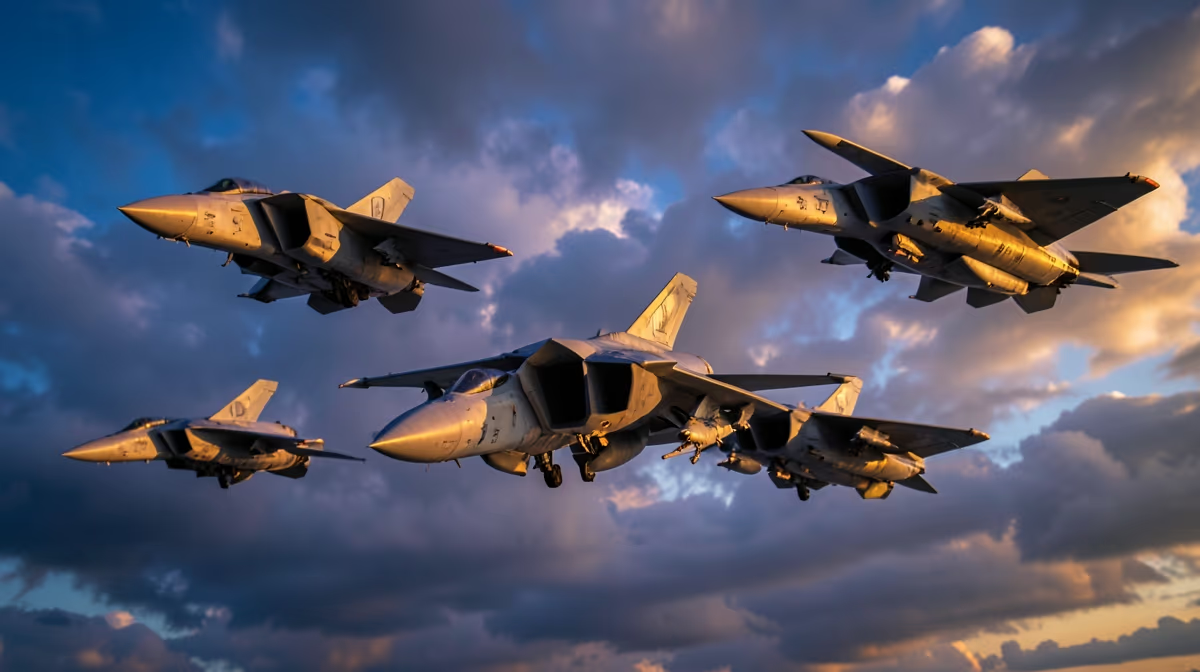
The thunder of jet engines across the Indian subcontinent signifies more than just a routine exercise; it marks the approach of a century of aerial dominance and national protection. As the nation readies itself for Indian Air Force Day 2026, the focus shifts to a force that has transitioned from four wooden-framed biplanes to a sophisticated, nuclear-capable air power that defines regional security.
This milestone anniversary serves as a critical junction for military analysts and the public alike, offering a moment to reflect on 94 years of service, sacrifice, and technological advancement. From the dusty airstrips of 1932 to the modern, high-tech displays planned for the 2026 parade, the Indian Air Force (IAF) continues to act as a vital reminder of national sovereignty and a booster of public morale.
The Indian Air Force's transition from a small colonial auxiliary unit equipped with just four Wapitis in 1932 into a formidable regional power represents one of the most significant military evolutions in modern history.
Historical Foundations and the Four Wapiti Milestone
The origins of the Indian Air Force are rooted in a modest establishment on October 8, 1932. At its inception, the force was far from the global power it is today, beginning its journey as an auxiliary unit of the Royal Air Force. The initial fleet consisted of just four Westland Wapiti aircraft, a stark contrast to the multi-role fighter jets and indigenous platforms that now populate its hangars.
The expansion of the Royal Indian Air Force during World War II provided the foundational operational experience necessary for modern military aviation in South Asia. This era tested the resilience of early air warriors and laid the groundwork for the strategic independence that would follow. As the IAF celebrates its 94th anniversary, the history of these early operations remains a cornerstone of the force's identity, reminding the nation of the courage required to build a world-class air wing from the ground up.
Key Milestones in the IAF Journey
Orchestrating the 94th Anniversary Celebrations
The lead-up to Indian Air Force Day 2026 has been marked by rigorous preparations and full dress rehearsals. These events are not merely ceremonial; they are a public demonstration of operational readiness and technological prowess. Major media outlets, including Forbes India, have highlighted these preparations through visual documentation of full dress rehearsals for the official parade, capturing the precision of the personnel and the complexity of the aerial formations.
Educational platforms and news organizations such as Jagranjosh, News18, and Utkarsh Classes have extensively covered the lead-up to the event. Their reports focus on the themes driving the 2026 celebrations, which emphasize the historical retrospectives of the force while looking forward to future-impact modernization. These celebrations involve nationwide greetings, with citizens and leaders alike honoring the dedication of air force personnel who protect India's skies during both peace and conflict.
Strategic Evolution and the Modernization Race
Behind the ceremonial parades and air shows lies a more complex narrative of strategic evolution. Analysts point to a "hidden angle" involving an intense logistical and technological race. The IAF is currently tasked with the challenge of integrating sophisticated indigenous aerospace platforms alongside its legacy foreign fleets. This creates a testing environment for maintenance ecosystems, requiring high levels of technical expertise and domestic investment.
The modernization efforts are not just about purchasing new hardware; they are about maintaining a strategic deterrence posture. By showcasing its aerial capabilities during the 94th anniversary, the IAF reinforces its position within the Indo-Pacific region. This display of combat readiness serves as a message to both security partners and regional competitors, projecting a state capacity that is prepared for the complexities of modern warfare.
The official commemoration of the 94th anniversary highlights an evolution from a colonial auxiliary unit into a formidable, modern regional air power capable of projecting strong state capacity.
The Geopolitical and Political Dimensions of Air Power
The annual Air Force Day celebrations serve a dual purpose: reinforcing national defense readiness and bolstering domestic political unity. By projecting a vision of a strong, modernized military, the government reinforces public confidence in national security leadership. This is particularly relevant in the context of the Indo-Pacific region, where India’s strategic deterrence is a key component of regional stability.
| Era | Force Status | Primary Equipment |
|---|---|---|
| 1932 | Colonial Auxiliary | 4 Wapiti Aircraft |
| 1940s | Expanding Force | World War II era fighters |
| 2026 | Global Strategic Power | Multi-role jets and Indigenous platforms |
From an economic perspective, the drive for modernization is a significant catalyst for domestic defense manufacturing. Under mandates for self-reliance, the IAF’s requirements are fueling technological investments and manufacturing initiatives within India. This "Atmanirbhar" approach aims to reduce dependence on foreign hardware while fostering a robust internal aerospace industry.
Analyzing the Impact and Future Trajectory
The impact of the Indian Air Force Day 2026 celebrations extends beyond the military community. It reaches aviation enthusiasts, defense personnel, and the families of those in service, fostering a sense of national pride. Expert predictions suggest that the event will lead to heightened public engagement with military achievements and spark strategic discussions regarding the future of armed forces modernization.
In the immediate term, the next 24 to 72 hours are expected to see a peak in media coverage. As the official parade and main air show highlights unfold on October 8, public messaging from national leaders will likely emphasize gratitude and the continued commitment to securing the nation's borders. The best-case scenario for these events involves the smooth execution of all aerial displays, further cementing the IAF's reputation for precision and excellence.
Security Assessment and Operational Readiness
The rigorous practice sessions and rehearsals leading up to the 94th anniversary are a testament to the IAF's focus on operational readiness. These displays are more than just a show for the public; they are a manifestation of the hours of training and the logistical coordination required to manage a modern air fleet. The aerial formations practiced for the parade represent the cutting edge of military aviation, showcasing the capabilities of both pilots and ground support teams.
However, these celebrations also face potential challenges. Logistics during final rehearsals and the unpredictable nature of weather can disrupt scheduled aerial displays. Despite these variables, the IAF maintains a high standard of preparation to ensure that the anniversary events successfully reflect the force’s legacy and its forward-looking strategic goals.
Frequently Asked Questions
What is the significance of Indian Air Force Day 2026?
It marks the 94th anniversary of the IAF, celebrating its history from its 1932 founding to its current status as a modern global air power.
How did the Indian Air Force begin?
The IAF was established on October 8, 1932, famously starting with a small fleet of four Westland Wapiti aircraft.
What are the main highlights of the 2026 celebrations?
The celebrations include full dress rehearsals, a grand official parade, air shows featuring various aircraft, and nationwide commemorative events.
Why does this anniversary matter for national security?
It serves as a reminder of India’s aerial capabilities and strategic deterrence, particularly within the Indo-Pacific region, while boosting public morale.
Conclusion
The 94th anniversary of the Indian Air Force is a milestone that bridges a storied past with a technologically advanced future. As the celebrations for Indian Air Force Day 2026 conclude, the focus remains on the force's ability to adapt to new security challenges while honoring the legacy that began with four Wapitis in 1932. Verified reports of successful dress rehearsals and the massive media engagement surrounding the event confirm that the IAF remains a central pillar of India's national identity and security infrastructure. Moving forward, the integration of indigenous technology and the maintenance of a high state of operational readiness will continue to be the primary drivers of the force's evolution.
Sources
- Indian Air Force Day 2026, 94th Anniversary, Theme & Highlights — Vajiram & Ravi
- 94th Indian Air Force Day 2026 Theme, History and Celebration — Utkarsh Classes
- When is Indian Air Force Day 2026? Check Theme, History, 94th Anniversary & Key Highlights — Jagranjosh.com
- Indian Air Force Day 2026: Wishes, Greetings And IAF History — News18
- Indian Air Force Day: Four Wapitis and the Birth of the IAF in 1932 — MiGFlug
- Photo of the day: Full dress rehearsal for the Air Force Day parade — Forbes India


.webp)
