
Iran Currency Collapse Reaches Unprecedented Levels As Rial Plunges
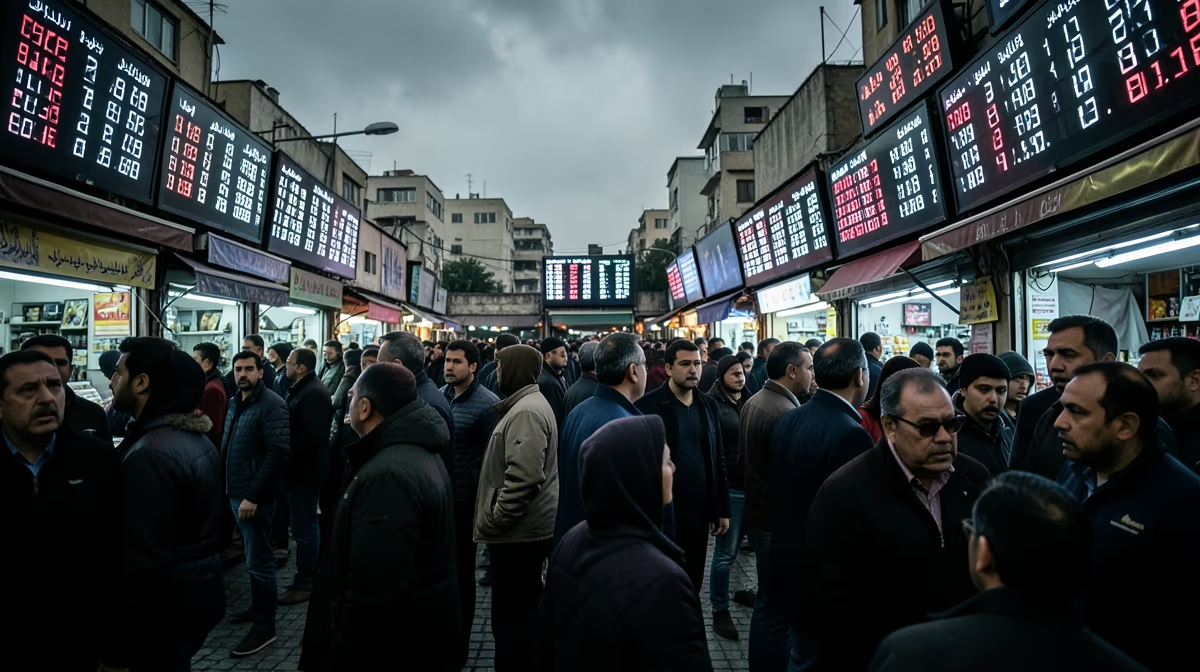
The Iranian rial has entered a terminal-style descent, shredding the purchasing power of an entire nation as it breaches psychological barriers once thought insurmountable. This ongoing Iran currency crash has reached unprecedented levels, sparking widespread concern over regional and domestic economic stability as the rial plunges to new lows.
The Iranian regime is facing a catastrophic economic bottleneck as it simultaneously runs out of oil to sell and finds itself unable to repatriate funds from its few remaining international customers.
The Anatomy of a Monetary Collapse
As the currency sinks, the Central Bank of Iran has attempted to arrest the slide by actively selling off US dollars. These interventions are designed to prop up the rial’s value, yet market data indicates that these efforts have struggled to offset the massive downward pressure driven by geopolitical conflicts. The demand for hard currency remains voracious, while the supply of foreign reserves is increasingly constrained by the nation's inability to access international financial networks.
Shifting Assets and Public Panic
- Foreign currencies (predominantly the US dollar and euro)
- Hard goods and consumer durables
- Real estate and precious metals
- Other alternative assets that hedge against hyperinflation
This movement of capital out of the banking system and into tangible assets further complicates the central bank’s mission, as it signals a total breakdown in public confidence in the national monetary unit.
The Oil Revenue Bottleneck
The current situation is defined by a two-pronged failure: 1. A depletion of available oil export capacity that is not being replaced by new production or stable trade routes. 2. An inability to repatriate revenues from international customers who are either wary of secondary sanctions or unable to find secure channels to send funds to Tehran.
This lack of liquidity means the government lacks the necessary foreign exchange reserves to fund state operations or continue its interventions in the currency market. When the primary export commodity of a nation is effectively neutralized, the currency serves as the first and most visible casualty of that stagnation.
Geopolitical Isolation and the Russian Connection
These revelations suggest that the supposed "sanction-proof" financial corridor between Moscow and Tehran is suffering from severe liquidity crunches. Informal trade corridors and secondary financial networks, which the regime has long used to dodge sanctions, appear to be stalling. This isolation leaves Iran without a significant external buffer to absorb the shocks of its domestic currency devaluation.
The current crisis exposes the fragility of Iran's external trade relationships, isolating the regime further amidst international sanctions and ongoing warfare.
Economic Fallout and Historical Parallels
Market analysts have drawn a historical parallel between the current Iranian situation and the severe economic isolation seen in Venezuela. During the height of Venezuela’s oil export embargoes, a similar pattern emerged: - A total collapse of the domestic currency against the dollar. - The emergence of a hyperinflationary environment where prices change daily. - A government increasingly desperate to deploy diminishing reserves. - A public that views the national currency as a liability rather than an asset.
| Phase of Decline | Key Trigger | Economic Result |
|---|---|---|
| Initial Pressure | Sustained sanctions and regional conflict | Erosion of domestic stability and oil revenues |
| Internal Friction | Blocked customer payments | Difficulty in funding state operations |
| Public Flight | Rial hits psychological records | Mass conversion of savings into hard assets |
| Crisis Peak | Central bank intervention failure | Euro tops 3 million rials; systemic liquidity stall |
Strategic Outlook and Expert Predictions
The Next 24 to 72 Hours
Best-Case and Worst-Case Scenarios
- Best-Case Scenario: Central bank interventions successfully slow the rate of the rial's decline. This would require the government to secure alternative trade mechanisms or hidden relief funds to calm public panic and provide a temporary floor for the currency.
- Worst-Case Scenario: The rial continues its freefall past all remaining psychological thresholds. This would severely erode public purchasing power beyond repair, potentially escalating economic protests and leading to a systemic financial collapse where the currency loses all practical utility for trade.
The long-term viability of central bank interventions is increasingly questioned by economic observers, as the underlying causes—namely the oil sales economy and international sanctions—remain unaddressed.
The Political Dimension of Economic Collapse
The erosion of economic stability limits the regime's ability to project power regionally or maintain its domestic social contracts. As the "rial-ruble" trade myth dissipates and the oil revenues dry up, the regime's options are narrowing. This isolation is further compounded by the ongoing warfare in the region, which acts as a constant drain on resources and a deterrent to any potential foreign investment or stabilization efforts.
Frequently Asked Questions
Why is the Iranian rial crashing to record lows?
The Iranian rial has plummeted to historic lows as ongoing conflict and severe economic instability erode the country's financial foundation. Compounding these pressures, the regime is struggling with a lack of oil to sell and severe difficulties accessing funds owed by international customers.
How is the collapse of the rial affecting everyday Iranians?
As the local currency sinks rapidly, ordinary citizens are desperately seeking shelter in almost anything else to protect their savings from inflation. With the euro climbing past 3 million rials, the purchasing power of the general population has been severely devastated.
What role does oil play in Iran's current currency crisis?
Iran's economy relies heavily on oil revenues to stabilize its currency and fund state operations. The current crash is deeply tied to the regime running out of oil available for export and being unable to secure payments from buyers abroad.
Is the central bank taking action to support the rial?
In an effort to curb the dramatic slide, the Iranian central bank has been actively selling dollars to support the currency. However, these interventions have struggled to offset the massive downward pressures driven by geopolitical conflicts and dwindling oil revenues.
How are international allies impacting Iran's economic situation?
Recent reports, including leaked Kremlin documents, have highlighted strains in trade mechanisms like the ruble-rial exchange between Moscow and Tehran. These revelations undercut previous claims of robust bilateral trade support, leaving Iran more economically isolated.
What is expected to happen next as Iran's economic stability erodes?
As long as regional wars continue and vital oil exports remain constrained, financial experts predict persistent volatility for the Iranian economy. Citizens will likely continue converting rials into stable assets or foreign currencies to hedge against further devaluation.
Conclusion
The Iranian rial has reached a new record low, a development that signifies a deep and potentially irreversible erosion of the country's economic stability. The verified facts show a regime struggling with a double-hit to its revenue: a lack of oil to sell and an inability to retrieve money from existing international customers. Despite the central bank's intervention through the sale of dollars, the currency continues to sink, with the euro topping the 3 million rials mark. Ordinary Iranians, sensing a systemic collapse, are fleeing the national currency in favor of hard assets and foreign exchange. As geopolitical tensions persist and trade frameworks like the ruble-rial exchange show signs of failure, the Iranian economy faces an increasingly isolated and volatile future. The next steps for the region will likely depend on whether the regime can find a way to break the oil revenue bottleneck or if the currency freefall will lead to a broader financial and social collapse.
Sources
- Iran's currency crashes as the regime runs out of oil to sell and can’t get its money from customers — Fortune
- Iranian rial at new low, as cenbank sells dollars to support currency — Reuters
- As the rial sinks, Iranians seek shelter in almost anything else — Iran International
- Iran’s currency hits a new record low as war erodes the country’s economic stability — AP News
- Euro tops 3 million rials as Iran's currency hits fresh record lows — Iran International
- Leaked Kremlin plan undercuts Moscow's claims on ruble-rial trade with Iran — Iran International


.webp)