
Iran Currency Collapse Deepens As Oil Reserves Face Total Depletion
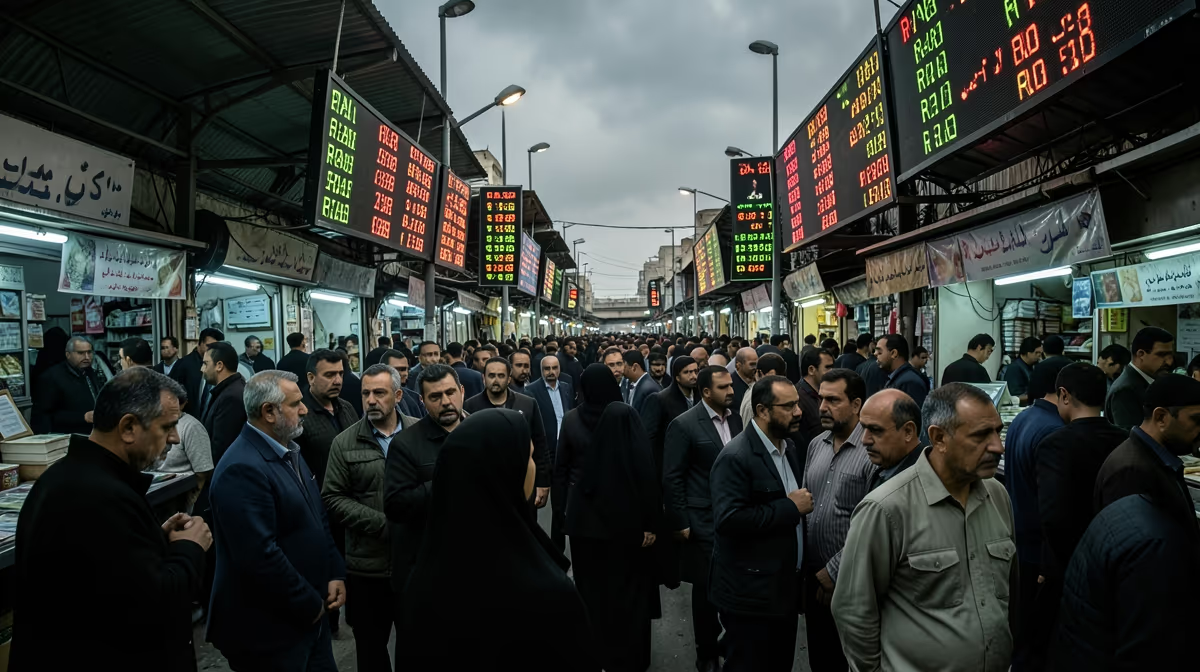
The Iranian Rial is no longer just losing value; it is evaporating alongside the nation’s primary source of sovereign wealth. This unprecedented Iran currency crash has reached historic lows as the nation's vital oil revenues dry up amid escalating geopolitical tensions and a tightening global stranglehold on its financial architecture.
The one sentence a reader must not miss: The Islamic Republic is facing a systemic "slow meltdown" as U.S.-led economic warfare successfully severs the regime's access to both remaining oil reserves and the international banking channels required to collect payments from its few remaining customers.
The Anatomy of a Systemic Financial Breakdown
The current financial catastrophe is not a temporary market fluctuation but a foundational collapse of the Iranian economy. At the heart of the crisis is a dual failure: the regime is rapidly depleting the physical oil supplies it is able to bring to market, and it is simultaneously finding itself unable to repatriate the money it is owed by international buyers. This paralysis has triggered a freefall in the national currency, as the central bank finds itself without the foreign exchange reserves necessary to stabilize the Rial.
Analysts monitoring the situation describe the current trajectory as a slow meltdown of the Islamic Republic’s financial architecture. Unlike previous periods of economic pressure, the current environment offers the ruling elite significantly fewer ways out. The root cause is a combination of severe depletion of oil reserves available for sale and an inability to navigate the increasingly sophisticated web of Western sanctions and covert financial operations.
- Hyperinflation is making basic goods unaffordable for everyday citizens.
- Petroleum reserves available for export are reaching critical lows.
- Central bank interventions have failed to stop the currency's descent.
- Payment mechanisms are heavily restricted, trapping funds in foreign accounts.
Operation Economic Outcast: Dismantling the Industrial Base
The United States Treasury has intensified its pressure through a strategic offensive known as Operation Economic Outcast. This operation is designed to inflict maximum damage on the Iranian regime's capability to sustain its state budget and patronage networks. While oil has historically been the primary target, U.S. officials state that this operation is now moving to dismantle secondary sectors that the regime uses to circumvent energy-related losses.
Targeting Auto and Rail Industries
In a significant expansion of economic warfare, the U.S. Treasury has recently implemented sanctions targeting Iran's automotive and rail industries. These sectors were previously seen as potential alternative revenue streams or domestic stabilizers. By cutting off these industries from international trade and technology, Operation Economic Outcast aims to completely drain the regime's remaining financial resources. Treasury officials indicate that this targeted approach is successfully inflicting heavy damage on the state’s industrial capabilities, leaving the government with almost no viable economic alternatives.
The Oil Revenue Bottleneck and Trapped Capital
The failure of the Iranian economy is deeply linked to the collapse of its energy exports. For decades, oil exports served as the financial backbone of the state budget. However, the regime is now running out of oil to sell, and even when transactions occur, the money often never reaches Tehran.
| Economic Factor | Current Status | Impact Level |
|---|---|---|
| Oil Exports | Constrained by supply and sanctions | Critical |
| Currency Value | Record lows against global benchmarks | Extreme |
| Revenue Collection | Funds trapped abroad due to banking blocks | High |
| Industrial Output | Declining due to auto/rail sanctions | Moderate to High |
This revenue collection bottleneck is a direct result of tightening financial pressures. International customers, fearful of secondary sanctions or caught in the crosshairs of US Iran war economics, are finding it increasingly difficult—or impossible—to settle their debts with the Iranian government. This has created a situation where the regime is effectively exporting its most valuable resource for free or for credit that it may never be able to access.
Geopolitical Consequences and the China Factor
The ripples of the Iranian economic collapse are being felt far beyond the borders of the Middle East. Major external actors, particularly China, are finding themselves in an increasingly difficult position. As a primary energy buyer for Iran, Beijing has historically been a lifeline for the regime. However, the China factor is shifting as the expanding scope of U.S. sanctions and the broader fallout of heightened regional conflict create new risks for Chinese entities.
Analysts describe the Islamic Republic's current situation as a slow meltdown with fewer ways out.
The geopolitical angle is further complicated by the stance of other international players. The Australian Treasurer has openly characterized the escalating economic pressures and conflicts involving the U.S. and Iran as an economic disaster. This sentiment reflects a growing global concern that the total collapse of the Iranian financial system could trigger a wider regional instability that energy markets and international diplomacy are ill-equipped to handle.
Internal Meltdown: The Human and Political Cost
For the everyday citizens living in Iran, the Iran currency crash is not a matter of abstract geopolitics but a direct threat to survival. As the Rial loses its purchasing power, hyperinflation has taken hold, making food, medicine, and basic necessities prohibitively expensive. This has placed the Islamic Republic in a crisis of legitimacy.
The ruling elite are facing an accelerating internal crisis as the "slow meltdown" continues. With dwindling options to quell public discontent or sustain the patronage networks that keep the regime in power, the risk of severe internal unrest is growing. The historical parallel often cited by observers is the severe economic isolation and currency collapse experienced by late-stage Soviet bloc economies or pre-collapse Venezuela under maximum pressure sanctions.
Systemic Failures in Sanctions-Evasion Channels
A hidden angle to the current crisis is the apparent failure of the secretive banking channels that Iran has used for years to evade sanctions. Historically, these shadow networks kept the regime afloat during peak embargo periods. However, recent developments suggest these channels are being systematically identified and neutralized.
- U.S. Treasury expands sanctions to include domestic manufacturing sectors like rail and auto.
- Analysts identify a persistent failure in the regime's financial architecture.
- Iran's currency crashes as oil export capacity dwindles and funds are trapped abroad.
The current crash may reflect not only the direct loss of exports but a more fundamental breakdown in the regime's ability to move money clandestinely. Without these financial backdoors, the government is unable to restore liquidity, further accelerating the currency’s downward spiral.
Projected Outcomes: 24 to 72 Hours
The immediate outlook for the Iranian economy remains bleak as the "slow meltdown" reaches a critical phase. Over the next 24 hours, financial markets are expected to continue reacting to the Iran currency crash and the mounting impact of industrial sanctions. The volatility of the Rial is likely to persist as investors and domestic actors weigh the regime's shrinking exit strategies.
Within the next 72 hours, international observers will be closely monitoring the regime's diminishing oil supplies and its continued inability to collect revenues. The compounding effects of Operation Economic Outcast will likely lead to further assessments from the U.S. Treasury regarding the efficacy of these measures.
Potential Scenarios
In the best-case scenario, international diplomatic intervention or shifting economic factors could provide a stabilization mechanism to mitigate a broader global economic disaster. However, the expert prediction suggests that the economic squeeze will only intensify as the regime runs out of options. The worst-case scenario involves a total collapse of the Iranian financial system, leading to severe internal unrest and wider geopolitical instability that could disrupt global energy supplies and alter long-term regional alignments.
Frequently Asked Questions
Why is Iran's currency crashing right now?
Iran's currency has plummeted as the regime runs out of oil to sell and struggles to recover money owed by international customers. This financial strain is heavily compounded by intense U.S. economic sanctions and military pressures targeting critical sectors.
What is Operation Economic Outcast?
Operation Economic Outcast is a U.S. Treasury-led sanctions effort designed to inflict severe financial damage on the Iranian regime. Recent targets of this operation include Iran's automotive and rail industries to cut off alternative revenue streams.
Who is affected by the Iran currency crash?
The economic collapse directly impacts the Iranian population through a slow meltdown of domestic stability and basic financial security. Globally, international markets and nations reliant on regional stability, such as Australia, view the escalating situation as a severe economic disaster.
What role does China play in the current Iran crisis?
China remains a critical factor in the geopolitical and economic dynamics surrounding the Iran conflict, particularly as a major buyer of Iranian energy. Observers closely watch how Beijing navigates US sanctions and its economic ties with Tehran.
What happens next as the Iranian regime runs out of options?
Analysts describe the situation as a slow meltdown, leaving the regime with fewer viable pathways to evade sanctions or restore liquidity. Continued pressure from international trade restrictions and financial targeting suggests the economic squeeze will only intensify.
How are international sanctions impacting Iran's non-oil industries?
Beyond the collapse of oil exports, the U.S. Treasury has expanded sanctions to target domestic manufacturing sectors like rail and auto production. These measures aim to completely drain the regime's remaining financial resources and prevent economic recovery.
Conclusion
The convergence of vanishing oil reserves, the failure to repatriate international funds, and the aggressive expansion of U.S. Treasury sanctions under Operation Economic Outcast has brought the Iranian economy to the brink of a total breakdown. The **Iran currency crash** serves as the most visible indicator of what analysts call a "slow meltdown" of the Islamic Republic's financial architecture. With secondary industries like auto and rail now under fire and the "China factor" becoming more constrained, the regime is left with dwindling options to stabilize its domestic environment. As the economic disaster unfolds, the focus shifts to whether the regime can find any remaining financial backdoors or if the system will succumb to the weight of sustained international isolation and internal pressure.
Sources
- Iran knows US 'is winning' as Operation Economic Outcast inflicts damage, Treasury official says — Fox Business
- Islamic Republic's 'slow meltdown' leaves it fewer ways out, analysts say — Iran International
- Iran's currency crashes as the regime runs out of oil to sell and can’t get its money from customers — Fortune
- Australian Treasurer Calls US-Iran War an Economic ‘Disaster’ — Bloomberg.com
- The China factor in the Iran war — The Arab Weekly
- Treasury sanctions operation targets Iran's auto, rail industries in latest economic attack — CNBC


.webp)