
New Hampshire Bluefin Tuna Catch Shatters Records With Massive Haul
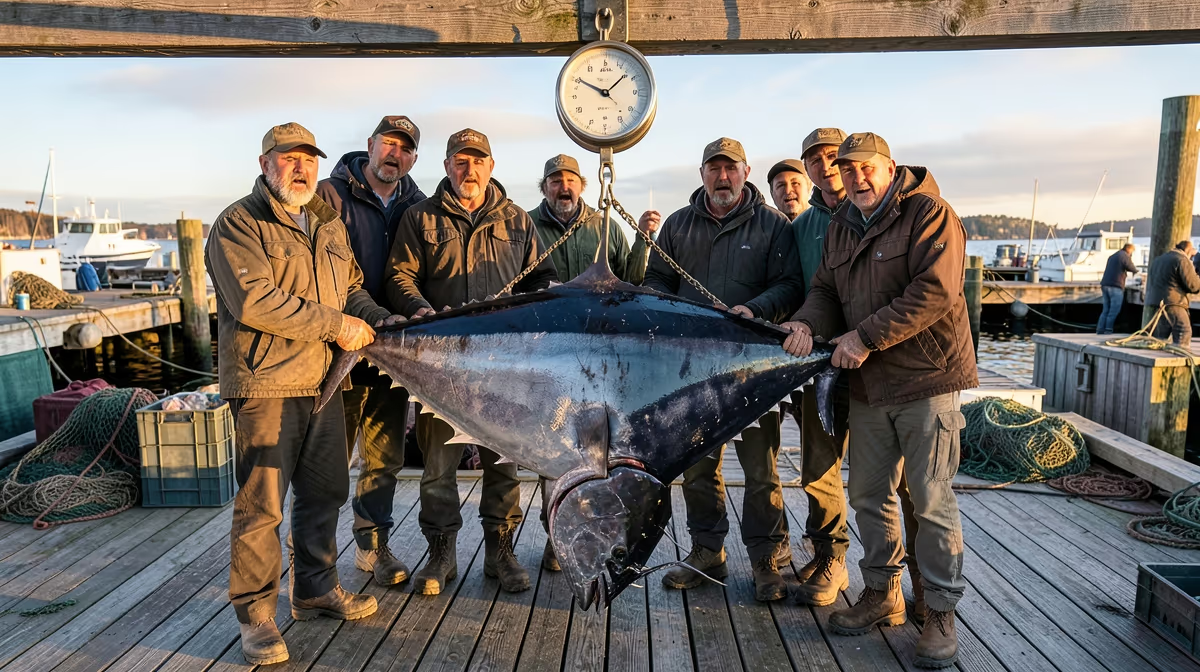
The scales in the coastal town of Rye were pushed to their absolute limits when a local fishing crew returned to port with a haul that appeared almost prehistoric in its proportions. At a staggering weight of 1,116 pounds, the Atlantic bluefin tuna landed off the coast has officially redefined the New Hampshire bluefin tuna record, shattering previous benchmarks and capturing the immediate attention of the global maritime community. This catch is not merely a feat of strength and patience but a significant data point in the ongoing narrative of New England’s marine ecosystem and its management.
The sheer scale of this 1,116-pound catch represents more than a local milestone; it signifies a historic intersection of marine conservation success and the high-stakes world of trophy recreational fishing.
The Anatomy of a Record-Breaking Catch
Reeling in a fish that weighs over half a ton is an endeavor that demands more than just luck; it requires a combination of immense physical strength, specialized equipment, and a deep understanding of the Atlantic bluefin’s behavior. The monumental event occurred in the waters near Rye, where the crew hooked the massive specimen. For hours, the battle between man and nature played out in the deep waters of the Gulf of Maine, a region increasingly known for its potential to produce "whopper" catches.
The confirmation of the 1,116-pound weight has sent shockwaves through the regional sporting community. Local outlets, alongside national giants like Fox News and the New York Post, have documented the achievement, noting that the fish’s mass easily eclipsed the previous state record. For the local fishing community in New Hampshire, this event serves as a powerful reminder of the thriving marine life just miles from their shores, highlighting a healthy ecosystem capable of supporting such extraordinary mega-fauna.
Navigating the Technicalities of Certification
While the raw weight of the fish is undisputed, the path to official record status was not without its hurdles. Reports from specialized outdoor publications, such as Outdoor Life, have pointed to unique technicalities that occasionally complicate the certification of such massive catches. In the world of state-regulated fishing records, every aspect of the catch—from the equipment used to the method of weighing—is subject to intense scrutiny to ensure fairness and adherence to sporting standards.
The Regulatory Landscape
State fishing records are meticulously tracked by New Hampshire wildlife and fisheries authorities. These records are more than just trophies; they are historical documents that help biologists and conservationists understand the health and age distribution of the species in local waters. In this instance, a specific technicality nearly threatened the record status of the 1,116-pound tuna. However, despite the initial snag, the catch has been cemented in the state history books, serving as a benchmark for future generations of anglers.
Certification Challenges
- Accurate weighing on certified scales capable of handling over 1,000 pounds.
- Verification of the fishing gear to ensure compliance with recreational sportfishing regulations.
- Documentation of the catch location and the number of participants involved in the haul.
- Adherence to state-specific rules regarding the landing and reporting of highly migratory species.
Environmental and Management Drivers
The appearance of a 1,116-pound Atlantic bluefin tuna is not an isolated fluke but rather the result of complex environmental and regulatory factors. Analysts point to the confluence of warming waters in the Gulf of Maine and the long-term rebuilding efforts directed at Atlantic bluefin populations. For decades, international bodies and federal agencies have worked to manage these stocks, and the presence of such massive, mature individuals suggests that some conservation thresholds are being met.
The catch highlights the rare and thrilling nature of deep-sea sportfishing in a region where conservation and sport increasingly overlap.
However, the presence of these giants also brings political tensions to the surface. There is a delicate balance between state-level pride in fishing records and the federal or international quotas managed by organizations such as NOAA Fisheries and the International Commission for the Conservation of Atlantic Tunas (ICCAT). These bodies govern the harvest of highly migratory species to ensure that the global market demand does not lead to over-exploitation, even as recreational anglers celebrate historic individual catches.
Economic Impact and Global Market Pressure
The landing of a bluefin tuna of this magnitude carries significant economic weight. Beyond the local tourism boost for towns like Rye, there is the undeniable commercial value of the fish itself. On the global market, particularly in luxury seafood markets abroad, a massive bluefin tuna can fetch tens of thousands of dollars. This high value creates a unique dynamic where a single catch can influence local charter fishing interest and maritime tourism.
| Milestone | Detail |
|---|---|
| October 2026 | Crew lands 1,116-pound bluefin tuna off the coast of Rye |
| October 2026 | Major media outlets (WMUR, Fox News, NY Post) confirm the record |
| October 2026 | Technicalities regarding catch certification are addressed by officials |
| Present | Heightened interest in New Hampshire deep-sea sportfishing documented |
The economic "halo effect" of such a catch often leads to a boom for local charter boat operators. When news of a record-breaking fish spreads, it draws outdoor enthusiasts and fishing fans from across the country to New Hampshire's coast, eager for their own chance at a legendary haul. This surge in interest provides a vital boost to the regional economy, supporting everything from local tackle shops to hospitality services in coastal New England.
A Historic Parallel in Marine Fishing
The current excitement in New Hampshire mirrors the mid-20th-century boom of giant bluefin tuna fishing off the coasts of Nova Scotia and New England. During that era, the pursuit of these "giants of the deep" became a cornerstone of both commercial and recreational identity for the region. The eventual necessity of strict international catch quotas in the years following that boom highlights the importance of the current regulatory framework. By documenting and celebrating catches like the 1,116-pounder within a regulated system, authorities can promote sustainable angling while acknowledging the historic nature of the event.
The Future of New Hampshire’s Coastal Fisheries
In the immediate wake of this record-breaking event, local and regional news coverage is expected to continue as wildlife authorities finalize the verification of the state record. Over the next 72 hours, further analysis from outdoor publications will likely delve into the specific mechanics of the catch and its implications for local sportfishing records.
Expert predictions suggest that the wide dissemination of this news will lead to heightened interest in deep-sea fishing along the New Hampshire coast. While the best-case scenario involves increased attention to sustainable angling and a boost in maritime tourism, there is always the risk that disputes over catch technicalities or regulations could overshadow the achievement. Nevertheless, for now, the fishing community remains in awe of the sheer proportions of the 1,116-pound beast that rose from the depths of the Atlantic.
Frequently Asked Questions
What is the new record for a bluefin tuna caught in New Hampshire?
A fisherman in New Hampshire reeled in a massive bluefin tuna weighing an incredible 1,116 pounds. This monumental catch successfully smashed the previous state record.
Where was the record-breaking 1,116-pound bluefin tuna caught?
The gigantic fish was hooked and brought in off the coast of New Hampshire, with specific reports noting the catch occurred off Rye. It quickly drew widespread attention from local and national media outlets.
Why did this massive bluefin tuna catch almost face a technicality issue?
According to reports by Outdoor Life, the 1,116-pound catch nearly hit a snag due to a specific technicality that threatened its record status. Fortunately, the fish still cemented its place in state history books.
Who caught the record-breaking bluefin tuna in New Hampshire?
Local fishermen out on the water accomplished the feat by snagging the insane 1,116-pound fish. The extraordinary catch easily broke the existing New Hampshire state fishing benchmark.
Why does catching an 1,116-pound bluefin tuna matter for the local fishing community?
Breaking a long-standing state record with a fish of this magnitude highlights the thriving marine life and exceptional sportfishing opportunities off the New England coast. It puts local anglers and towns like Rye on the map for monumental catches.
What happens next after catching a record-breaking bluefin tuna?
Following such a historic catch, officials officially verify the weight to ensure state records are accurately updated. The remarkable event also sparks renewed local interest in deep-sea fishing regulations and record-keeping.
Conclusion
The landing of the 1,116-pound bluefin tuna off the coast of Rye marks a historic moment for New Hampshire’s sporting history. By shattering the previous state record, this catch has not only celebrated the skill of the local fishermen but also highlighted the robust health of the Atlantic bluefin tuna stocks in the Gulf of Maine. While technicalities and regulatory hurdles provided a brief moment of uncertainty, the official verification of the weight ensures that this haul will be remembered for decades. As local interest in deep-sea fishing surges, the event serves as a testament to the importance of sustainable management and the enduring mystery of what lies beneath the coastal waters of New England. Realistic next steps involve the formal updating of state record books and continued monitoring of the regional bluefin population to ensure future generations can witness such giants of the sea.
Sources
- New Hampshire fisherman reels in record-breaking 1,116-pound bluefin tuna, smashing state mark — New York Post
- New Hampshire fishermen smash state record by snagging insane 1,116-pound bluefin tuna — Fox News
- Reel big: Whopper of a tuna caught off Rye — New Hampshire Public Radio
- 1,116-pound bluefin tuna catch sets New Hampshire record — WMUR
- 1,116-Pound Bluefin Tuna Caught Off New Hampshire Would Have Been a Record Except for This One Technicality — Outdoor Life
- 1,116-pound bluefin tuna caught off NH coast sets state record — WMTW


.webp)
