
Pakistan Troops in Saudi Arabia Spark Regional Power Shift
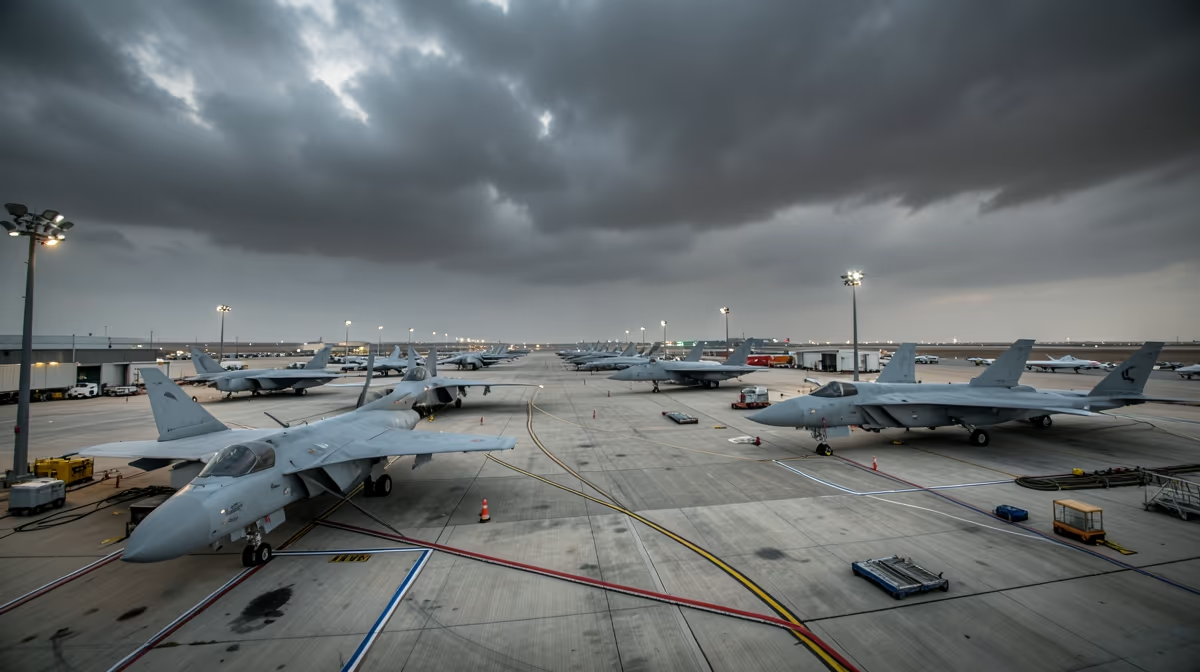
The skies over the Arabian Peninsula and the rugged terrain of Yemen have transformed into a theater of direct international intervention, marking a critical shift in the long-standing regional power struggle. The deployment of Pakistan troops Saudi Arabia has drawn renewed global attention amid a sharp escalation in the Houthi conflict across the region, signaling a move from advisory support to active combat participation.
The direct participation of Pakistani jets and troops draws a broader retaliation from Houthi forces, aggravating the conflict and widening the scope of regional instability.
As missile strikes hit areas near critical infrastructure like the Riyadh airport, the military escalation marks a serious turn in a long-standing regional crisis. This involvement prompts both strategic alignments and concerns over wider instability, as the conflict involving Yemen's Houthi movement and the Saudi-led coalition sheds its localized skin to become a broader regional confrontation.
The Activation of the Mecca Pact
The formalization of the military involvement is centered around what reports identify as the Mecca Pact. This framework serves as the foundational architecture under which allied nations are coordinating military actions and troop deployments to defend Saudi security. While Pakistan has historically provided various levels of support to the Kingdom, the current scale of operations represents a significant deepening of the bilateral defense relationship.
Troop Numbers and Ground Presence
Official confirmations indicate that Pakistan has confirmed the presence of its military personnel within the borders of Saudi Arabia. The scale of this deployment is substantial, with approximately 8,000 Pakistani soldiers reported to be stationed in the Kingdom. These ground forces are tasked with securing the Saudi border and vital infrastructure against Houthi assaults, which have increasingly moved from the periphery to the heart of the Saudi state.
Aerial Operations and Direct Strikes
Beyond ground defense, the nature of the involvement has expanded into the kinetic domain of air warfare. Reports indicate that Pakistani fighter jets have been utilized in strikes against Houthi targets within Yemen. This air campaign, executed as part of the Mecca Pact framework, represents a significant escalation in Pakistan's role. The use of Pakistani air assets is a direct response to the increasing frequency of cross-border drone and missile attacks that have targeted Saudi economic and aviation hubs.
Strategic Deterrence and Regional Alliances
The escalation of attacks by Houthi rebels targeting Saudi infrastructure and Riyadh airport has compelled Riyadh to lean heavily on regional alliances. This has led to the activation of the Mecca Pact and the direct military integration involving not only Pakistan but also Turkey. This trilateral alignment—Pakistan, Turkey, and Saudi Arabia—aims to create a formidable deterrence strategy against Houthi forces.
Beyond official defense pacts, the involvement of Pakistani air assets may signal a broader trend where cash-strapped South Asian states trade military manpower and operational expertise for vital economic bailouts and energy concessions from wealthy Gulf monarchies.
The formalization of this Pakistan-Turkey-Saudi deterrence framework shifts the regional balance of power. It signals a deeper security architecture that appears increasingly independent of Western intervention to secure Middle Eastern airspace and borders. By leveraging the operational expertise of the Pakistani military, Saudi Arabia is effectively outsourcing high-intensity defense requirements to a partner with long-standing historical ties and shared security interests.
Domestic Friction and Political Implications
The decision to deploy troops and engage in active combat has not been without controversy. In Pakistan, the plan to deploy troops under the Mecca Pact has sparked domestic political debate and public anger. Critics are concerned about the country being drawn into foreign entanglements that could have long-term repercussions for domestic security and diplomatic neutrality.
The political angle of this deployment highlights a tension between the ruling elite's security alignment with the Gulf kingdom and the public's wariness of external conflicts. Despite this, the security alignment remains a cornerstone of Pakistan’s foreign policy, reinforced by the need for economic stability. The "hidden angle" of this arrangement suggests that the export of military manpower serves as a strategic asset for Pakistan, potentially securing energy concessions and financial support at a time of domestic economic pressure.
| Event Timeline | Description of Security Escalation |
|---|---|
| Initial Mounting Tensions | Houthi missile and drone strikes increasingly target critical Saudi infrastructure. |
| Riyadh Airport Incident | Missile attacks hit locations near the Riyadh airport, prompting immediate military responses. |
| Mecca Pact Activation | Pakistan, Turkey, and Saudi Arabia formalize a joint deterrence strategy. |
| Confirmation of Presence | Pakistan confirms 8,000 soldiers and fighter jets are active in the region. |
| Active Air Campaign | Reports emerge of Pakistani jets executing strikes against Houthi targets in Yemen. |
Security and Economic Impacts
The direct military involvement of nations like Pakistan in the Saudi-Houthi conflict threatens to expand a localized civil war into a broader regional confrontation. This increases geopolitical instability, affects international oil and aviation security, and reshapes alliances across the Middle East and South Asia.
Risks to Infrastructure and Aviation
The Houthi aerial threats against Saudi economic and aviation hubs necessitate robust aerial defense and deterrence capabilities. Protecting vital trade and energy infrastructure investments is a priority shared between the Gulf states and their regional partners. The strike near Riyadh airport served as a catalyst for this military integration, proving that the conflict is no longer confined to the southern borders but is a direct threat to the Kingdom's connectivity to the world.
The Historical Context of Cooperation
The current deployment finds a historical parallel in the 1960s and 1970s. During that era, Pakistani military advisory missions and troop deployments were sent to various Gulf states to bolster local monarchies against regional insurgencies and external ideological pressures. The current activation of the Mecca Pact can be seen as a modern iteration of this long-standing security relationship, updated for the era of drone warfare and ballistic missile threats.
Future Outlook and Expert Predictions
In the next 24 to 72 hours, analysts expect continued reporting and diplomatic assessments regarding Pakistan's active military involvement. The regional reactions to the deployment of Pakistani troops and air assets under the Mecca Pact framework will be critical in determining the next phase of the conflict. Security measures around Riyadh airport are expected to remain at peak levels as assessments of the recent missile strikes continue.
Defense analysts expect heightened military maneuvers and intense diplomatic realignments across the region as Pakistan and its allies formalize their deterrence strategy. The conflict has reached a stage where the key players—Pakistan, Saudi Arabia, the Houthi rebels, and Turkey—are locked into a cycle of escalation that may be difficult to de-escalate without significant political movement.
Best and Worst Case Scenarios
- Best Case: The show of joint deterrence through the Mecca Pact successfully curtails cross-border attacks. This renewed security may lead to increased pressure for a negotiated political settlement as the Houthi forces recognize the increased cost of continuing the offensive.
- Worst Case: The direct participation of Pakistani jets and troops draws a broader retaliation from Houthi forces. This could lead to a widening of the conflict, drawing more regional actors into the fray and causing a sustained period of instability that impacts global oil markets and regional aviation safety.
Frequently Asked Questions
Why has Pakistan deployed troops and jets to Saudi Arabia?
Pakistan has confirmed the presence of its military personnel and jets in Saudi Arabia as part of a broader regional deterrence strategy involving the Mecca Pact. These forces have reportedly participated in air strikes targeting Houthi positions in Yemen following escalating missile attacks.
How does the escalation between the Houthis and Saudi Arabia involve Pakistan and Turkiye?
Pakistan and Turkiye are part of a growing deterrence alignment with Saudi Arabia aimed at countering Houthi aggression and stabilizing the region. This military cooperation has manifested in joint air campaigns and strategic defense pacts.
What is the significance of the Mecca Pact in the current Houthi conflict?
The Mecca Pact serves as the foundational framework under which allied nations, including Pakistan, are coordinating military actions and troop deployments to defend Saudi security. It formalizes mutual defense commitments amidst escalating cross-border missile and drone threats.
Who is affected by Pakistan's military involvement in the Saudi-Houthi conflict?
The conflict directly impacts regional stability across the Arabian Peninsula, affecting civilians and infrastructure in Saudi Arabia and Yemen. Domestically, the deployment has also sparked political debate and public anger within Pakistan regarding foreign military entanglements.
What happens next as Pakistani forces join the air campaign against the Houthis?
As Pakistan deepens its military engagement alongside Saudi Arabia and regional allies, observers anticipate heightened retaliatory tensions with Houthi forces in Yemen. Diplomatic efforts may also intensify to prevent a wider regional conflagration.
How many Pakistani soldiers are currently stationed in Saudi Arabia?
Reports indicate that approximately 8,000 Pakistani soldiers are stationed in Saudi Arabia alongside fighter jets actively participating in operations against Houthi targets.
Conclusion
The confirmation of **Pakistan troops Saudi Arabia** marks a watershed moment in the Houthi conflict, shifting the regional security landscape from passive support to active military engagement. With 8,000 soldiers on the ground and air assets conducting strikes in Yemen under the Mecca Pact, the alliance between Islamabad and Riyadh has reached a high-water mark of operational integration. While this move aims to provide a robust deterrence against Houthi missile and drone threats—particularly those targeting vital infrastructure like Riyadh airport—it also carries the risk of domestic political backlash in Pakistan and a broader regional escalation. As Turkey joins this deterrence framework, the Middle East sees the emergence of a new security architecture. The coming days will be critical in determining whether this joint force can pressure a path toward a political settlement or if the direct involvement of Pakistani forces will ignite a wider and more volatile chapter of the Yemen conflict.
Sources
- Pakistan confirms it has troops in Saudi as conflict with Yemen’s Houthi rebels escalates — CNN
- Pak jets strike Houthi targets in Yemen as part of Mecca Pact, 8,000 soldiers in Saudi Arabia too — India Today
- Pakistan reportedly joins air campaign against Houthis as missiles hit Riyadh airport — Ynetnews
- Pakistan, Turkiye and Saudi deterrence against Houthis: What that means — Al Jazeera
- Pakistan jets used in strikes against Houthis in Yemen: NYT report — The Indian Express
- Pakistan’s plan to deploy troops in Yemen under Mecca pact sparks anger — ThePrint


.webp)
