
US Green Card Suspension Triggers Sridhar Vembu Warning to Techies
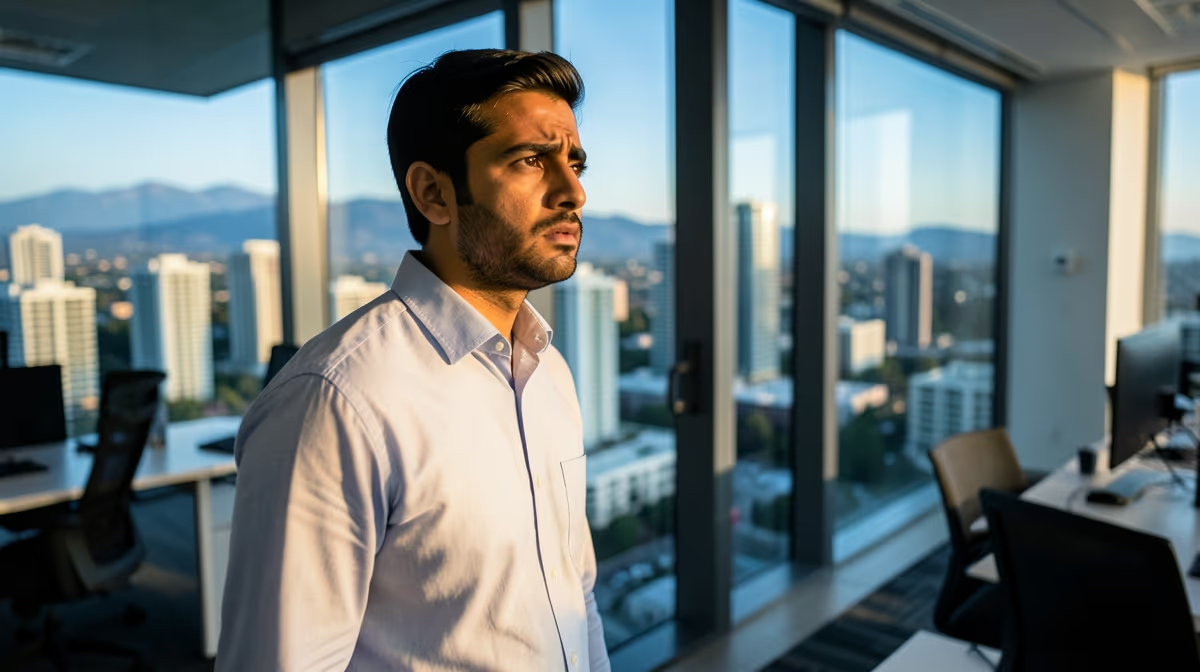
The long-standing dream of permanent residency in the United States is facing a structural reckoning, prompting high-profile industry leaders to rethink the global talent map. Following recent immigration shifts, Sridhar Vembu US Green Card concerns have sparked a major debate about the future of tech talent and the viability of the American Dream for Indian professionals.
The suspension of US Green Card processing has transformed the residency pathways of thousands of Indian professionals into a period of prolonged uncertainty, prompting a call for a strategic return to the domestic ecosystem.
As Western nations adjust their administrative levers, the ripples are being felt across the Silicon Valley diaspora. Sridhar Vembu, the co-founder and CEO of Zoho Corporation, has publicly intervened in the discourse, suggesting that the era of open-door retention for foreign talent in the United States may be reaching a transition point. His message is clear: the changing landscape abroad serves as a catalyst for Indian engineers and specialists to reconsider their long-term career trajectories and look toward the opportunities emerging within their home country.
The Call for a Reverse Brain Drain
The recent suspension or freeze on US Green Card processing has created a wave of anxiety among foreign workers who have built lives and careers in America. Sridhar Vembu's appeal emphasizes that these immigration policy shifts are not merely temporary administrative hurdles but signals of a broader change in how Western nations view skilled migrants. By encouraging tech talent to return, Vembu is highlighting the expanding opportunities within India’s own technology and startup ecosystem.
In statements responding to the US immigration development, the Zoho CEO highlighted that changing conditions abroad suggest the United States is no longer looking to retain foreign tech workers in the same capacity. This sentiment has resonated deeply with Indian tech professionals who find themselves caught in a system facing massive backlogs. For decades, the US Green Card system has been under pressure, leaving applicants from high-volume countries like India waiting years or even decades for permanent residency. The current freeze acts as a tipping point for many who were already weighing the costs of living in a state of perpetual visa dependency.
America no longer wants us, come back: Sridhar Vembu urges Indian techies after US Green Card freeze
Vembu's perspective is rooted in the belief that the domestic Indian market now offers a promising alternative to living abroad. He suggests that rather than waiting for an uncertain residency status, experienced engineers and specialists should return to build the domestic ecosystem, strengthening India's position as a global product and R&D hub.
Structural Tightening and Policy Shifts
The root cause of the current disruption lies in the structural tightening of US immigration policy. Administrative suspensions of Green Card processing have severely disrupted the career pathways of skilled Indian technology professionals. While immigration politics in Western nations frequently undergo shifts driven by political updates, the current weaponization of visa restrictions for domestic political appeal has forced technology leaders to advocate for talent retention within India.
The Political and Economic Dimension
From a political standpoint, the tightening of residency pathways is often used to signal a focus on domestic labor markets. However, the economic fallout of such protectionist policies may inadvertently benefit the Global South. The potential repatriation of skilled techies redirects high-value human capital back to the Indian economy, boosting local startup ecosystems and reducing the reliance on foreign labor markets for high-level innovation.
| Stakeholder | Potential Impact of Green Card Freeze |
|---|---|
| Indian Tech Professionals | Increased career uncertainty and residency status anxiety |
| Domestic Tech Ecosystem | Influx of high-value human capital and global expertise |
| US Tech Industry | Potential loss of specialized talent to emerging global hubs |
| Tier-2/3 Indian Cities | Possible acceleration of digital economy and infrastructure |
This migration reversal is not a new phenomenon but represents a shifting global talent mobility trend. Protectionist Western policies are inadvertently accelerating the rise of alternative technology hubs. This shift marks a transition where the Global South is becoming more than just a source of labor; it is becoming a destination for returning expertise.
A Shifting Landscape for Global Talent
The current situation bears a striking historical parallel to the late 1990s and early 2000s during the dot-com contraction. That era also saw a significant number of Indian engineers return from Silicon Valley to India, a movement that ultimately fueled the massive tech boom in Bangalore. Analysts suggest that the current Green Card suspension could trigger a similar "reverse brain drain," but on a much larger scale given the maturity of the current Indian startup scene.
Impact on Domestic Innovation
A hidden angle to this migration reversal is the potential impact on India's geographic distribution of digital wealth. This influx of returning talent may prompt Indian tech firms to accelerate investments in tier-2 and tier-3 Indian cities. As professionals return with global experience and a desire for a high quality of life outside of the traditional metropolises, the geography of the nation's digital economy could be fundamentally altered.
Vembu’s own advocacy for "rural-shoring"—moving tech jobs to smaller towns and villages—aligns with this trend. The return of experienced global talent provides the necessary leadership and technical depth to make these decentralized hubs successful. This could lead to a more balanced development of the technology sector, moving beyond the saturated markets of Bangalore, Hyderabad, and Pune.
Predicting the Next Phase
In the immediate term, the next 24 hours are expected to see intensified discussions and social media debates across Indian tech communities. Professionals in the United States are currently weighing their options, balancing the stability of their current employment against the long-term uncertainty of their residency status. Over the next 72 hours, industry forums and tech associations will likely begin a deeper analysis of the broader implications of these US immigration policy shifts on the Indian tech diaspora.
Expert Outlook and Scenarios
Industry analysts expect an increased discourse around how Indian tech firms can leverage this returning talent. The best-case scenario involves a significant number of skilled professionals returning to contribute to the domestic ecosystem, thereby accelerating India's transition into a global R&D powerhouse. Conversely, the worst-case scenario involves prolonged uncertainty that causes career disruption for workers abroad without an immediate or coordinated absorption into the domestic market.
- Talent Migration: A potential surge in repatriation as residency pathways in the US remain frozen.
- Workforce Dynamics: Indian software firms may see a rise in high-level applicants with global experience.
- Policy Perceptions: A significant shift in how Indian students and professionals view the long-term viability of the US as a career destination.
The expert prediction suggests that while the US remains a major player in tech, the perceived stability of its immigration system has been compromised. This creates a window of opportunity for India to capture the "brain gain" it has been seeking for decades.
The Human and Professional Cost
Beyond the economic statistics and geopolitical strategies lies the human cost for thousands of Indian technology professionals. These individuals, many of them H-1B visa holders, have built families and community ties in the United States. The suspension of Green Card processing leaves them in a state of legal limbo, where their ability to remain in the country is tied strictly to their employment status, with no clear path to permanent residency.
This uncertainty impacts long-term life decisions, such as home ownership and their children’s education. Sridhar Vembu's call to return addresses this specific anxiety, suggesting that building a future in India offers a more stable and promising environment than the current precariousness of foreign residency. The development has drawn significant attention from major news outlets, reflecting the high stakes involved for the Indian middle class and the global technology sector.
Frequently Asked Questions
Why did Sridhar Vembu urge Indian techies to return to India?
Sridhar Vembu urged Indian tech professionals to return following reports of a US Green Card suspension, suggesting that opportunities abroad are shifting. He emphasized that building a future in India offers a more stable and promising environment.
What triggered Sridhar Vembu's comments about US Green Cards?
His remarks were prompted by recent developments regarding a US Green Card freeze, which has raised concerns among many immigrant workers regarding their long-term residency status in the United States.
Who is most affected by the US Green Card suspension?
Indian techies, H-1B visa holders, and other skilled professionals currently living and working in the United States who are waiting for permanent residency are directly impacted by these policy changes.
Why does this matter for the Indian tech ecosystem?
This potential brain drain reversal could bring highly skilled engineers, researchers, and entrepreneurs back to India, significantly boosting the domestic technology sector and local startup ecosystem.
What happens next for Indian tech workers in the US?
Affected tech professionals are closely monitoring immigration updates, legal challenges, and policy shifts while weighing their options between remaining on temporary visas or returning to their home countries.
What specific perspective did the Zoho CEO share on the situation?
According to reports, Vembu highlighted a sentiment that traditional Western immigration pathways are becoming increasingly uncertain, reinforcing his ongoing advocacy for building deep-tech capabilities within India.
Conclusion
The suspension of US Green Card processing has created a significant inflection point in the global movement of technology talent. Sridhar Vembu’s call for Indian professionals to return home is more than a reaction to a policy freeze; it is a strategic recognition of India’s growing capacity to absorb and utilize world-class expertise. While the immediate future for many Indian techies in the US remains clouded by administrative uncertainty and political shifts, the domestic landscape in India is positioning itself as a viable and stable alternative. The coming months will determine if this period marks the beginning of a major talent repatriation that could redefine India's role in the global digital economy. As industry forums and policymakers monitor the situation, the focus remains on whether the domestic market can effectively integrate this returning human capital to drive the next wave of innovation.


.webp)
