
German Protests Turn Violent Across Cities in a Shocking Escalation
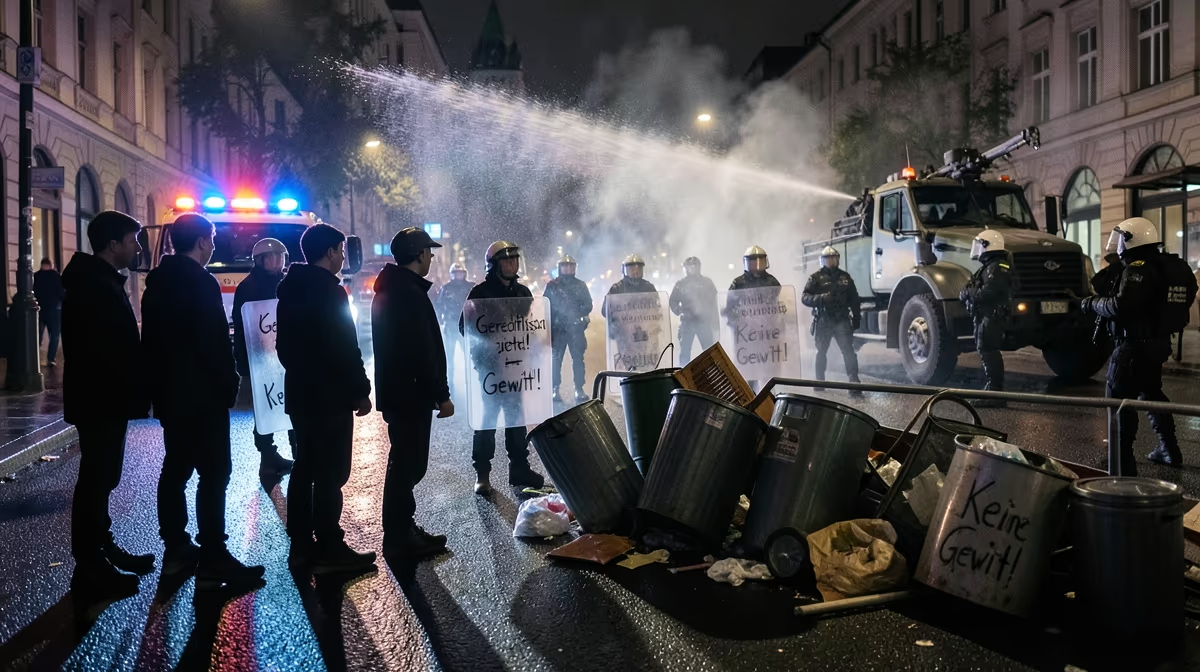
Street corners that typically host holiday revelers transformed into flashpoints of confrontation over the weekend, exposing a deepening fracture between young demonstrators and urban security forces. Across multiple metropolitan centers, German protests turn violent as activists clash with police, marking a sharp escalation in youth-led demonstrations that have rapidly spread across continental borders.
Water cannons, street barricades, and commercial property damage now define a widening wave of youth unrest that has spilled over from neighboring nations into the heart of Germany.
What began as coordinated assemblies driven by generational grievances quickly deteriorated into chaotic street encounters. Demonstrators, dominated by Gen Z cohorts, faced off against heavily equipped police units throughout Saturday and into the early hours of Sunday. Law enforcement deployed crowd-control measures, including targeted water cannons, in an effort to clear key gathering sites and disperse crowds after localized disturbances threatened urban centers.
What Sparked the Clashes in Germany
The immediate unrest ignited as public squares saw demonstrations swell on Halloween evening, running directly through Saturday, October 31, 2026. What was initially organized as an expression of youth mobilization rapidly transitioned into physical confrontations between groups of activists and police lines.
As demonstrators pushed into restricted zones and erected makeshift street obstacles, law enforcement forces moved to intervene. In response to aggressive crowd movements and localized disturbances, authorities initiated active clearance protocols. Specialized crowd-control units deployed water cannons to push back activist formations, disperse concentrated groups, and clear primary thoroughfares.
The friction resulted in localized property damage, including incidents of looting that left commercial storefronts compromised. While initial gatherings maintained political chants and visual displays of civil disobedience, the arrival of specialized police units intensified crowd hostility, culminating in running street clashes that extended late into the weekend.
A Synchronized Continental Wave: From France to Portugal
The confrontations within German borders do not exist in isolation. Instead, they represent the latest manifestation of a synchronized continental wave of Europe youth unrest that gained momentum in late October. The cross-border movement migrated eastward into Germany following intense days of street action in neighboring states.
The broader geographic footprint highlights the regional scale of the mobilization:
- France: Widespread youth-driven demonstrations saw aggressive street action, resulting in roughly 500 arrests as security services moved aggressively to curtail public disruptions.
- Portugal: Law enforcement forces in Lisbon took decisive action against activist infrastructure, clashing with demonstrators and clearing an established camp, which culminated in 13 arrests.
- Germany: Mobilizations converging over Halloween weekend rapidly adopted the confrontational posture seen across the Rhine, bringing direct street disruption into major German cities.
This cross-border continuity indicates that activists clash with police Germany after drawing tactical momentum from peer movements abroad. The synchronized timing underscores how shared grievances are bypassing national borders, presenting coordinated operational challenges to domestic security agencies across Europe.
Timeline of the Escalation
The progression from localized discontent to violent cross-border confrontation followed a compressed schedule over late October and early November 2026.
| Timeframe | Location | Primary Developments |
|---|---|---|
| Late October 2026 | France & Portugal | Youth protests erupt over socioeconomic concerns; 500 arrests in France and 13 detained in Lisbon. |
| Saturday, Oct 31, 2026 | German Metropolitan Centers | Demonstrations turn volatile over Halloween; police deploy water cannons as clashes break out. |
| Sunday, Nov 1, 2026 | Across Germany | Municipalities assess property damage and reported looting; security forces clear occupied sites. |
| Early November 2026 | Pan-European Region | Heightened security alerts persist as authorities manage fallout and monitor cross-border activist networks. |
Underlying Drivers: Socioeconomic Pressures and Gen Z Mobilization
At the core of the widespread disruption lies growing socioeconomic disillusionment among younger generations. The current surge in Gen Z European protests reflects intense frustration surrounding economic stability and cost-of-living pressures, which have left younger demographics feeling increasingly alienated from prevailing economic frameworks.
Civic demonstrations frequently serve as an outlet when younger populations encounter limited economic prospects. However, analysts note that the current wave demonstrates how economic strain can accelerate into active civil disobedience when public gatherings meet firm policing.
Beyond standard socioeconomic factors, observers point to a distinct operational angle regarding the timing of the unrest:
The strategic convergence of protests over the Halloween weekend suggests organizers may have utilized festive public cover to maximize crowd density and mask digital mobilization efforts.
The rapid coordination observed in major cities indicates that digital channels have allowed Gen Z activists to mobilize quickly, congregating in dense urban pockets before law enforcement can establish preventive perimeters.
Institutional Authority and Historical Parallels
The escalation poses severe operational and political questions for German governance. Municipal authorities and political leaders are caught between protecting democratic rights to assembly and fulfilling the mandate to maintain public order. The visible deployment of water cannons against young demonstrators underscores how strained civil management frameworks have become.
This dynamic draws notable historical parallels to the 1968 student protests in West Germany. During that era, large-scale mobilizations of young activists challenged established institutional authority, fundamentally altering the domestic political landscape and forcing a prolonged social reckoning.
Today, ruling parties face comparable institutional tests. When demonstrations cause street-level property damage and looting, political leaders must balance robust policing against accusations of disproportionate force. The cross-border dimension amplifies this dilemma, as localized security responses in Germany are scrutinized alongside enforcement tactics in France and Portugal, testing the cohesion of pan-European security and civil stability frameworks.
The Human and Economic Toll on Urban Centers
The physical fallout of the weekend confrontations extends beyond political debate into tangible economic costs for local communities. Shop owners, commercial operators, and urban residents bore the immediate brunt of the volatility as public streets turned into contested territory.
Emergency services and municipal clean-up crews moved into affected zones following the dispersal operations to clear debris and assess structural damage. Local businesses faced property destruction, broken storefronts, and looting damage sustained during the peak hours of unrest.
For municipal governments, the costs are twofold: repairing damaged public infrastructure and absorbing the high operational expenditure required to sustain massive police mobilizations. Meanwhile, residents in central urban corridors faced logistical paralysis, transit disruptions, and heightened security measures throughout the weekend.
Security Horizon and Future Outlook
Security agencies remain on high alert as the situation transitions from immediate crowd suppression to longer-term civil unrest management. The operational horizon points to continued vigilance across municipal and national boundaries.
Over the next 24 hours, German authorities will likely maintain heightened security postures, focusing on securing vulnerable commercial districts and permanently clearing remaining protest encampments. Within the next 72 hours, comprehensive assessments of property damage and looting incidents will conclude, providing a clearer picture of the financial toll while intelligence units monitor regional communications for signs of renewed mobilizations.
Industry analysts expect sustained vigilance from European law enforcement agencies following the convergence of youth demonstrations over the holiday weekend. Looking further ahead, two distinct paths remain possible:
- Best-Case Scenario: Street confrontations subside peacefully as protest energy wanes, paving the way for constructive dialogue between local government representatives and youth activist organizations regarding socioeconomic grievances.
- Worst-Case Scenario: Volatility escalates into sustained civil unrest, triggering repeated violent confrontations with law enforcement, escalating urban property damage, and deepening political gridlock.
At present, official tallies regarding total nationwide arrests and finalized damage figures remain developing, as regional authorities continue active security operations to ensure urban order is preserved.
Frequently Asked Questions
What happened during the German protests?
German protests turned violent as activists clashed with police during demonstrations. Law enforcement used water cannons and other measures against demonstrators as unrest spread.
Why are these protests significant?
The demonstrations reflect a broader European wave of unrest involving Gen Z activists. The escalation into violence highlights growing tensions and widespread discontent among youth groups.
Who is affected by the protests in Germany?
Gen Z activists, local demonstrators, and law enforcement officers are directly involved in the confrontations. Communities and businesses have also been impacted by property damage and looting.
What was the background of these demonstrations?
The protests originated as part of a wider movement spreading across European countries, including France and Portugal, around the Halloween weekend. Youth-led frustrations quickly escalated into large-scale street confrontations.
What specific detail characterized the clashes in Germany?
Police forces deployed water cannons to disperse crowds of demonstrators. The escalating violence also resulted in significant property damage and looting in affected areas.
What happens next following the violent clashes?
Authorities across Europe are dealing with widespread arrests, security crackdowns, and property damage assessments. Governments face ongoing pressure to address the underlying grievances fueling the youth protests.
Conclusion
The weekend unrest across Germany has elevated youth-led demonstrations from localized civil disobedience into a significant public security challenge. Confirmed events reveal that activists clashed with police units, prompting the deployment of water cannons and resulting in commercial property damage and looting. These confrontations arrived as an extension of broader European unrest that previously triggered hundreds of arrests in France and camp clearances in Portugal. As municipal officials conclude initial damage assessments and maintain strict security protocols across major cities, governing bodies face the complex task of addressing the underlying socioeconomic frustrations of younger generations while re-establishing urban stability.
Sources
- Germany's Gen Z protests disrupted by violence on Saturday — DW.com
- Europe protests - as they happened: Police clear Lisbon camp; looting damage in Germany; 500 arrests in France — Sky News
- German Protests Turn Violent as Activists Clash With Police — Bloomberg
- 13 arrested as Portuguese police clash with protesters — RTE.ie
- Germans join Europe's wave of 'Gen Z' protests; police fire water cannon on demonstrators — Dawn
- French youth protests spread to Germany on Halloween — upi


