
ICE Santa Clarita Detention Sparks Major Outcry After Car Window Shattered
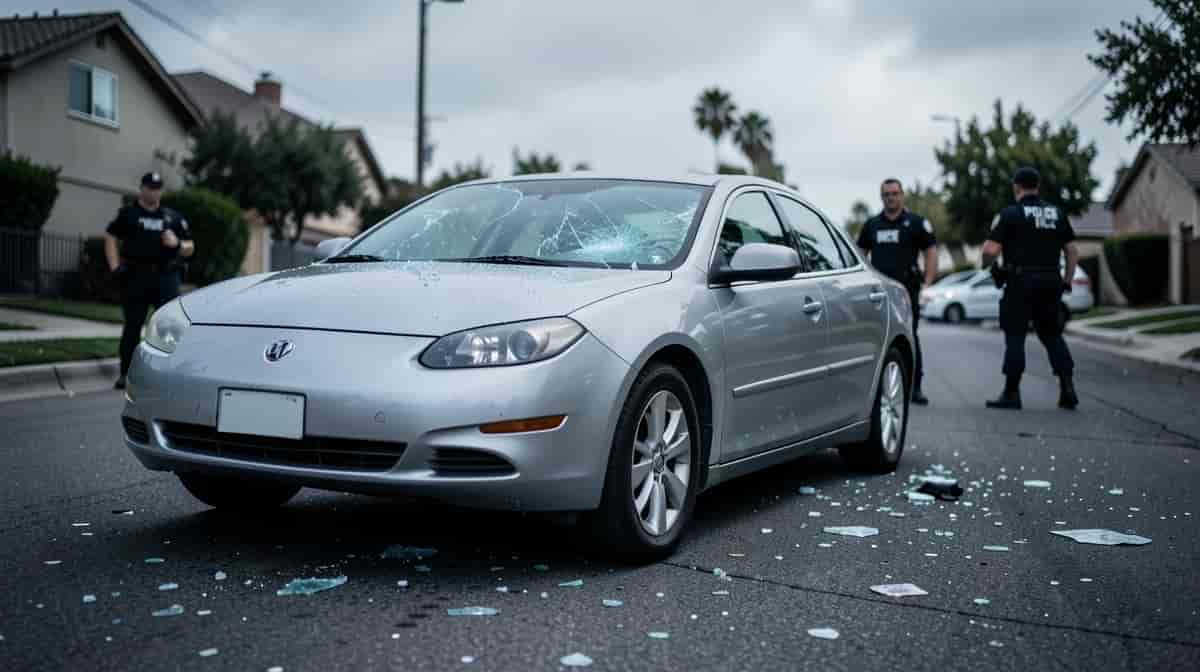
A single video clip has the power to reshape the public’s understanding of federal enforcement boundaries in real-time. The controversial ICE detention Santa Clarita incident, captured in high-definition outside a local law enforcement facility, has forced a critical examination of the tactics used by federal agents in densely populated community spaces. As the footage circulates globally, it reveals the intense friction between federal immigration mandates and local community resistance in California.
Footage from the scene depicts federal Immigration and Customs Enforcement (ICE) agents taking aggressive measures to secure a detention, including the forceful breaking of vehicle windows to reach a man seated inside. The operation, which unfolded directly outside the Santa Clarita sheriff’s station, quickly transitioned from a standard enforcement action into a chaotic confrontation as bystanders, community patrollers, and protesters converged on the site. This incident serves as a stark reminder of the volatile nature of interior immigration enforcement in regions where local policies and federal actions frequently collide.
This event underscores the growing tensions and public friction surrounding immigration enforcement operations in local neighborhoods, highlighting how forceful tactics can spark immediate community protest and intensify national debates over policy and safety.
Forceful Tactics and the Santa Clarita Confrontation
The sequence of events captured on video outside the Santa Clarita sheriff’s station provides a rare, unvarnished look at high-visibility immigration enforcement. In the footage, ICE agents are seen utilizing tools to smash the glass of a car window, an action taken to expedite the detention of a male individual. This level of force, occurring in broad daylight and in a public thoroughfare, served as an immediate catalyst for community intervention.
As the glass shattered, the atmosphere transformed. Local protesters and community members who were already in the vicinity began to confront the federal agents, leading to a series of tense exchanges. Reports from the scene, corroborated by media outlets such as the Los Angeles Times and ABC7 Los Angeles, indicate that the situation further escalated when federal agents deployed pepper spray. This chemical agent was used amidst the growing crowd, reportedly striking at least one community patroller who was attempting to document or intervene in the arrest.
Chronology of a Chaotic Detention
The timeline of the incident reflects a rapid escalation from a targeted operation to a public disturbance:
- ICE agents identified and approached the target vehicle stationed outside the Santa Clarita sheriff's facility.
- Agents executed a forced entry by smashing the vehicle's windows to gain access to the driver.
- A crowd of protesters and local community patrollers gathered, vocalizing opposition and recording the agents' actions.
- Confrontations between the crowd and federal personnel led to the deployment of pepper spray.
- The individual was successfully detained and removed from the scene as media outlets began reporting the fallout.
Analyzing the Root Causes of Local Friction
The root cause of this incident lies in the escalating tensions surrounding federal immigration enforcement operations within sanctuary-leaning jurisdictions like California. For years, the state has maintained policies designed to limit cooperation between local law enforcement and federal immigration authorities. When ICE agents conduct operations in high-visibility areas—especially those adjacent to local police or sheriff stations—it is viewed by many community members as a direct challenge to local public safety protocols and civil liberties.
From a political perspective, the Santa Clarita incident highlights the ongoing friction between federal mandates and local environments. Immigrant advocacy groups point to the use of pepper spray and property damage as evidence of overreach, while proponents of strict border and interior enforcement argue that such tactics are necessary when subjects refuse to comply with lawful federal orders. This ideological divide ensures that every public detention becomes a potential flashpoint for broader civil unrest.
When federal arrests occur publicly and involve forceful tactics like broken windows and pepper spray, it sparks immediate community protest and intensifies national debates over immigration policies.
The Rising Trend of Decentralized Oversight
A critical, yet often overlooked, aspect of the Santa Clarita detention is the involvement of community patrollers. These individuals represent a growing trend of decentralized civilian oversight and real-time digital counter-surveillance. Unlike traditional protesters, these patrollers often focus specifically on documenting the procedural conduct of law enforcement and federal agents.
The presence of independent observers equipped with high-quality mobile cameras means that federal operations no longer occur in a vacuum. The immediate availability of the ICE car window smash video allowed the story to bypass traditional gatekeepers, reaching millions of viewers before official statements could even be drafted. This shift in the information landscape places federal agencies under a level of scrutiny that was historically impossible, turning local enforcement actions into international news stories within hours.
| Incident Factor | Impact and Observation |
|---|---|
| Primary Tactic | Smashing vehicle windows to facilitate detention |
| Site Selection | Public space outside a local sheriff's station |
| Chemical Force | Deployment of pepper spray against community observers |
| Digital Footprint | Viral video footage circulating across global platforms |
| Public Reaction | Heightened local protest and civil rights advocacy |
Broader Impact Areas and Community Relations
The economic and social costs of such high-profile enforcement operations are substantial. High-visibility arrests in local neighborhoods can impact labor markets by increasing fear among immigrant communities, leading to shifts in local economic participation. Furthermore, these events strain municipal resources; local law enforcement agencies often find themselves caught in the middle, forced to manage public protests and maintain order during federal operations they may not have been actively involved in.
Geopolitically, these domestic flashpoints resonate far beyond California’s borders. They reflect federal policy debates regarding human rights and the treatment of foreign nationals, influencing how the United States is perceived internationally. Analysts suggest that the use of chemical agents and forceful entry in public spaces can be interpreted as a shift toward more aggressive interior enforcement strategies, which may draw critiques from international human rights observers.
Historical Parallels in Southern California
This incident is not without precedent. Analysts have noted historical parallels to high-visibility interior enforcement actions that occurred in Southern California during the late 2000s and mid-2010s. During those periods, friction points between federal agents and community activists similarly led to chaotic public encounters. However, the current era is distinguished by the speed of information dissemination and the organized nature of community-based patrol groups, which have become more sophisticated in their documentation methods.
The Predictor: What Follows the Viral Footage?
In the next 24 hours, it is expected that the video footage of ICE agents smashing car windows and pepper-spraying bystanders will continue to circulate widely. This sustained attention will likely force official responses from Immigration and Customs Enforcement, local law enforcement agencies, and community advocacy groups. The pressure for transparency regarding the operational protocols followed during this specific arrest will be a primary driver of the news cycle.
Looking toward the next 72 hours, the potential for further protests outside local sheriff stations remains high. Expert predictions suggest that analysts expect increased scrutiny on federal immigration enforcement methods, particularly regarding property damage and the use of chemical agents in the presence of non-combative protesters.
Future Scenarios
- Best-Case Scenario: Relevant authorities conduct transparent reviews of the incident, leading to a constructive dialogue between federal agents, local law enforcement, and community representatives to prevent future escalations and ensure bystander safety.
- Worst-Case Scenario: Tensions continue to mount, leading to further clashes between demonstrators and immigration enforcement personnel. This could result in additional arrests, injuries, and a total breakdown of communication between federal agencies and the communities they operate within.
The status of the individual detained remains a key point of interest for local advocates, as does the question of whether the use of pepper spray against a community patroller will lead to legal challenges or formal complaints. As the situation in Santa Clarita develops, it remains a potent symbol of the complex, often volatile intersection of law, policy, and community identity in modern America.
Frequently Asked Questions
What happened during the ICE detention incident in Santa Clarita?
ICE agents were caught on video smashing a car's windows to detain a man outside the Santa Clarita sheriff's station. The chaotic scene also involved pepper-spraying protesters and a community patroller who attempted to intervene.
Why does the Santa Clarita ICE detention incident matter?
The aggressive tactics used by federal immigration agents, including breaking vehicle glass and deploying pepper spray right outside a local sheriff's station, have sparked intense public scrutiny and safety concerns. It highlights the growing tensions surrounding immigration enforcement actions conducted in public spaces.
Who was affected by the ICE operation in Santa Clarita?
The direct subjects included the man whose car window was smashed and who was subsequently detained by federal agents. Additionally, local community patrollers and protesters who gathered at the scene were affected after being pepper-sprayed during the confrontation.
What is the background of ICE enforcement actions near local police stations?
Federal immigration enforcement operations typically occur in various public or residential settings, but carrying out an arrest directly outside a local law enforcement facility often draws immediate crowds and heightened community resistance. Such high-visibility arrests frequently test the limits of local cooperation and public safety protocols.
What specific detail emerged from the video footage of the Santa Clarita arrest?
Footage widely circulated by news outlets clearly shows agents forcefully breaking through the vehicle's windows to access the driver. The video also captures protesters confronting the agents and the deployment of pepper spray amidst the growing crowd.
What happens next following the chaotic ICE arrest in Santa Clarita?
As video of the incident continues to circulate across national and local media platforms, community advocacy groups and local officials are expected to demand further accountability and transparency regarding the tactics used. Investigations or formal reviews into the conduct of both the agents and the responding parties may follow.
Conclusion
The forceful detention in Santa Clarita has become a significant marker in the ongoing dialogue regarding immigration enforcement tactics in California. By breaking vehicle windows and deploying pepper spray in a public area outside a sheriff’s station, federal agents have triggered a wave of community pushback and legal scrutiny. While the primary objective of the operation—the detention of an individual—was achieved, the resulting chaotic atmosphere and viral documentation have raised serious questions about the balance between federal law enforcement mandates and public safety. As community advocacy groups and local officials seek clarity, the incident remains a high-impact example of the friction inherent in modern immigration enforcement. The coming days will likely bring more official statements as the social and political fallout from the **ICE detention Santa Clarita** continues to expand.
Sources
- ICE officer seen on video smashing window to detain man at Santa Clarita sheriff’s station — Los Angeles Times
- ICE smashes car window, detains man outside Santa Clarita Sheriff's Station — ABC7 Los Angeles
- ICE Agents Smash Car Windows, Pepper Spray Community Patroller in Santa Clarita — L.A. Taco
- Video shows ICE agents smashing car windows, pepper-spraying protesters during arrest in Santa Clarita — FOX 11 Los Angeles
- ICE Agents Smash Car Window During Santa Clarita Detention — Demokratis.co.id
- Chaotic ICE arrest caught on video as protesters confront agents outside California police station — New York Post


