
India Election Commission Under Scrutiny Following Mass Voter Deletion Claims
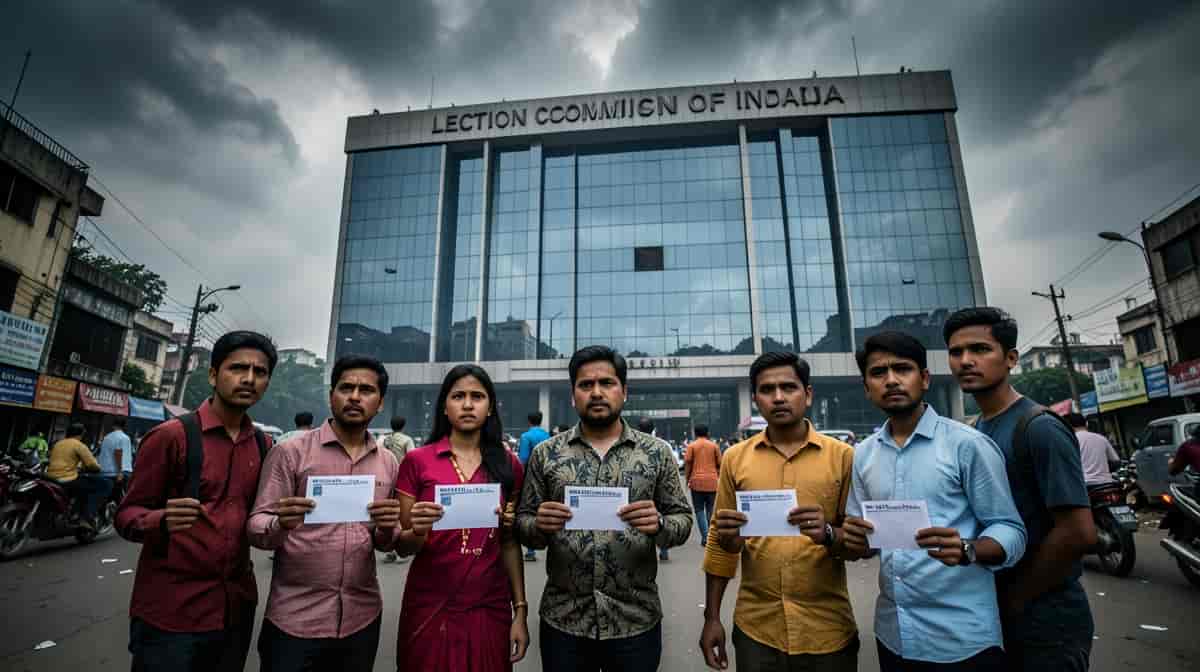
The silence of millions of missing names from India’s electoral rolls has been replaced by the roar of nationwide protests as citizens across the country discover their right to vote has vanished. The ongoing debate surrounding Election Commission credibility and voter deletions has triggered nationwide concerns, drawing sharp reactions from political factions and institutional watchdogs alike.
What began as administrative adjustments has spiraled into a profound crisis of institutional trust. As investigative reports reveal procedural inconsistencies and political alliances demand immediate transparency, the Election Commission of India (ECI) finds itself under unprecedented scrutiny. The scale of the disenfranchisement, affecting tens of millions of eligible voters, has raised fundamental questions about the health of the world's largest democracy and the autonomy of the bodies meant to protect it.
The sudden removal of tens of millions of voters from India’s electoral rolls has triggered a national credibility crisis for the Election Commission, sparking widespread protests and intensive legal scrutiny over procedural transparency.
The Scale of Disenfranchisement and Public Outcry
The sheer volume of the recent voter purges has sent shockwaves through the Indian political landscape. Reports from October 2026 indicate that tens of millions of voter deletions have occurred, leading to a wave of demonstrations that have spanned major urban centers and rural districts. This is not merely a logistical error; for many, it represents a systemic failure in electoral administration that threatens to strip eligible citizens of their primary tool for democratic participation.
The crisis of credibility facing the Election Commission of India (ECI) stems from a perceived lack of transparency in how these names were identified for removal. Citizens have reported finding themselves suddenly stripped of their right to vote without prior notice or clear explanation. This has led to a climate of uncertainty, where the accuracy of the entire voter registry is being called into question by both domestic observers and international monitoring groups like ACLED.
The Impact on Marginalized Communities
A critical "hidden angle" to this administrative purge is the disproportionate impact on specific segments of the population. Analysis of the deletion patterns suggests a severe effect on:
- Marginalized socio-economic communities who may lack the resources to contest administrative errors.
- Migrant workers whose mobility makes them particularly vulnerable to residence-based administrative disenfranchisement.
- Urban voters who have reported sudden discrepancies in electoral lists despite long-term residency.
These purges often target those with the least institutional power, further complicating the narrative of neutral administrative "cleanup" of the voter rolls.
The INDIA Bloc Confrontation and the 48 Questions
The political response to the voter deletions has been led by the opposition INDIA bloc, which has moved beyond rhetoric to formal, detailed inquiries. In November 2026, the alliance posed 48 targeted questions to the Election Commission regarding the Special Intensive Revision (SIR) process. This move is designed to force a level of accountability that has, thus far, been missing from the commission's public communications.
The questions focus heavily on the criteria used for deletions and why such massive numbers were removed in a relatively short window. The INDIA bloc has accused the commission of institutional bias, suggesting that the administrative overreach in voter roll revisions serves specific political ends. This friction has escalated from standard political maneuvering into a significant challenge to the ECI’s historical reputation for independence.
When citizens lose their right to vote without proper notice, the foundation of a democratic society is shaken.
Investigative Findings and the Delhi SIR Controversy
Further damaging the commission’s standing are investigative reports concerning the Delhi Special Intensive Revision (SIR). Reports from The Reporters' Collective suggest that the ECI may have bent its own established rules to bring back certain deleted voters while leaving others disenfranchised. Such inconsistencies suggest a lack of a unified, transparent standard for how voter data is managed.
The Delhi case study has become a focal point for critics who argue that the ECI's administrative procedures are no longer predictable or fair. By appearing to adjust rules on the fly, the commission has inadvertently fueled theories of procedural manipulation. This "rule-bending" has become a central piece of evidence for those arguing that the ECI is facing a crisis of credibility that cannot be solved by simple administrative fixes.
Legal Challenges and the Scrutiny of CEC Powers
As protests continue in the streets, a parallel battle is unfolding in the courts. Legal and constitutional scrutiny has intensified regarding the powers of the Chief Election Commissioner (CEC). The Supreme Court Observer has tracked at least 10 key objections to existing CEC powers, alongside the ECI’s formal responses to these challenges.
The core of the legal debate centers on institutional accountability. Critics argue that the current framework allows the CEC and the commission at large to operate with too little oversight, particularly concerning the management of the Special Intensive Revision process.
| Key Milestone | Event Description |
|---|---|
| October 2026 | ACLED and Reuters report escalating credibility crisis and mass protests. |
| October 27, 2026 | Supreme Court observations highlight 10 key objections to CEC powers. |
| November 19, 2026 | INDIA bloc poses 48 detailed questions to the ECI regarding the SIR process. |
| November 20, 2026 | Investigations reveal rule-bending in Delhi SIR to reinstate certain voters. |
Root Causes and Systemic Flaws
Analysts point to systemic flaws and administrative overreach as the root causes of the current instability. The Special Intensive Revision (SIR) process, intended to modernize and clean voter registries, appears to have functioned without sufficient safeguards. The result is a massive unexplained deletion of voters that the commission has struggled to justify with empirical data.
This failure is not just an internal administrative issue; it has broader implications for India’s standing on the global stage. International scrutiny on the health of Indian democracy is mounting, as the perceived independence of constitutional watchdogs like the ECI directly impacts democratic indices and diplomatic narratives. The perception of institutional reliability is essential for maintaining investor sentiment and political stability in the long term.
The Future Outlook: Heightened Friction or Corrective Action
The next 24 to 72 hours are expected to see continued debate and potential responses from opposition political blocs. As the public pressure mounts, the Election Commission faces a critical choice: provide transparent clarifications and corrective measures or risk a deepened institutional crisis.
Expert predictions suggest that analysts should expect heightened political friction and demands for transparency regarding voter roll management. The "best-case" scenario involves the ECI successfully restoring public trust through resolve and discrepancies management. However, the "worst-case" scenario remains a reality: escalating street protests, prolonged legal challenges, and a lingering sense of disenfranchisement that could shadow future elections.
Potential Institutional Responses
The ECI’s next moves will likely focus on:
- Formal statements addressing the 48 questions posed by the INDIA bloc.
- Clarifications on the procedural rules used during the Delhi SIR.
- Potential adjustments to voter rolls to reinstate eligible citizens who were erroneously removed.
Frequently Asked Questions
Why is the Election Commission of India facing a crisis of credibility?
The Election Commission of India has come under intense scrutiny and a crisis of credibility due to controversies surrounding its handling of elections and institutional powers. Recent reports highlight growing concerns over transparency, drawing criticism from international and domestic observers alike.
What led to widespread protests over voter deletions in India?
Widespread protests erupted following the sudden deletion of tens of millions of voters from electoral rolls. These massive omissions sparked outrage, accusations of disenfranchisement, and widespread demonstrations questioning the fairness of the electoral process.
Who is affected by the recent voter deletions in India?
Tens of millions of eligible citizens across the country have been directly affected by the mass voter deletions, finding themselves stripped of their right to vote. This disproportionately impacts marginalized communities and urban voters who report sudden discrepancies in electoral lists.
What is the Delhi SIR and how does it relate to the Election Commission?
The Delhi SIR involved controversial voter roll revisions where the Election Commission was accused of bending its own rules to reinstate deleted voters. This specific mechanism drew significant investigative attention regarding the integrity and consistency of the commission's administrative procedures.
Why has the INDIA bloc posed questions to the Election Commission?
The opposition INDIA bloc formally posed 48 detailed questions to the Election Commission regarding the SIR process and electoral discrepancies. This political maneuver aims to hold the electoral body accountable for transparency issues and alleged procedural lapses during voter roll updates.
What happens next regarding the Election Commission's powers and voter transparency?
Legal scrutiny and public pressure continue to mount as courts and observers examine Chief Election Commissioner powers and institutional responses to objections. Moving forward, the ECI faces mounting demands to restore public trust by addressing transparency concerns and rectifying mass voter roll errors.
Conclusion
The Election Commission of India is currently navigating its most significant credibility crisis in recent history. The confirmed deletion of tens of millions of voters has not only sparked nationwide protests but has also united opposition forces in a demand for procedural transparency. From the investigative findings of rule-bending in the Delhi SIR to the 48 pointed questions from the INDIA bloc, the pressure on the commission is multifaceted and growing. As the Supreme Court continues to review the scope of CEC powers, the path forward remains uncertain. The restoration of public trust will depend entirely on whether the commission can move beyond administrative defensiveness and provide the transparency required to ensure that every eligible Indian citizen retains their fundamental right to vote. Realistic next steps must include a clear, data-backed explanation for the mass deletions and a standardized, fair process for reinstating those who were wrongly removed.
Sources
- India’s Election Commission under the cosh — The Economist
- Why is India’s Election Commission facing a crisis of credibility? — ACLED
- Why India's tens of millions of voter deletions have led to widespread protests — Reuters
- CEC powers: 10 key objections and the ECI’s responses — Supreme Court Observer
- Delhi SIR: ECI Bends Its Own Rules to Bring Back Deleted Voters — The Reporters' Collective
- Why has the INDIA bloc posed 48 questions to the Election Commission over SIR? — The Hindu


