
Iran US Strait of Hormuz Tension Escalates As Tehran Reacts To Blockade
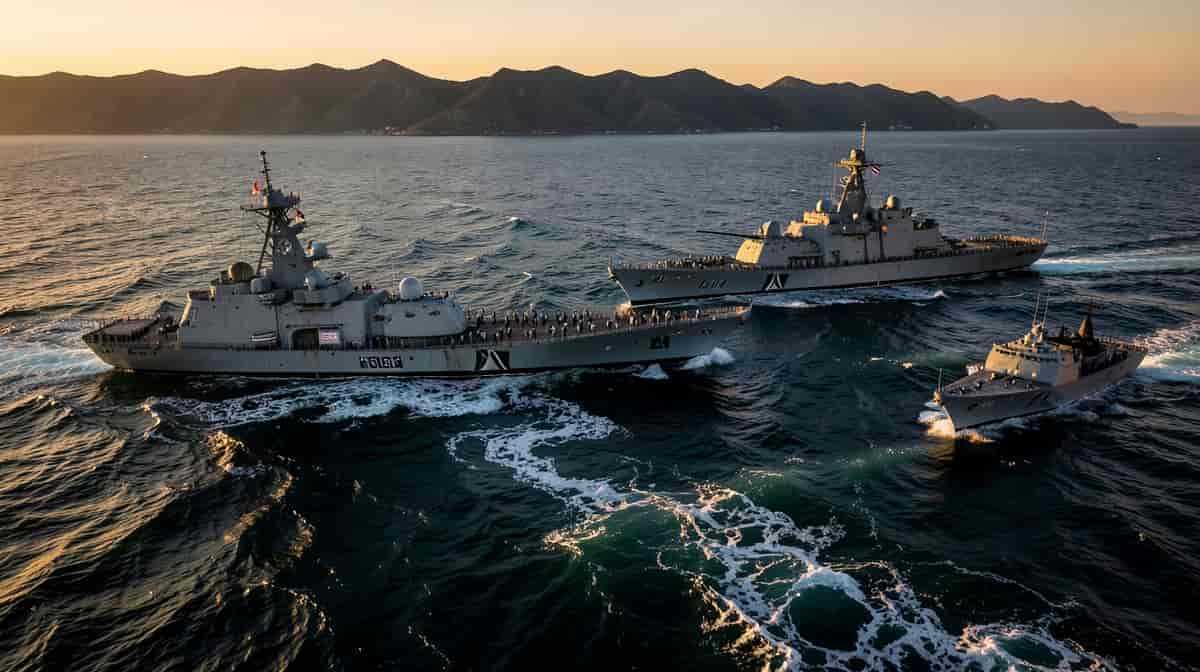
The narrow waters of the Persian Gulf have become a volatile flashpoint where the friction between a naval siege and a vow of resistance threatens to ignite a global energy crisis. The ongoing Iran US Strait of Hormuz conflict has reached a critical juncture as threats of a maritime blockade mount, pushing international maritime security to its most precarious state in decades. As Tehran signals its readiness for a sustained confrontation, the world's most vital energy artery faces a disruption that could reshape global economic stability.
Iran has signaled a full-scale readiness for a showdown in the Strait of Hormuz, declaring it will use "all tools" to dismantle the U.S. naval blockade as commercial tanker attacks reach record levels.
The Escalation of Maritime Hostilities
The intensity of kinetic activity within the Strait of Hormuz has surged to unprecedented levels. Naval authorities have confirmed that the frequency of attacks on commercial vessels in the region has reached the highest point since the conflict began. These engagements are no longer mere posturing; they have resulted in significant physical damage to the infrastructure of global trade. Multiple oil tankers have been reported ablaze near the strait, with maritime security forces identifying underwater mines as the primary cause of these fires.
The use of naval mines represents a sharp intensification of the tactical environment. Unlike direct missile strikes or boardings, the presence of mines creates a persistent and invisible threat that complicates all commercial navigation. These incidents have not been isolated to a single nationality or fleet; instead, they represent a broad danger to all tankers navigating the narrow passage. As vessels catch fire and succumb to structural damage, the immediate risk to crew safety and environmental health becomes a secondary concern to the potential for a total halt in shipping.
Tehran’s Strategic Imperative and the "All Tools" Doctrine
Tehran has explicitly signaled its readiness for a decisive showdown despite the continued U.S. military buildup in the region. The Iranian leadership has publicly stated that it will utilize all available tools and all means necessary to shatter the U.S. naval blockade. This rhetoric reflects a strategic imperative grounded in economic survival. For Iran, the blockade is not merely a military maneuver but a direct threat to its ability to maintain vital maritime trade routes.
The declaration of using "all tools" suggests a multi-layered approach to countering U.S. pressure. This includes:
- The deployment of naval assets to challenge the presence of Western warships.
- The potential for increased mining operations to deter commercial traffic associated with hostile powers.
- Targeted attacks on shipping to demonstrate the vulnerability of the chokepoint.
- Political maneuvering to rally domestic support against what it characterizes as a maritime siege.
The collision between the tightening U.S. naval blockade and Tehran’s survival instinct has transformed the Persian Gulf into a high-stakes arena of deterrence and provocation.
The Global Economic Stranglehold
The Strait of Hormuz serves as the world's most critical maritime chokepoint for the global energy supply. It connects the Persian Gulf with the Gulf of Oman and the Arabian Sea, acting as the primary exit route for a significant portion of the world's crude oil. Any disruption to this narrow passage has immediate and far-reaching consequences for the global economy.
Energy Market Volatility
When shipping lanes are compromised by military conflict or mining, the impact is felt instantly in the energy markets. The current intensification of hostilities has already begun to drive up shipping insurance premiums and freight rates. Investors and market analysts are monitoring the situation for sudden spikes in fuel prices, which occur when the flow of oil is restricted or perceived to be at risk.
Impact on Global Consumers
The consequences of the Iran US Strait of Hormuz conflict extend beyond the trading floor. Global consumers, international shipping companies, and nations dependent on Middle Eastern oil imports are directly affected by the escalating disruptions. For many countries, particularly those in Asia and Europe that rely on a steady stream of energy imports through the strait, a prolonged blockade or a spike in tanker attacks could lead to domestic economic destabilization and energy shortages.
Political Dimension and the US Military Response
In Washington, the administration faces a complex balancing act. While the U.S. has maintained a strong military buildup and reinforced its naval presence to enforce the blockade, political leadership has publicly sought to play down the severity of the escalating attacks. This strategy may be intended to prevent market panic or to avoid being drawn into a broader, unplanned military engagement.
However, the reality on the water tells a different story. The U.S. Navy is actively grappling with the threat of naval mines and the challenge of securing commercial corridors against Iranian tactical escalations. The administration’s attempt to project strength while simultaneously downplaying the crisis highlights the delicate nature of the geopolitical calculus. For the U.S., the goal remains the enforcement of the blockade and the containment of Iranian influence, even as the risk of deterrence failure grows.
Analytical Perspectives on the Root Cause
Military and geopolitical analysts suggest that the current crisis is a direct result of the collision between two opposing strategic goals. The U.S. objective is to strangulate Iranian trade through a maritime siege, while Tehran’s objective is to demonstrate that such a blockade cannot be maintained without incurring an unacceptable cost to the global economy.
The chokepoint crisis transforms a regional confrontation into a global security test, forcing international stakeholders to navigate heightened risks of escalation.
Historical Parallels
The current situation draws strong comparisons to the 1980s Tanker War during the Iran-Iraq War. During that period, commercial vessels in the Persian Gulf faced escalating attacks and maritime blockades, which eventually prompted international naval escorts to protect shipping. The historical parallel suggests that without a diplomatic breakthrough, the current conflict may follow a similar trajectory of tit-for-tat escalations and the eventual necessity for heavy international military intervention to keep the lanes open.
The Hidden Angle
Beyond the visible naval movements, there is potential for under-the-radar backchannel diplomatic efforts. Regional intermediaries may be seeking to establish safe humanitarian or commercial corridors. Such efforts would aim to prevent total economic strangulation and provide a release valve for the mounting pressure, though no official agreements have yet surfaced.
Timeline of the Conflict Escalation
The progression of the current maritime crisis has followed a specific sequence of tactical and political moves.
| Phase | Development |
|---|---|
| 1 | U.S. naval forces establish and tighten a blockade around key Iranian shipping lanes. |
| 2 | Iranian attacks and mining incidents surge to the highest levels of the conflict, leaving multiple tankers ablaze. |
| 3 | Tehran signals readiness for a sustained showdown, vowing to use all means to break the blockade. |
Future Outlook and Expert Predictions
The next few days are expected to be critical for the stability of the region. Experts suggest that the risk of further maritime escalation remains high as both sides remain committed to their current courses of action.
Next 24 to 72 Hours
In the immediate term, analysts expect continued military posturing and rising tensions. There is a high probability of further engagements around the Strait of Hormuz as Iranian forces challenge the blockade and U.S. forces attempt to maintain their positions. Within the next 72 hours, heightened naval activity is anticipated, potentially leading to an escalation of attacks if diplomatic channels remain closed.
Possible Scenarios
| Scenario | Description |
|---|---|
| Best-Case | De-escalation efforts open channels to address the blockade, reducing attacks on commercial tankers and stabilizing the region. |
| Worst-Case | A severe military escalation severely disrupts global energy supplies, resulting in widespread tanker damage and broader conflict. |
Analysts would likely expect further security maneuvers in the strait as the confrontation persists. The outcome depends heavily on whether either side is willing to blink or if the international community can successfully intervene to mediate the maritime siege.
Frequently Asked Questions
What is happening in the Strait of Hormuz conflict between Iran and the US?
Iran has stated it will use "all tools" and means to break what it calls a U.S. blockade in the region. Meanwhile, attacks in the Strait of Hormuz have escalated to the highest levels since the conflict began.
Why are Iranian attacks in the Strait of Hormuz increasing?
The surge in attacks comes as tensions mount over the maritime blockade and a significant U.S. military buildup in the region. Iran is signaling its readiness for a showdown despite the escalating military pressure.
Who is affected by the Strait of Hormuz conflict?
Global shipping and oil transit are heavily impacted by the hostilities in this vital waterway. Recent reports indicate that commercial tankers have been left ablaze after striking mines near Hormuz.
What specific incidents have been reported recently in the strait?
Navy officials and media sources have reported that oil tankers caught fire after hitting underwater mines in the area. This marks a sharp intensification of kinetic activity in the strategic chokepoint.
How is the United States responding to Iran's threats?
The U.S. has maintained a strong military presence and buildup in the region to counter Iranian actions. Leadership, including Donald Trump, has downplayed some of the escalating attacks while maintaining strategic defense positions.
What happens next in the Iran-US Hormuz confrontation?
With Tehran vowing to utilize every available tool to counter the blockade and attacks reaching record levels, the risk of further maritime escalation remains high. Observers are closely watching for any diplomatic breakthroughs or potential major naval clashes.
Conclusion
The conflict in the Strait of Hormuz has entered a dangerous new phase characterized by record-level attacks and a direct challenge to the U.S. naval blockade. With tankers ablaze and naval mines threatening the world's primary energy corridor, the situation has moved beyond political rhetoric into a high-stakes military confrontation. Tehran’s commitment to using "all tools" to break the economic siege, coupled with the U.S. military buildup and its refusal to back down from the blockade, creates a scenario where the risk of a broad regional escalation is significantly elevated. As energy markets react to the volatility and the threat to maritime trade routes intensifies, the international community remains on high alert for the next tactical move or a potential diplomatic intervention that could prevent a total disruption of global energy supplies.
Sources
- Iran war live: ‘All tools’ to break US blockade will be used – Tehran — Al Jazeera
- Live Updates: Iran says it will use all means to end U.S. blockade as Trump plays down escalating attacks — CBS News
- Iranian attacks in the Strait of Hormuz are at the highest levels since the conflict began — CNN
- Iran war updates: Navy says tankers ablaze near Hormuz after hitting mines — Al Jazeera
- Strait of Hormuz attacks have increased to highest level since Iran war began — ABC News - Breaking News, Latest News and Videos
- Iran signals readiness for Hormuz showdown despite US buildup — Iran International


