
Karl Bushby 28-Year Global Walk Reaches an Emotional End in Britain
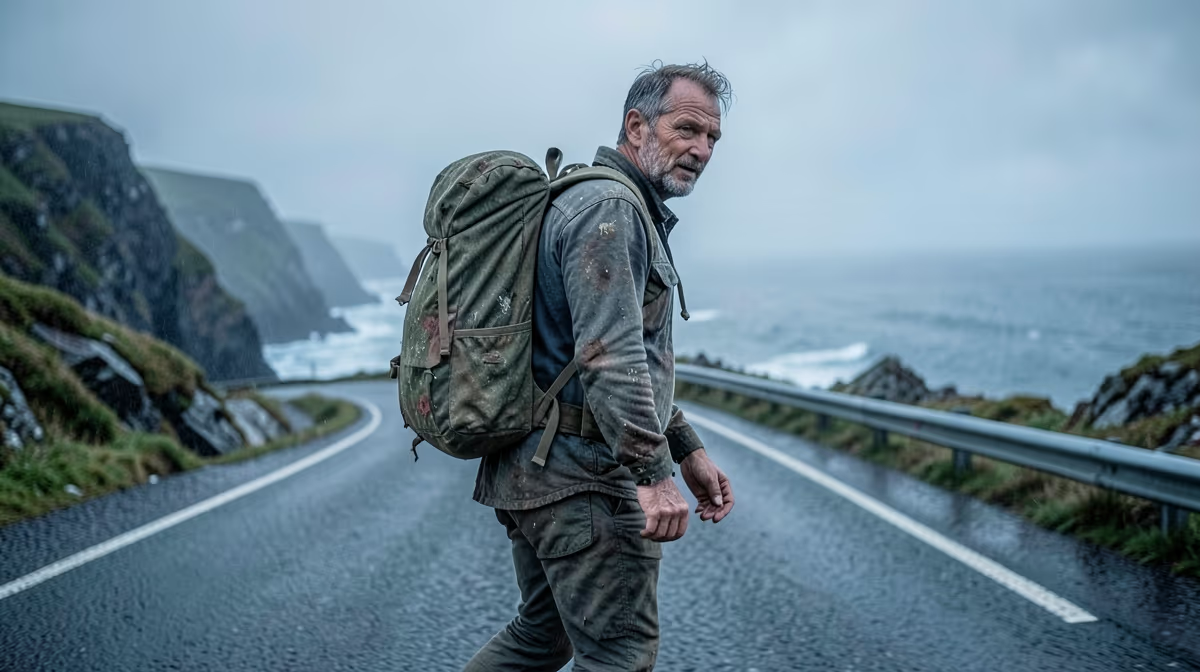
Few individuals have ever attempted to measure the vast scale of the planet using nothing more than their own footsteps, and fewer still have dedicated three decades of continuous movement to complete such an ambition. When the British adventurer Karl Bushby walk home expedition first began in the mid-1990s, it initiated a grueling, continuous journey across four continents that would test the absolute frontiers of human endurance and geopolitical adaptability.
Karl Bushby’s completion of a 28-year global walk across four continents stands as one of the most remarkable modern feats of human endurance on foot.
Now, after crossing harsh environments, navigating complex international borders, and overcoming decades of bureaucratic hurdles, the former British Army paratrooper has officially reached Great Britain. His arrival, punctuated by a historic walk across the Humber Bridge, brings an end to an extraordinary pursuit that mirrors classic early 20th-century feats of global pedestrian exploration.
The Genesis of an Unprecedented 28-Year Global Walk
The origins of this multi-decade expedition lie in the mid-1990s, when Karl Bushby was serving as a paratrooper in the British Army. Driven by an intense obsession with extreme physical tests and human limits, he formulated an ambition that appeared nearly impossible by modern standards: to fly to the southern reaches of South America and walk back to his home in the United Kingdom entirely on foot.
This endeavor was not designed as an intermittent series of self-contained hikes, but as a continuous, unmechanized passage spanning thousands of miles. By committing to traverse four continents without relying on motorized transport, Bushby subjected himself to conditions that few contemporary travelers have ever confronted.
What began as an extreme personal pursuit of endurance evolved into a marathon effort sustained over nearly three decades. Over this prolonged timeframe, Bushby had to navigate not only the immediate demands of wilderness survival, but also the logistical necessities of financing, supply management, and securing sponsorships to keep the journey moving forward across four distinct continents.
Four Continents on Foot: Surviving Jungles and Deserts
Walking across four continents demands constant physical adaptation to some of the planet's most punishing terrain. Over the course of his 28 year global walk, Bushby was forced to confront environments that pushed the human body to its absolute thresholds, specifically dense, trackless jungles and sweeping, unforgiving deserts.
Traversing four continents entirely on foot required continuous physical adaptation to extreme natural barriers, including hostile jungles and arid deserts.
In equatorial and tropical sectors, hostile jungle canopies presented constant physical hazards, demanding relentless navigation through dense brush, humidity, and challenging isolation. Conversely, arid and desert regions presented opposite extremes, requiring precise water management, physical stamina, and mental fortitude under relentless heat and vast, desolate stretches of ground.
Beyond the immediate environmental hazards, the sheer cumulative wear of pedestrian travel over nearly three decades posed an immense physical toll. Continuous foot transit over tens of thousands of miles requires navigating fluctuating weather patterns and seasonal shifts while maintaining the physical integrity required to press onward day after day.
Geopolitical Red Tape and the Shifting Reality of International Borders
While the physical challenges of walking across the globe were immense, the geopolitical and bureaucratic hurdles proved equally formidable. Spanning the mid-1990s through late 2026, Bushby’s journey took place across an era characterized by shifting international relations, evolving security barriers, and increasingly stringent border controls.
- Navigating complex visa requirements and international red tape across multiple sovereign nations.
- Negotiating diplomatic hurdles and administrative delays at international frontiers.
- Adapting to shifting regional security policies and border control regimes over three distinct decades.
- Maintaining legal compliance while executing an unmechanized, continuous overland foot crossing.
Because the expedition required crossing numerous international frontiers entirely on foot, Bushby repeatedly encountered complex international red tape. Securing legal passage meant dealing with changing visa frameworks, diplomatic impasses, and bureaucratic delays that often threatened to halt the journey entirely.
His journey provides an unusual case study in how individual human mobility intersects with global state security. As the world transitioned from the late 20th century into the heightened security environments of the 21st century, unmechanized global travel became increasingly restricted. Bushby’s ability to navigate these tightening diplomatic hurdles underscores how administrative challenges can rival extreme environmental barriers in modern global expeditions.
Crossing the Humber Bridge: The Long-Awaited Arrival in Hull
The monumental expedition culminated in late October and early November 2026 as British adventurer Karl Bushby finally reached Great Britain. The closing chapters of his long journey led him to the Humber Bridge near Hull, an iconic crossing that served as the threshold for his final return home.
Stepping onto the Humber Bridge marked the transition from a solitary, multi-decade international trek into a widely witnessed public homecoming. Supporters, onlookers, and media outlets gathered to watch the former paratrooper complete the final miles of his 28-year trek on foot.
For local regional authorities in Hull and the British public, the milestone represented a moment of major civic celebration. Having departed Great Britain in the mid-1990s as an active-duty serviceman, Bushby returned to a fundamentally transformed landscape, bringing a nearly 28-year transcontinental loop to an emotional and historic conclusion.
The Psychological Architecture of Multi-Decade Isolation
While public attention often centers on the physical milestones of long-distance walking, the psychological endurance required for an expedition of this duration is unprecedented. Spending nearly 28 years on the road involves sustained isolation, prolonged separation from family and friends, and the continuous mental strain of long-duration transit.
Living as a global pedestrian for nearly three decades meant operating outside the conventional rhythms of traditional society. Bushby had to maintain mental resilience while constantly moving through unfamiliar communities, diverse linguistic regions, and protracted periods of solitude. The mental fortitude required to wake each day for nearly thirty years with the singular objective of walking forward constitutes an extraordinary study in long-term human psychology.
Now that the journey has concluded, a profound psychological challenge emerges: the transition from continuous transit to stationary life. Experts and observers recognize that readjusting to a settled environment after decades of perpetual travel requires significant psychological recalibration, especially under the glare of intense international media attention.
Exhibitions, Public Interest, and the Future Outlook
With the walk completed, focus has shifted toward documenting and preserving the history of Bushby’s expedition. Cultural institutions and community organizers have already begun charting the trek, with dedicated exhibitions opening to display artifacts, route maps, and records accumulated over nearly three decades of travel.
In the immediate 24 to 72 hours following his crossing of the Humber Bridge, local and global media coverage continues to expand alongside public celebrations in Hull. The broader implications and potential future outcomes of this historic return include:
- A surge in international media interest, long-form adventure literature, and documentary projects examining the logistical and physical reality of the trek.
- The establishment of permanent educational exhibitions charting the expedition's geographic and cultural footprint across four continents.
- Sustained public and academic interest regarding human endurance, resilience, and unmechanized navigation.
- The delicate balance between intense public celebration and the personal space required for Bushby to readjust to civilian, stationary living.
In a best-case scenario, the completion of this monumental journey will inspire lasting educational programs and permanent cultural exhibits in Hull, offering future generations an intimate look at global geography and perseverance. However, analysts also observe that the intense spotlight must be managed carefully to ensure the returning explorer is not overwhelmed by immediate public demands after decades on the move.
Frequently Asked Questions
Who is Karl Bushby and what did he achieve?
Karl Bushby is a British adventurer and former paratrooper who completed an epic 28-year global walk home to the UK. His monumental journey involved traversing four continents entirely on foot, overcoming extreme environments and bureaucratic hurdles.
When did Karl Bushby start his global walk?
Bushby began his remarkable endurance trek in the mid-1990s after flying to South America with the goal of walking back to his home in the UK. Driven by an obsession with extreme physical challenges, he spent nearly three decades on the road.
What were some of the major challenges Karl Bushby faced during his trek?
Throughout his 28-year journey, Bushby had to navigate hostile jungles, unforgiving deserts, and complex red tape across international borders. His expedition tested the absolute limits of human endurance across multiple continents.
Why is Karl Bushby's walk significant?
His continuous journey represents one of the most remarkable feats of endurance and exploration in modern history. The feat captured global attention, showcasing extraordinary resilience and dedication over nearly three decades.
What specific landmark did Karl Bushby cross upon returning?
As part of his final return to the UK, Bushby famously crossed the Humber Bridge near Hull on foot. This momentous event marked the emotional final stretch of his 28-year global walking expedition.
What is next for Karl Bushby after completing his walk?
Having finally completed his epic multi-decade journey home, Bushby's incredible trek has also been celebrated through public exhibitions detailing his travels. He is now settling back home after nearly a lifetime on the move.
Conclusion
Karl Bushby’s completion of his 28-year trek across four continents brings one of the modern era's most ambitious human endurance feats to an authoritative close. From departing South America as a British paratrooper in the mid-1990s to crossing the Humber Bridge on foot, Bushby overcame extreme physical environments and evolving geopolitical hurdles to fulfill his goal of walking home. As civic celebrations, documentary interest, and public exhibitions chart the extensive history of his expedition, his journey stands as a singular testament to resilience, determination, and the human capacity to navigate the globe on foot.
Sources
- In 28 years of walking, Karl Bushby has overcome jungle, desert and red tape. Now he's nearly home — AP News
- British man returns home after 28 years of walking across the globe — CBS News
- In the mid-1990s Karl Bushby was a paratrooper in the British Army, obsessed with endurance tests. So he flew to South America and started walking home. Now four continents and nearly 28 years later, he’s almost done. — Facebook
- After 28 Years Walking Across the Globe, He’s Almost Home — The New York Times
- Exhibition charts Karl Bushby's 28-year trek home — BBC
- Karl Bushby crosses the Humber Bridge after 28 years on foot: what happens in Hull today — Nacionale


