
Navi Mumbai Airport Flight Shifts Gain Support From Foreign Airlines
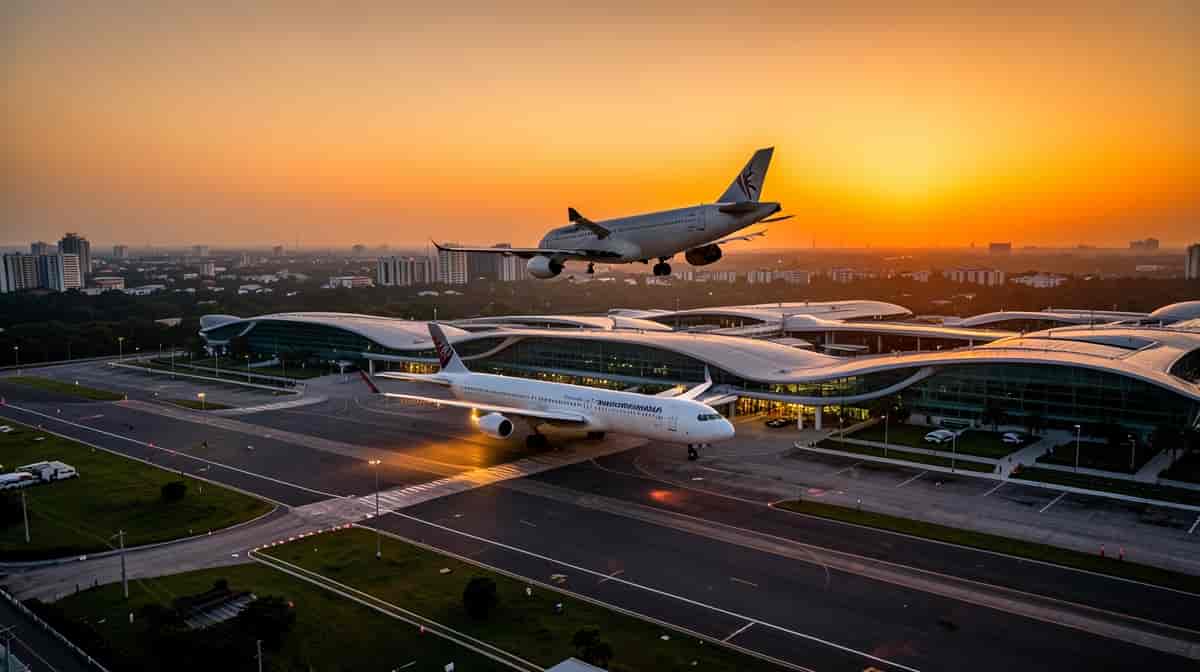
The saturation of Mumbai’s primary airspace has reached a critical threshold, forcing a high-stakes recalibration of how the world’s most populous nation manages its financial gateway. Foreign airlines are showing strong support for shifting operations to Navi Mumbai Airport Mumbai flights to ease congestion, marking a pivotal moment in the evolution of the region’s aviation landscape.
As the Chhatrapati Shivaji Maharaj International Airport (CSMIA) nears its absolute capacity, the operationalization of the Navi Mumbai International Airport (NMIA)—managed by the Adani Group—is no longer a distant luxury but a logistical necessity. This transition, however, is not merely a matter of moving planes; it is a complex negotiation involving bilateral aviation rights, massive infrastructure commitments, and the commercial viability of split-hub operations. While some international carriers see the new facility as the only way to bypass the current delays and carbon inefficiencies of circling over a crowded city, others remain deeply entrenched in the established infrastructure of the old hub.
Decentralizing air traffic in a massive metropolitan area like Mumbai is critical for reducing flight delays, lowering carbon emissions from circling planes, and accommodating future travel demands safely and efficiently.
A Metropolis Under Pressure: The Case for Relocation
The root cause of the current push to relocate flights lies in the severe capacity constraints facing Mumbai's Chhatrapati Shivaji Maharaj International Airport. For years, the facility has struggled to handle surging aviation traffic, leading to significant congestion that affects both domestic and international schedules. The development of the Navi Mumbai International Airport by the Adani Group was designed specifically to address this bottleneck, offering a greenfield alternative that can support the next generation of Indian aviation growth.
International airlines and local authorities have engaged in extensive discussions regarding the relocation of specific flight blocks. The goal is to create a balanced distribution of traffic across the metropolitan area, ensuring that neither airport is overwhelmed. This decentralization is expected to lead to more reliable slot availability and improved ground handling, which have become pain points at the existing land-locked airport in the heart of the city.
The Resistance: Why Global Giants Are Hesitating
Despite the strategic backing for the new airport, the transition is facing friction from some of the industry’s largest players. Major carriers like Emirates and Air France have expressed reservations about Adani’s Navi Mumbai airport plan. Their hesitation stems from several commercial and operational risks that come with moving to a secondary hub in a metropolitan region.
For a global carrier, splitting operations between two airports in the same city can significantly increase costs. It requires separate ground staff, maintenance crews, and lounge facilities, while also complicating connections for passengers transferring from international to domestic flights. There are also concerns regarding initial connectivity and whether the new airport can offer the same level of premium service and passenger convenience that has been established over decades at the primary hub. This resistance highlights the delicate balance between state-led infrastructure planning and the commercial realities of the global aviation market.
Infrastructure as a Catalyst: The CIDCO Elevated Corridor
The success of any secondary airport is inextricably linked to its accessibility from the urban core. Recognizing this, the City and Industrial Development Corporation (CIDCO) has moved to fast-track critical transit links. One of the most significant projects currently underway is the 25-kilometer elevated corridor designed to connect Thane directly to the Navi Mumbai Airport.
CIDCO has already floated tenders for this project, which aims to provide a high-speed transit artery for passengers and cargo. By cutting down travel time from the northern and eastern suburbs, the corridor is intended to mitigate the "distance penalty" that often plagues new airports located on the outskirts of major cities.
Logistics and Local Connectivity
- CIDCO floats tenders for the 25-kilometre elevated corridor to boost regional connectivity.
- The project serves as a critical link for travelers from Thane and surrounding metropolitan regions.
- High-speed road access is viewed as a prerequisite for winning over hesitant international carriers.
However, the path to seamless connectivity has seen some recent setbacks. The discontinuation of Cityflo’s free shuttle service from the Navi Mumbai International Airport serves as a reminder that local transport networks are still in a state of flux. As the airport scales, the reliance on long-term, state-funded infrastructure projects like the elevated corridor will become even more critical than temporary private shuttle arrangements.
Operational Milestones and Growth Indicators
Despite the ongoing debates over airline relocation, the Navi Mumbai International Airport is already demonstrating its operational potential. The facility recently marked a major milestone by recording over 200 flights in a single day. This rapid early growth suggests that the airport is capable of handling high-volume traffic even as it continues to refine its infrastructure and service offerings.
| Milestone | Detail |
|---|---|
| Daily Flight Volume | Surpassed 200 flights in a single day |
| Primary Infrastructure Developer | Adani Group |
| Key Transit Project | 25km Elevated Corridor (Thane to NMIA) |
| Coordinating Agency | CIDCO |
These numbers are a strong signal to the aviation industry that the facility is moving toward full-scale commercial readiness. The ability to handle 200 flights daily during the transition phase provides a proof-of-concept for foreign airlines that are currently weighing the risks of moving their operations.
A Global and Geopolitical Perspective
The expansion of Mumbai’s airport capacity carries significant weight beyond India’s borders. As a key financial and transit hub in South Asia, Mumbai's ability to manage its airspace directly influences international trade routes and bilateral aviation rights. The geopolitical angle is clear: foreign carrier positioning in the rapidly growing Indian aviation market depends on their ability to secure favorable slots in the country’s most important commercial city.
There is a clear historical parallel to this transition. Major metropolitan areas around the world, such as London with Heathrow and Gatwick, or Tokyo with Haneda and Narita, have had to navigate the same balancing acts. The phased migration of traffic from older, land-locked hubs to secondary greenfield airports is a proven model for long-term growth, but it always requires a period of adjustment where airlines and passengers alike must adapt to a new geography of travel.
Shifting international operations requires balancing passenger convenience, airline operational costs, and robust ground transportation networks.
Future Outlook: The Next 72 Hours and Beyond
The immediate future of the Navi Mumbai transition will be defined by continued assessments and high-level negotiations. In the next 24 hours, foreign airlines and airport operators are expected to continue their evaluations of operational feasibility, focusing on the logistics of shifting select flight blocks.
Over the next 72 hours, the industry is anticipating further clarifications from international carriers like Emirates and Air France. These statements may provide more detail on their specific reservations or offer a potential timeline for when they might consider a move. Simultaneously, updates on infrastructure progress, particularly the transit connectivity projects managed by CIDCO, will be closely watched by stakeholders.
Expert Predictions and Scenarios
Analysts expect a gradual transition phase. International carriers will likely wait for more robust ground infrastructure and clear evidence of passenger convenience before fully committing their most profitable routes to Navi Mumbai.
- Best Case: Smooth negotiations lead to an optimized distribution of flights between both airports, supported by fast-tracked transit links and strong passenger uptake.
- Worst Case: Resistance from key international airlines due to logistical hurdles leads to prolonged delays in balancing capacity, keeping Mumbai’s airspace congested for longer than anticipated.
The ongoing friction between state infrastructure planners, the Adani Group, and global aviation giants will determine how quickly Mumbai can resolve its air traffic crisis and solidify its position as a world-class aviation hub.
Frequently Asked Questions
Why are foreign airlines being asked to shift some Mumbai flights to Navi Mumbai Airport?
International carriers are being encouraged to move portions of their operations to alleviate severe congestion at the main Mumbai airport. The newly developing Navi Mumbai airport project aims to accommodate growing regional aviation demands and distribute traffic more evenly across the metropolitan area.
What is the current status of the Navi Mumbai airport operations?
The Navi Mumbai airport has recently recorded significant milestones, handling over 200 flights in a single day. This rapid growth demonstrates its expanding capacity to support commercial flight operations and ease regional aviation bottlenecks.
Are all international airlines on board with the Navi Mumbai airport plan?
Not all major carriers are immediately participating, with some airlines like Emirates and Air France initially showing hesitation regarding the transition. Concerns often involve infrastructure readiness, operational logistics, and passenger convenience during the early phases of the airport's launch.
How is connectivity to the Navi Mumbai airport being improved?
To support the rising traffic and facilitate smoother commutes, infrastructure projects are actively underway. For instance, CIDCO has floated a tender for a 25-kilometre elevated corridor project connecting Thane to the Navi Mumbai airport.
What happened to the complimentary shuttle services previously operating at Navi Mumbai International Airport?
Certain private transport options have experienced adjustments, such as Cityflo discontinuing its free shuttle service from the Navi Mumbai International Airport. Passengers and commuters must rely on alternative transit arrangements while regional transport networks continue to evolve.
What happens next for travelers and airlines regarding the airport shift?
As infrastructure improves and more flights are successfully integrated, aviation authorities will likely continue pushing for a balanced distribution of flights. Airlines will evaluate operational efficiencies and connectivity enhancements before fully committing additional routes to the new facility.
Conclusion
The shift toward Navi Mumbai International Airport represents a fundamental change in India’s aviation strategy, necessitated by the overcrowding of the Chhatrapati Shivaji Maharaj International Airport. While the Adani Group’s new facility has already demonstrated its capacity by handling over 200 flights in a single day, the transition remains a point of contention for major international carriers like Emirates and Air France. The success of this dual-airport system hinges on the rapid completion of CIDCO’s infrastructure projects, such as the 25-kilometer elevated corridor from Thane, which will address the critical issue of passenger transit. As negotiations continue, the focus remains on creating a seamless operational environment that balances the commercial needs of global airlines with the regional necessity of easing Mumbai’s congested skies.
Sources
- Foreign Airlines Back Moving Some Mumbai Flights To Navi Mumbai Airport — NDTV
- Why Emirates, Air France are not onboard Adani’s Navi Mumbai airport plan — The Indian Express
- Why are international airlines being asked to shift to Navi Mumbai? | Explained — The Hindu
- Navi Mumbai Airport Records Over 200 Flights In A Day — Sarkaritel.com
- Thane To Navi Mumbai Airport: CIDCO Floats Tender For 25 Kilometre Elevated Corridor Project — Swarajya
- Cityflo’s free shuttle from Navi Mumbai International Airport discontinued — The Times of India


