
Nifty Bank Record High Above 62000 Signals A Massive Market Shift
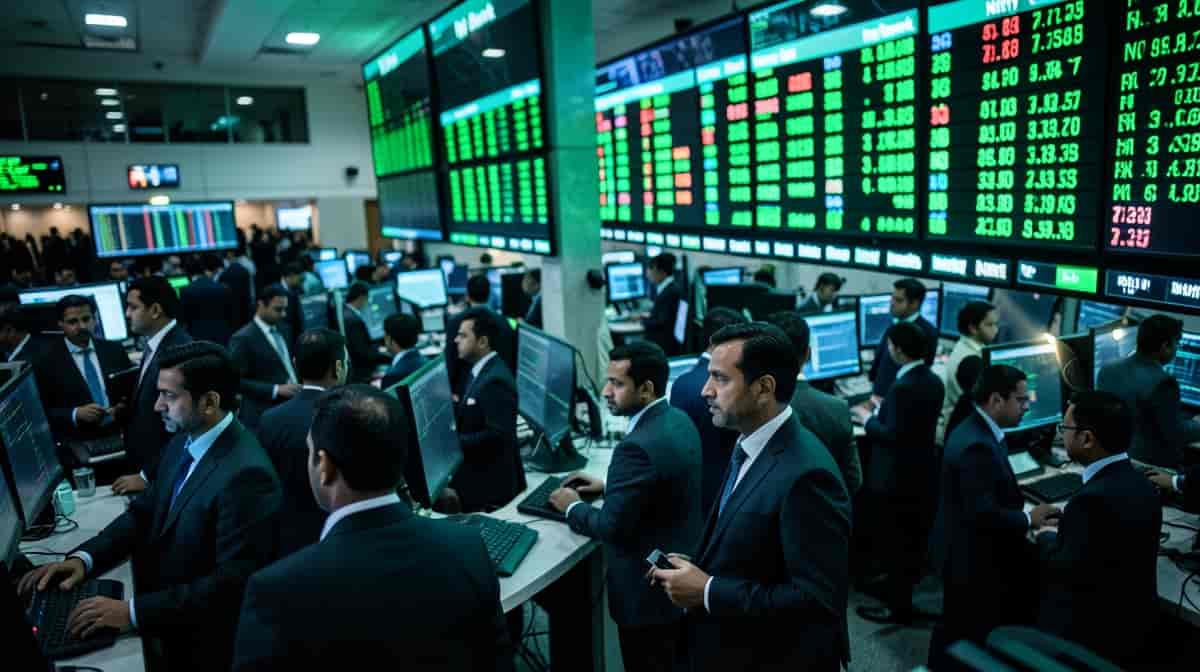
The velocity of the Indian financial sector’s ascent has caught global observers by surprise, recalibrating expectations for emerging market performance in the final quarter of 2026. This historic milestone saw the Nifty Bank record high surpass the psychological 62,000 mark for the first time, signaling a fundamental shift in institutional appetite for the country's heavyweight lenders.
Driven by aggressive buying in major financial institutions, the surge did not stop at the 62,000 threshold. Within a short window, the momentum propelled the index toward the 64,000 mark, marking one of the most significant monthly rallies in the history of the Indian banking sector. This movement reflects a period of robust financial activity and intense investor interest that has effectively lifted the broader market indices, including the Sensex and the Nifty, to levels not seen in nearly a year.
The Nifty Bank record high surpassed the 64,000 mark in November 2026, driven by a 21 percent surge in heavyweight lenders HDFC and ICICI Bank.
The Mechanics of a Record-Breaking Rally
The climb to the 62,000 and 64,000 marks was not a sudden spike but the result of sustained domestic buying and a powerful rally in major banking shares throughout November. Analysts identifying the root causes of this movement point toward heavy capital inflows into key banking equities. This indicates strong liquidity within the domestic market and an improved balance sheet outlook among top-tier Indian financial institutions.
During the initial phase of the surge in mid-November, the Nifty Bank index crossed the 62,000 mark for the first time as lenders collectively rallied by 13 percent. This momentum acted as a catalyst for the wider market. As the month progressed, the buying pressure intensified, specifically targeting private sector giants. The subsequent leap past the 64,000 threshold was underpinned by stellar performances from frontline financial institutions, which saw their individual stock values soar by up to 21 percent.
Sectoral Triggers and Institutional Flows
Institutional investment flows have been the primary engine behind this milestone. Large-scale buying by institutional players suggests a long-term confidence in the Indian financial sector's ability to navigate broader macroeconomic shifts. The performance of the banking sector is frequently viewed as a proxy for national economic health; thus, the record highs are being interpreted as a reflection of perceived economic stability and fiscal resilience.
The following table outlines the progression of the banking index during this critical period in November 2026:
| Period | Milestone Reached | Key Driver |
|---|---|---|
| Mid-November 2026 | 62,000 Mark | 13% sector-wide rally and domestic buying |
| Late-November 2026 | 64,000 Mark | HDFC and ICICI Bank gains of up to 21% |
| Overall November | Record Highs | Aggressive institutional inflows and auto sector support |
Heavyweights Leading the Charge: HDFC and ICICI Bank
The concentration of gains within a few select entities is a defining characteristic of this rally. HDFC Bank and ICICI Bank emerged as the primary engines of the Nifty Bank record high. Their stock performance, which saw gains reaching 21 percent in a single month, provided the necessary weight to pull the entire index upward.
Market analysts observe that when these heavyweight lenders sustain an upward trajectory, it often creates a ripple effect across the financial services landscape. The aggressive buying in these stocks is attributed to their perceived stability and their central role in the credit ecosystem of the country. As these banks play a vital role in lending and business growth, their soaring valuations often translate to improved credit availability and heightened economic confidence across the board.
The Auto Sector Synergy
While the banking sector was the undisputed leader, it did not act in isolation. A broad-based rally saw significant support from the automotive sector. This synergy was most evident when the Sensex surged nearly 1,000 points in a single session, a move led by auto stocks that coincided with the Nifty Bank's record-breaking climb. This multi-sector participation suggests that investor confidence is not localized within finance but is spreading into other high-growth areas of the Indian economy.
Broader Market Impact: Sensex and Nifty Milestones
The ripple effects of the banking surge were felt across all major Indian indices. The Sensex climbed significantly, reclaiming high-water marks and pushing toward psychological resistance levels alongside the Nifty Bank. The broader Nifty index also reclaimed the 25,500 mark, reaching its highest level in nine months.
The banking sector's surge reflects more than just stock prices; it highlights a period of robust financial activity and strong investor interest in the central pillars of the Indian economy.
This broad-based rally has significant implications for various stakeholders:
- Retail investors and mutual fund holders are seeing bolstered portfolio returns driven by financial and auto sector exposure.
- Banking sector employees and financial professionals are operating in an environment of high market valuation and increased institutional activity.
- Borrowers and businesses may find a more confident lending environment as the balance sheets of major lenders reflect significant market strength.
Economic and Geopolitical Dimensions
The performance of the domestic capital market serves as an important indicator for international observers. A surging banking index enhances India's attractiveness as an emerging market investment destination. At a time when global capital allocations are shifting, the Nifty Bank record high positions the Indian financial sector as a destination for foreign institutional interest.
Politically, the market's performance is often used to bolster the narrative surrounding the government's fiscal management. The perceived stability of the banking sector is frequently linked to broader economic policies that aim to ensure financial sector health and resilience.
Hidden Vulnerabilities within the Surge
Despite the headline-grabbing numbers, an investigative look at the index reveals a potential "hidden angle." The rally is heavily concentrated in a few private sector heavyweight lenders. This concentration may mask broader vulnerabilities or a lack of momentum among smaller regional banks and public sector banks within the same index. Analysts warn that for the rally to be truly sustainable and reflective of the entire banking landscape, the gains may eventually need to broaden beyond HDFC and ICICI Bank to include a wider array of financial institutions.
Future Outlook: Sustainability and Consolidation
As the Nifty Bank index evaluates its position above the 64,000 mark, the market enters a phase of critical assessment. The immediate future suggests two possible paths based on current institutional momentum.
The Next 24 to 72 Hours
In the extremely short term, the index is expected to maintain its current momentum, though traders will be watching closely for any signs of profit-booking. Volatility remains a factor as major lender stocks like HDFC and ICICI Bank continue to see heavy trading volumes. Over the next 72 hours, the market will assess whether the broad-based rally, supported by auto stocks, can sustain these record-high valuation levels against evolving macroeconomic cues.
Long-Term Expert Predictions
Financial experts generally anticipate a period of short-term consolidation following such a rapid surge past multiple milestones. While the overall sentiment remains bullish, the sustainability of the rally depends on whether major private lenders can maintain their upward trajectory.
- Best-Case Scenario: Buying momentum continues to push the Nifty Bank and broader indices higher, solidifying investor confidence and attracting further global capital.
- Worst-Case Scenario: Significant profit-booking at these record levels could trigger a correction, potentially pulling the Nifty Bank back below its recent psychological resistance levels.
Frequently Asked Questions
What was the primary milestone reached by the Nifty Bank in November 2026?
The Nifty Bank index crossed the historic 62,000 mark for the first time and subsequently topped the 64,000 mark.
Which specific stocks were the main drivers of the rally?
The rally was primarily fueled by HDFC Bank and ICICI Bank, which saw their stock prices increase by up to 21 percent during the month.
How did the broader market respond to the banking surge?
The Sensex surged nearly 1,000 points, and the Nifty reclaimed the 25,500 mark, reaching a nine-month high, supported by gains in the banking and auto sectors.
Why does the Nifty Bank reaching a record high matter to the general economy?
Banking indices reflect economic health and investor sentiment; a rising banking sector often indicates better credit availability and overall confidence in the financial system.
Conclusion
The climb of the Nifty Bank to a record high beyond the 64,000 mark represents a landmark moment for the Indian stock market. Driven by massive institutional buying and the stellar performance of heavyweights like HDFC and ICICI Bank, the rally has redefined the financial landscape for the end of 2026. While the concentration of gains in a few large lenders suggests a need for caution, the broader market's ability to reclaim major levels like the Nifty 25,500 mark points to a period of significant optimism. Moving forward, the market’s focus will shift toward the sustainability of these levels and the potential for a broader participation across the entire banking and financial services sector.
Sources
- Nifty Bank at new high, tops 64,000; HDFC, ICICI Bank soar up to 21% in Nov — Business Standard
- Nifty Bank Tops 62,000 for First Time as Lenders Rally 13% in November — BigGo Finance
- Nifty Bank hits record high, crosses 62,000 mark - Here are key triggers behind the move - CNBC TV18 — LinkedIn
- Sensex Surges Nearly 1,000 Pts, Nifty Reclaims 25,500 As Auto Stocks Lead Broad-based Rally — TradingView
- Nifty Reaches Nine-Month High as Bank Nifty Hits Record on Strong Buying — INDIA New England News
- Sensex, Nifty surge over 1% as banks, auto stocks drive rally; Bank Nifty hits record high — The Hindu


