
Permanent Daylight Saving Time Bill Ignites Fierce US Safety Battle
Every autumn, millions of Americans engage in the familiar, grudging ritual of turning their clocks backward by one hour, but a persistent legislative effort seeks to break that cycle once and for all. As lawmakers revisit permanent daylight saving time legislation, public health experts and safety advocates are intensifying debates over whether the US should finally stop changing the clocks or if doing so could introduce severe and preventable hazards into daily life.
The push to permanently end America's biannual time change is colliding with unresolved safety warnings over schoolchildren commuting in pitch-black winter mornings.
The debate has moved back to the center of national discourse following the seasonal transition where clocks officially fall back. A high-profile, Trump-backed bill proposes to eliminate the traditional time shifts entirely, keeping the country on Daylight Saving Time year-round. While the concept of permanent evening daylight appeals to many citizens tired of resetting their schedules twice a year, the prospect of altering the nation's timekeeping system permanently touches nearly every layer of daily society, from public safety and transport patterns to standard corporate scheduling and biological health.
The Federal Push for Year-Round Daylight Saving Time
The primary vehicle for the proposed nationwide shift remains federal legislation currently awaiting action in the US Senate. Under the provisions of the Trump-backed proposal, the United States would forego the late-autumn ritual of setting clocks back, effectively establishing a permanent forward shift. Lawmakers promoting the measure argue that abolishing the biannual disruption will stabilize public schedules and preserve extended daylight hours in the late afternoon and evening throughout the winter months.
This political initiative leverages widespread public fatigue over the twice-yearly disruption. For decades, the traditional mechanism of advancing clocks in the spring and dropping them back in the autumn has drawn criticism from citizens who find the schedule jarring. By introducing legislation to lock the clock permanently on Daylight Saving Time, federal sponsors hope to settle the question decisively.
However, moving the proposal through the US Senate time change debate has exposed deep divisions. While the political momentum behind the bill is notable, federal lawmakers must weigh the convenience of permanent late-afternoon sunshine against significant operational and safety pushback from transport officials, child safety experts, and health specialists.
State Initiatives Blocked by Federal Inaction
Frustration with the biannual time change has already spurred several individual states to take action on their own, only to encounter constitutional and statutory barriers. Georgia, among other states, has previously passed legislation endorsing permanent daylight saving time within its borders. Yet despite state lawmakers approving the change, Georgia residents still set their clocks back when standard time arrives.
The roadblock lies directly in federal preemption. Under current federal statutes, individual states are permitted to opt out of Daylight Saving Time to remain on standard time year-round, but they do not possess the legal authority to adopt permanent Daylight Saving Time without explicit authorization from Congress.
This jurisdictional standstill has created a fragmented policy landscape: - Several state legislatures have officially enacted measures favoring permanent Daylight Saving Time. - Enacted state laws remain entirely dormant, conditional upon federal statutory changes that have yet to occur. - States are legally prohibited from independently abandoning the biannual clock change without an act of Congress. - Local populations experience recurring confusion when state-level approvals fail to prevent standard time from resuming in November.
Because federal approval remains stalled in Washington, the state-level enactments operate strictly as non-binding signals to Congress, leaving local communities tied to the federal calendar.
The School Commute Dilemma and Safety Concerns
The most significant resistance to the proposed federal shift does not stem from political rivalries, but from child welfare and medical experts. Public health advocates and safety specialists have warned that keeping Daylight Saving Time year-round poses acute physical dangers, with particular emphasis on clocks falling back safety concerns that affect schoolchildren during the winter months.
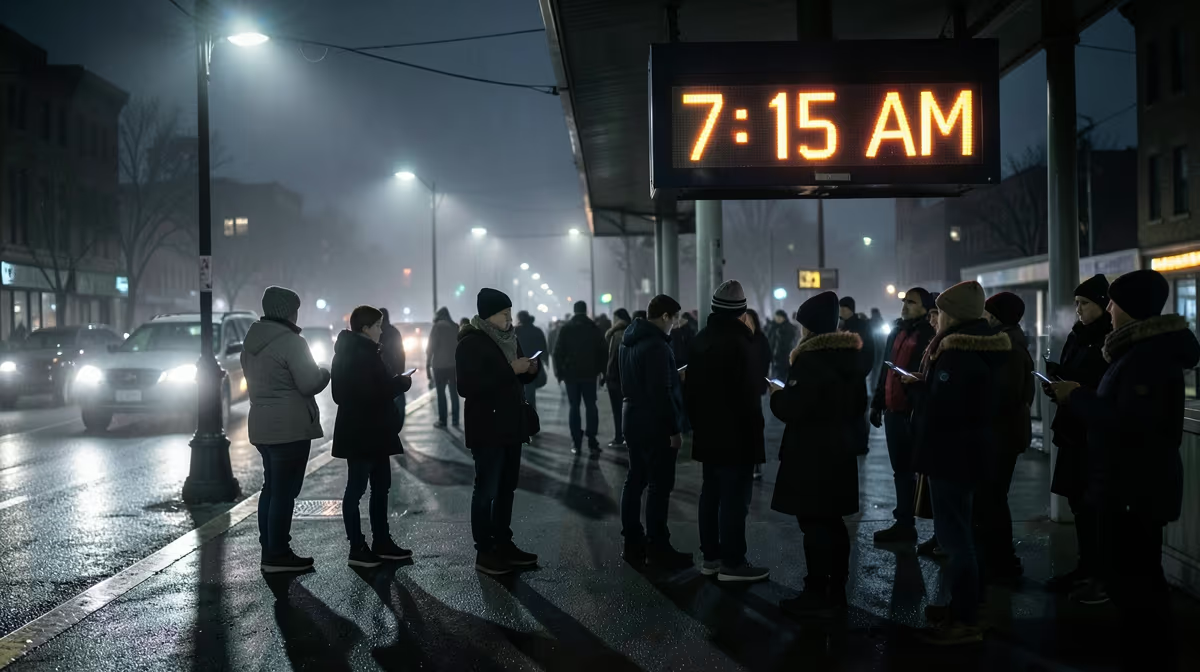
Under permanent Daylight Saving Time, the sun would rise significantly later between November and February across wide swaths of the United States. In many geographic regions, sunrise would not occur until 8:30 a.m. or even after 9:00 a.m. As a result, millions of young children would be forced to wake up, walk along roadways, and wait for school buses in pitch-black morning conditions.
Pediatric and child safety specialists emphasize that dark winter mornings dramatically elevate pedestrian and vehicular accident risks. Young students walking near busy commuter thoroughfares are far less visible to drivers navigating early morning traffic. Critics of the bill argue that while extended evening light may offer recreational benefits for adults, it directly compromises the basic transit safety of vulnerable students.
Safety experts warn that later winter sunrises under permanent daylight saving time would force millions of children to wait for morning school buses in total darkness.
The 1973 Precedent: Lessons from an Abrupt Reversal
The debate over permanent timekeeping in the United States is not purely theoretical. The nation experienced an identical policy experiment during the 1973 energy crisis, when the federal government enacted year-round Daylight Saving Time in an effort to conserve power.
The historical results of that experiment serve as a primary cautionary reference point in current policy discussions:
- The federal government enacted year-round Daylight Saving Time during the winter of 1973–1974 to curb national energy consumption.
- The policy initially enjoyed broad public favor due to the appeal of longer winter afternoons and an end to changing clocks.
- As mid-winter set in, darker morning hours led to a series of fatal pedestrian accidents involving children traveling to school before sunrise.
- Widespread parental protest and national public outcry mounted rapidly over school commute conditions.
- Congress decisively repealed the permanent measure within months, restoring standard time for the winter of 1974.
Analysts observing modern legislative debates frequently cite the 1973 reversal as evidence that public enthusiasm for permanent Daylight Saving Time tends to evaporate once the realities of frigid, sunless winter mornings are experienced firsthand.
Daily Rhythms, Municipal Infrastructure, and Domestic Fallout
Beyond commuter safety, moving away from standard time introduces biological and logistical complications into ordinary households. Sleep experts and chronobiologists caution that morning sunlight is the primary natural cue that resets human circadian rhythms. Eliminating early morning light during the winter can exacerbate chronic sleep deprivation, impair cognitive focus in classrooms, and degrade overall public health.
The disruption also extends inside domestic routines. Household pets, whose feeding and walking schedules are strictly tied to human behavior, regularly experience behavioral confusion when clocks shift. Pet owners often report challenges helping animals adjust their digestive and activity patterns to time changes.
On an institutional level, municipal governments and local school districts face acute logistical hurdles under the proposed federal change. Shifting school start times to align with later sunrises would disrupt district-wide bus schedules, collide with parental work hours, and strain urban transit networks that rely on staggered morning travel windows.
Economic Alignment and Global Synchronization
The proposed alteration carries notable economic and international dimensions. As a dominant global economic hub, shifts in the domestic timekeeping architecture of the United States directly influence international financial exchanges and multinational business operations.
Altering domestic time zones disrupts established synchronization windows with overseas financial markets, cross-border banking operations, and international corporate communications. Multinational entities rely on fixed operational overlaps between New York, London, and Asian economic centers. An uncoordinated or permanent shift within US boundaries requires foreign trading desks and global logistics systems to adjust their standard operating procedures.
Furthermore, domestic commercial sectors remain divided. While retail, golf, and outdoor recreation industries generally champion permanent Daylight Saving Time for the increased consumer activity it generates after standard working hours, agricultural producers and transport sectors have historically favored standard time to maximize daylight during early operational mornings.
The Path Forward: Deliberation and Legislative Gridlock
The near-term outlook for time reform indicates sustained political friction. Over the next 24 to 72 hours, public attention will remain focused on the immediate disruption of the autumn time shift alongside ongoing media analysis of the Trump-backed measure. However, concrete action within the US Senate faces formidable procedural obstacles.
Federal legislators remain caught between conflicting pressures. On one side stands a public eager to abandon the inconvenience of semi-annual clock adjustments, backed by political figures seeking a popular legislative victory. On the other stand public safety organizations, school boards, and health advocates pointing to empirical risks and historical precedent.
Analysts assess that in a best-case scenario, federal and state policymakers would pursue a coordinated legislative framework that addresses transit safety—potentially through adjusted school start mandates—before finalizing any statutory time change. In a worst-case scenario, federal gridlock will persist indefinitely, leaving proactive states like Georgia legally paralyzed while the national debate repeats itself every spring and autumn without resolution.
Frequently Asked Questions
What is the status of the permanent Daylight Saving Time bill in the US?
Legislation like the Trump-backed bill is awaiting further action, such as Senate consideration, to potentially establish permanent Daylight Saving Time nationally. Meanwhile, several individual states like Georgia have passed their own measures, though federal approval is still required to make the change permanent.
Why do some states still have to fall back their clocks if they passed daylight saving bills?
States can pass local legislation expressing support for permanent Daylight Saving Time, but federal authorization is ultimately required to alter time zones nationwide. Because federal approval has not yet been granted, clocks continue to fall back in the fall according to the existing federal schedule.
Why are safety experts concerned about Permanent Daylight Saving Time?
Safety experts, including sources from CNN, warn that keeping permanent Daylight Saving Time could put schoolchildren's lives at risk. The primary concern is that later sunrises during winter months would force children to commute and wait for school buses in the dark.
Who is affected by the seasonal changes in Daylight Saving Time?
Beyond humans experiencing disrupted sleep schedules and potential health risks during time transitions, pets can also be thrown off by the shift. Pet owners often need to adjust feeding and walking routines to help their animals adapt to the time change.
What specific changes would happen if the Trump-backed time bill passes?
A Trump-backed bill could create a significant time jump and eliminate the traditional practice of turning clocks back in the autumn. This would keep the United States on Daylight Saving Time year-round, extending evening daylight hours during the winter months.
What background context surrounds the ongoing debate to end clock changes?
The debate involves balancing the desire for extended evening daylight against potential public safety hazards during dark morning commutes. Lawmakers continue to weigh the economic and lifestyle arguments for staying on Daylight Saving Time permanently against expert warnings about morning darkness.
Conclusion
The federal push to enact permanent Daylight Saving Time remains stalled between widespread public fatigue over biannual time shifts and verified warnings regarding child pedestrian safety. Although several state legislatures have officially approved measures to end the clock changes, all local initiatives remain legally inactive without congressional authorization. As the US Senate weighs the Trump-backed proposal, the central challenge remains reconciling the appeal of extended winter evening daylight with the dangerous realities of darker morning commutes. Until federal lawmakers bridge the gap between lifestyle convenience and community safety, the nation will continue to observe the traditional biannual clock adjustments.
Sources
- Daylight saving time ends tonight. Here’s when to set your clocks back — Los Angeles Times
- ‘Spring forward’ … in November? A Trump-backed bill could create a time jump. — The Washington Post
- Daylight Saving Time can throw pets off. Here’s how to help — NewsNation
- Permanent Daylight Saving Time could put schoolchildren’s lives at risk. An expert explains — CNN
- Georgia passed permanent daylight saving time bill. Here’s why clocks still fall back — WSB-TV
- Time for change? Permanent daylight saving time bill awaiting US Senate action — JC Post


