
ICE Raid Lawsuit Filed After Photographers Face Police Chemical Tactics
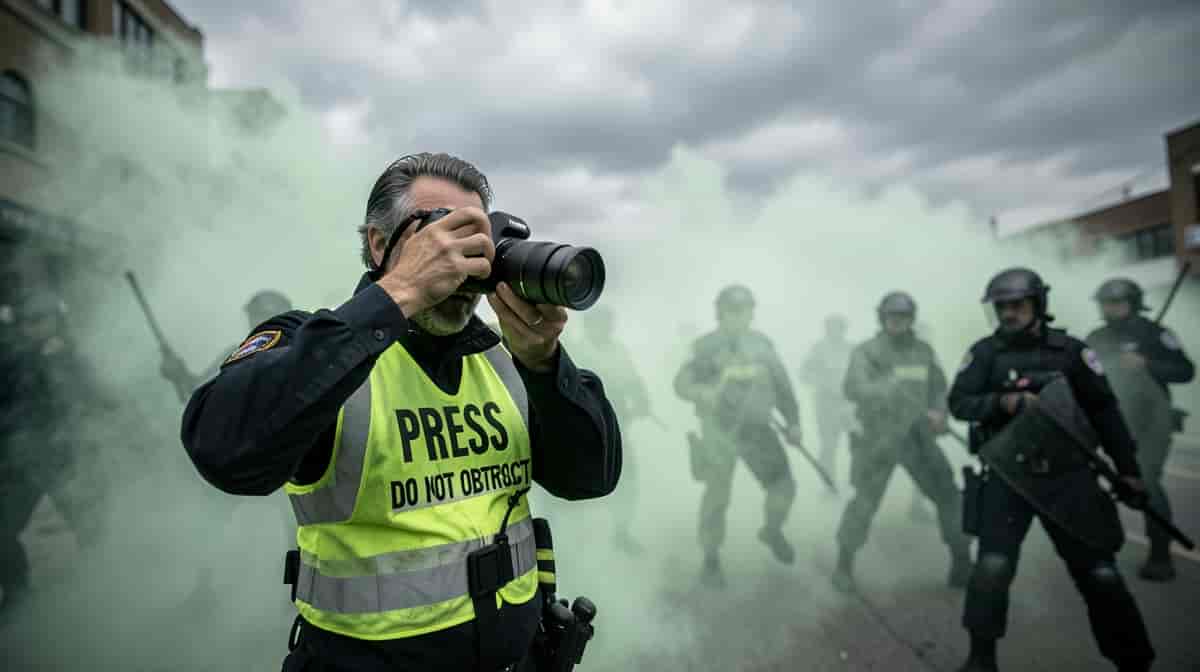
The flash of a camera lens is often the only shield a journalist has when a public protest turns into a battlefield. When that shield fails against the sting of chemical munitions, the resulting legal battle tests the very foundations of the First Amendment in a modern era of high-stakes enforcement. In a landmark legal challenge involving press freedom, three photographers sue police over the aggressive use of tear gas and pepper spray during a recent ICE raid protest. This incident underscores the precarious position of media professionals caught in the crossfire of domestic immigration enforcement operations and the tactical responses of local law enforcement agencies.
The lawsuit filed by three professional photographers against law enforcement highlights a critical conflict between tactical crowd control measures and the constitutional right of the press to document high-tension immigration enforcement operations safely.
The Mechanics of the Lawsuit
The core of this legal action stems from an incident where law enforcement reportedly deployed chemical agents—specifically tear gas and pepper spray—directly affecting photographers who were on-site to document an Immigration and Customs Enforcement (ICE) raid. These three photographers are now seeking accountability, alleging that the use of such force was not only excessive but constituted a direct violation of their professional rights. By filing this formal lawsuit against the police department, the plaintiffs are bringing renewed attention to the safety of press members operating in volatile environments.
Journalists and photographers frequently face difficult conditions while trying to document public safety actions. The lawsuit centers on whether the deployment of these chemical agents infringed upon constitutional protections regarding freedom of the press and the right to document public proceedings. In the eyes of the plaintiffs, the police tactics used during the ICE raid reflect a disregard for the safety of media personnel who are legally permitted to observe and record law enforcement actions in public spaces.
Confirmed Incidents and Legal Arguments
Legal actions of this nature typically examine the specific protocols followed by law enforcement during perimeter security and crowd management. The verified facts of this case include:
- Three professional photographers have officially filed a lawsuit against police.
- The complaint specifically identifies the use of tear gas and pepper spray as the primary cause of harm.
- The incident occurred during an immigration enforcement action involving ICE.
- PetaPixel and other media outlets have confirmed the filing of the legal challenge.
The Global Debate on Chemical Agents
The legal battle in the United States does not exist in a vacuum. Around the world, the use of tear gas and pepper spray by police has come under intense scrutiny due to the severe physical toll these agents take on both protesters and observers. In France, for instance, recent reports have highlighted the devastating impact of these munitions. A 14-year-old’s face was maimed by a tear gas grenade, and school protests have seen the "heaviest toll in decades" following the deployment of chemical agents.
Beyond immediate physical trauma, there are growing concerns regarding the long-term health impacts of tear gas. In various international contexts, menstrual disorders fueled by exposure to chemical agents have led to calls for a ban on tear gas at protests. These reports describe the sensation as being "ten times more painful" than typical physical distress, prompting health advocates to question the safety protocols of any agency utilizing these tools. Even public officials have been caught in the fray, such as a French mayor who was tear-gassed while attempting to shield protesters from police action.
Comparative Impact of Crowd Control Tactics
| Region | Context | Reported Consequence |
|---|---|---|
| United States | ICE Raid Protest | Photographers filing lawsuits for civil rights violations |
| France | School Protests | Heaviest toll in decades; severe injuries to minors |
| France | General Protests | Reports of menstrual disorders and calls for a ban |
| International | Media Safety | Targeted deployment against journalists and photographers |
Analyst Perspective: Root Causes and Militarization
The root cause of this specific lawsuit can be traced to escalating tensions between local law enforcement agencies, federal immigration enforcement operations (ICE), and the press. There is a perceptible friction between municipal police tactics and the constitutional rights of journalists, which is amplifying the national debate over police accountability and transparency. From an investigative standpoint, the deployment of chemical agents during routine or targeted ICE raids may reflect an increasing militarization of domestic law enforcement.
Specialized riot tactics, traditionally reserved for mass unrest, are increasingly being utilized in more targeted enforcement contexts. This shift suggests a tactical evolution where law enforcement prioritizes absolute perimeter control over the safety of non-combatant observers, including the press. This trend mirrors the historical parallels seen during the 2020 Black Lives Matter demonstrations, where the treatment of journalists during protests led to a wave of similar legal challenges and civil rights discussions.
Political and Economic Implications
The political angle of this lawsuit is significant. It highlights the ongoing struggle to balance government enforcement actions with the public's right to information. When journalists are physically incapacitated by chemical agents, the flow of independent information is effectively halted, leading to a lack of transparency in how immigration raids are conducted.
Economically, these incidents present a potential financial liability for local governments. Police departments facing civil rights lawsuits must deal with rising insurance costs and the operational expenses associated with both the munitions themselves and the subsequent legal defense. This creates a cycle of litigation that places a heavy burden on municipal budgets while failing to resolve the underlying conflict between police protocols and media rights.
The Future of Press Freedom and Police Accountability
As the legal proceedings advance, the outcome of this case is expected to set a major precedent. Legal representatives for the photographers will likely outline further details regarding the specific sequence of events that led to the deployment of tear gas. Meanwhile, law enforcement agencies are preparing their initial responses, which usually involve a defense of the necessity of force to maintain public order.
The lawsuit prompts a critical dialogue regarding the protection of journalists and media personnel covering high-tension law enforcement operations.
Expert analysts expect heightened scrutiny on the protocols governing how and when chemical agents are deployed. If the lawsuit is successful, it could lead to policy reforms that mandate stricter distance requirements and identification protocols for police interacting with the media. In a best-case scenario, this litigation will foster a constructive dialogue between law enforcement and media organizations to ensure that the "watchdog" role of the press is respected even in the most volatile settings.
Anticipated Developments
- Legal teams will file discovery motions to obtain police communication records from the day of the ICE raid.
- Civil rights organizations will likely file amicus briefs in support of the photographers to emphasize First Amendment protections.
- Media coverage is expected to expand, focusing on the broader implications of police tactics used against the press during immigration enforcement.
- Municipalities may review their crowd-control munition policies to mitigate further legal risks.
Navigating the Worst-Case Scenario
Conversely, the worst-case scenario involves an extended legal battle where both municipal authorities and civil liberties advocates take entrenched positions. This could escalate tensions further, leading to more aggressive policing of protests and a chilling effect on journalists who may fear physical harm or legal retaliation for covering controversial government actions. If no clear protocol is established, the safety of media professionals will remain at the mercy of individual tactical decisions made in the heat of enforcement operations.
The geopolitical angle also cannot be ignored. Incidents involving the suppression or targeting of journalists during enforcement operations draw international scrutiny. As a Western democracy, the United States' treatment of the press serves as a standard; instances where journalists are harmed by state-deployed chemical agents provide fodder for international critiques regarding the actual state of press freedom.
Frequently Asked Questions
Why are the photographers suing the police?
They are alleging that the use of tear gas and pepper spray against them during an ICE raid protest violated their constitutional rights and safety.
What specific chemical agents were used?
The lawsuit identifies tear gas and pepper spray as the primary chemical munitions deployed by law enforcement.
Where did this incident take place?
The incident occurred during an Immigration and Customs Enforcement (ICE) raid within the United States.
What are the potential long-term impacts of this lawsuit?
It could lead to policy reforms regarding how police interact with the media and set a legal precedent for press protection during high-tension operations.
Are there health concerns related to these chemical agents?
Yes, international reports have linked tear gas to severe injuries, maiming, and reproductive health issues such as menstrual disorders.
Conclusion
The lawsuit brought by three photographers against the police serves as a pivotal moment for the intersection of law enforcement and the First Amendment. By challenging the deployment of tear gas and pepper spray during an ICE raid, the plaintiffs are forcing a judicial review of tactics that physically obstruct the press from performing its duty. While law enforcement maintains the need for crowd control tools to ensure officer safety and operational success, the evidence of physical harm—ranging from direct injuries to long-term health complications—suggests that the current balance is heavily skewed. As this case moves through the courts, it will likely trigger a broader national conversation on the militarization of local police and the essential need for transparency in immigration enforcement. The legal community, media advocates, and civil rights organizations remain watchful, as the resolution of this case will define the boundaries of press freedom for years to come.
Sources
- Three Photographers Sue Police Over Use of Tear Gas and Pepper Spray During ICE Raid — PetaPixel
- The French 14-Year-Old Whose Face Was Maimed by a Tear Gas Grenade — The New York Times
- Police fire teargas as French school protests cause 'heaviest toll in decades' — Reuters
- Fears over impact of tear gas on women's health prompt calls for ban — Le Monde.fr
- ‘Ten times more painful’: Menstrual disorders fuel calls to ban tear gas at French protests — France 24
- French mayor tear-gassed after shielding protesters from police — Al Jazeera


