
Russian Fuel Limits Spread Across Regions After Critical Refinery Strikes
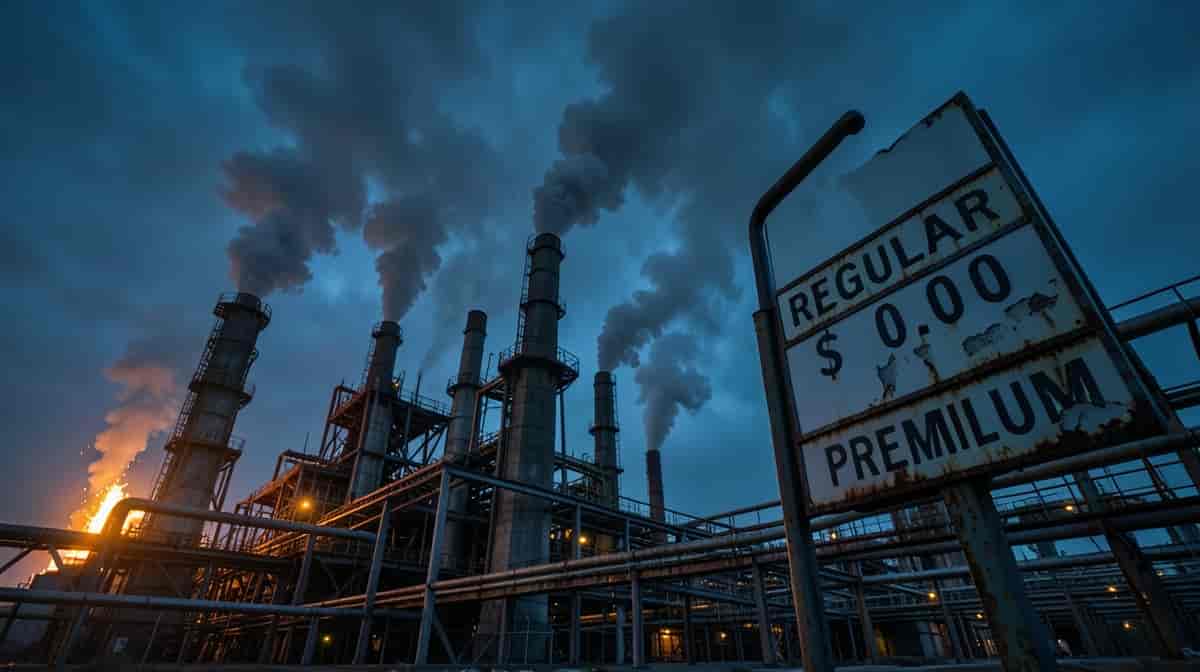
The sight of restricted fuel pumps is becoming increasingly common across multiple Russian administrative zones as the energy backbone of the nation faces a precision-guided crisis. Domestic stability, once insulated from frontline maneuvers, is now being recalibrated through administrative rationing and strict Russia fuel limits at the retail level.
As tensions continue to escalate, multiple Russian regions are enforcing strict Russia fuel limits following a series of successful drone operations targeting critical national infrastructure. These measures represent a significant shift in the domestic management of energy resources, moving from a position of global export dominance to one of localized scarcity management. According to reports from Reuters, the compounding effect of reduced refinery capacity and regional distribution bottlenecks has put mounting pressure on domestic fuel markets, making the logistical strain increasingly visible across multiple Russian territories.
Persistent and expanding drone strikes threaten to cause deeper damage, leading to widespread fuel rationing and prolonged economic friction across multiple regions.
Refinery Output and the Surge of Russia fuel limits
The core of the current crisis lies in the systematic degradation of domestic oil processing capabilities. Recent Ukraine drone strikes have successfully targeted key energy nodes, focusing on the sophisticated units required for petroleum product distillation. These facilities, once the pride of the national industrial sector, are now the focal point of a logistical struggle. When a refinery’s output drops, the ripple effect is felt almost immediately at the regional level, where distributors are forced to manage dwindling stocks with high precision.
The reductions in refinery output have triggered a wave of regional management strategies. Local administrations are stepping in with sales limitations to ensure that critical services remain operational while the general population faces restricted access at the pump. While the full extent of the damage to specific facilities remains under assessment by federal authorities, energy analysts note that these localized rationing measures reflect a broader challenge for Moscow. Maintaining stable fuel supplies internally while continuing a high-intensity military campaign requires a delicate balancing act that is becoming increasingly difficult to sustain.
Economic Friction and Regional Supply Chains
The economic impact of these fuel restrictions extends far beyond the inconvenience of a driver finding a closed gas station. In major energy-producing nations, fuel is the literal lubricant of the economy, and any disruption to its flow triggers a cascade of secondary effects. Regional fuel supply chains are currently being constrained by the refinery output drop, which in turn drives up local costs and strains the very networks designed to distribute energy to the population.
- Transport businesses are facing immediate logistical hurdles as they struggle to secure enough fuel for long-haul routes.
- Agricultural workers, particularly those in the midst of critical planting or harvesting cycles, find their operations vulnerable to sudden supply shifts.
- Local consumers are dealing with the reality of potential price spikes and the administrative burden of rationing.
The situation underscores how front-line conflicts increasingly impact the daily lives and economies of civilian populations far from the combat zone. These localized rationing measures are not just temporary fixes; they are indicators of a shifting economic landscape where energy security is no longer a given.
Tactical Energy Warfare and Strategic Objectives
The systematic nature of the strikes suggests a deliberate use of energy warfare tactics designed to degrade the underlying logistical capacity of the adversary. By targeting refineries and fuel depots, the operations aim to create a multi-front pressure point that affects both military logistics and civilian economic stability. This is not merely about destroying physical structures; it is about disrupting the complex web of production and distribution that keeps a modern nation functioning.
The vulnerability of Russian energy processing highlights the broadening economic friction of the conflict, directly impacting domestic energy security alongside international trade flows.
Analysts point to the root cause as the persistent degradation of infrastructure through long-range drone technology. Unlike traditional battlefield engagements, these strikes hit the industrial heart of the nation, forcing a reallocation of attention and resources. The tactical focus on critical industrial infrastructure serves to systematically reduce overall fuel production capabilities, creating a deficit that cannot be easily filled by simply redirecting exports, as the regional distribution nodes themselves are often part of the target list.
The Internal Balancing Act: Civilian vs Military Priorities
For the central government in Moscow, the domestic fallout from fuel restrictions creates a political challenge. There is a constant need to balance war-time economic mobilization with the maintenance of civilian stability in the affected regions. When regions are forced to limit fuel sales, it signals to the population that the conflict has reached their doorstep in a tangible, economic way.
A hidden angle in this development involves the reallocation of military assets. Continuous disruption of regional refining nodes could eventually force the government to move critical air defense assets away from the active frontline to safeguard vital internal industrial infrastructure. This creates a strategic dilemma: protect the soldiers at the front or protect the refineries that provide the fuel to get them there. This forced choice is a primary goal of infrastructure-targeted campaigns, as it thins out defensive capabilities across a wider geographic area.
Historical Context and the Shifting Security Landscape
The current situation mirrors strategic bombing campaigns seen in 20th-century conflicts, where domestic fuel and oil infrastructure were systematically targeted to degrade an adversary's logistics. Historically, when a nation’s refining capacity is compromised, the result is a slow but steady erosion of civilian economic stability. The modern twist is the use of relatively low-cost drones to achieve what once required massive bomber fleets.
| Event Timeline | Description of Development |
|---|---|
| Phase 1 | Sustained drone operations target key refinery processing units. |
| Phase 2 | Impacted refinery output leads to domestic supply shortages. |
| Phase 3 | Multiple regional authorities implement retail fuel sales limitations. |
| Phase 4 | Federal bodies grapple with distribution caps and logistical strains. |
This timeline illustrates a clear progression from external military action to internal administrative response. The vulnerability of these energy nodes highlights the challenges of defending a vast industrial landscape against modern, long-range tactical threats.
Predictive Assessment of the Energy Crisis
Looking ahead, the next 24 to 72 hours are expected to see a continuation of these administrative pressures. Regional authorities will likely maintain or even expand fuel sale limitations as they wait for refinery repairs to be assessed. The expert prediction suggests that as long as refinery output remains constrained, logistical hurdles for regional distributors will increase, leading to potential expansion of rationing measures.
- Short-term (24 hours): Continued implementation of fuel limitations in currently affected regions.
- Medium-term (72 hours): Likely expansion of administrative measures if refinery stabilization is not achieved.
- Long-term (Best Case): Rapid repairs to damaged infrastructure, allowing for the lifting of regional limits sooner than anticipated.
- Long-term (Worst Case): Persistent strikes causing deeper damage, leading to widespread national fuel rationing.
The situation remains fluid, with the ability of refineries to return to full capacity being the primary variable. As domestic stocks are managed through these strict limits, the focus remains on whether the current infrastructure can withstand a prolonged campaign of attrition.
Frequently Asked Questions
Why are more Russian regions limiting fuel sales?
Multiple Russian regions have begun limiting fuel sales following sustained Ukrainian drone strikes that have significantly impacted domestic oil refinery output. These attacks have disrupted critical processing facilities, creating supply strains across local markets.
What is the broader impact of the refinery output reductions?
The drop in refinery output strains domestic energy availability, forcing regional authorities to implement restrictions to manage dwindling supplies. This highlights the vulnerability of critical infrastructure amid ongoing geopolitical conflict.
Who is most affected by these fuel sale limitations?
Consumers and businesses operating within the affected Russian regions face immediate inconveniences and potential supply shortages. Transport and agricultural sectors relying heavily on steady fuel availability are particularly vulnerable.
What happens next as refinery disruptions continue?
As long as drone strikes continue to target processing plants, further restrictions and increased rationing measures may be introduced across more regions. Repairing damaged refineries remains a complex challenge under ongoing security threats.
What is the background behind the current fuel shortages in Russia?
The disruptions stem from targeted long-range drone operations aimed at degrading military logistics and refining capacity. These strikes have systematically targeted key energy nodes, reducing overall fuel production capabilities.
Which specific news source reported on the Russian fuel sales restrictions?
Reuters provided detailed coverage regarding how mounting Ukrainian drone strikes on refinery output have forced additional Russian regions to limit fuel sales.
Conclusion
The implementation of fuel sales limits across multiple Russian regions marks a significant moment in the ongoing conflict, highlighting the direct economic consequences of targeted energy infrastructure strikes. What began as a series of long-range drone operations has now manifested as domestic rationing, affecting transport, agriculture, and the daily lives of citizens far from the frontlines. As reported by Reuters, the reduction in refinery output has created a logistical strain that local administrations are struggling to manage. Moving forward, the stability of the Russian domestic fuel market will depend heavily on the speed of refinery repairs and the ability of the state to protect its remaining industrial nodes from further disruption. For now, the introduction of rationing suggests that the friction of the conflict has moved firmly into the realm of domestic energy security.
Sources
- More Russian regions limit fuel sales as Ukrainian drone strikes hit refinery output — Reuters
- Growth in Immigrants from Some Countries and Regions Has Been Enormous — Center for Immigration Studies
- Fed Cuts Pay Raises for Regional-Bank Staff — WSJ
- Keep inference running through regional capacity shortfalls with cross-Region inference routing in Amazon SageMaker AI — Amazon Web Services (AWS)
- UNU and Government of Kazakhstan Sign Agreement to Establish UNU Institute in Almaty — UNU | United Nations University
- Rock ends fall ranked among region’s best — Slippery Rock University Athletics


