
Russia Ukraine War Shifts Into A New Phase That Caught Analysts Off-Guard
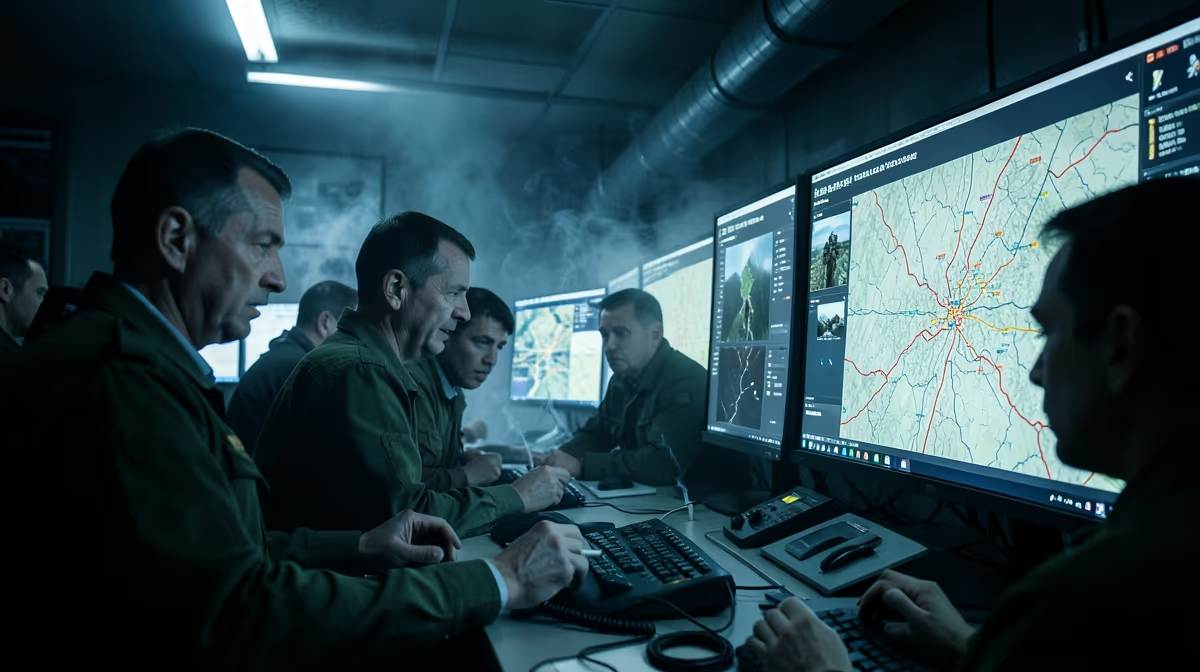
The strategic map of Eastern Europe is being rewritten in real time as the ongoing russia ukraine war continues to dominate international headlines, forcing a fundamental re-evaluation of modern security architectures. As the conflict intensifies, the shifting landscape of geopolitical escalation is testing the resilience of global alliances and the structural integrity of international defense cooperation.
The United Kingdom has intensified its diplomatic and military support for Ukraine this week as intensified Russian aerial assaults target critical energy infrastructure across eastern and central Ukrainian regions. In a coordinated response to the escalation, the British Ministry of Defence has confirmed the accelerated delivery of air defence missiles and electronic warfare equipment to bolster Kyiv's frontline capabilities. This shift in aid comes as intelligence reports indicate Russian forces are attempting to exploit vulnerabilities in the power grid ahead of the winter season, causing widespread rolling blackouts throughout the country.
Simultaneously, the UK government is leading efforts within the G7 to tighten sanctions enforcement, specifically targeting the shadow fleet of tankers Russia utilizes to bypass international oil price caps. British officials have stated that these measures are intended to restrict the Kremlin ability to finance continued offensive operations while maintaining economic pressure on the Russian industrial complex. On the ground, frontline positions remain largely static despite heavy artillery exchanges, with Ukrainian commanders reporting significant attrition rates. International observers, including representatives from the UK Foreign Office, continue to monitor the situation, emphasizing that the conflict has entered a critical phase requiring sustained long-term commitment from Western allies to prevent a strategic breakthrough by Russian ground forces.
Key Developments and Frontline Reality
The current status of the conflict is defined by a grinding war of attrition with active front lines concentrated in eastern and southern Ukraine. The invasion, which began on 24 February 2022, has evolved from a rapid offensive into a protracted struggle over territory and resource security. Russia currently occupies significant portions of these regions, and despite numerous international summits and diplomatic efforts, a peaceful resolution remains elusive. The UK stands as one of Ukraine primary military and financial backers, providing essential hardware such as Storm Shadow missiles and Challenger 2 tanks, while playing a lead role in training Ukrainian troops and coordinating international sanctions against the Russian economy.
Why It Matters
This conflict represents a major turning point for global security, directly challenging the post-Cold War world order and testing the strength of alliances like NATO. Beyond the immediate military theater, the war acts as a catalyst for widespread economic instability. Because Ukraine is a key global supplier of grain and the war has severely disrupted energy markets, it has contributed to high inflation and significant cost-of-living challenges for households in Britain and across the globe. The crisis affects everyone from the displaced Ukrainian population and Russian military personnel to nations heavily reliant on food and energy imports, illustrating the fragility of interconnected global trade systems.
Root Causes and Analyst Perspective
The root of this conflict lies in the collapse of Soviet-era security architecture and Russia perception of an existential threat stemming from NATO eastward expansion. From a political perspective, the Kremlin continues to consolidate internal power by projecting a sense of Great Power status in direct opposition to Western liberal democratic institutional influence. Economically, the conflict has forced a fragmentation of the global trade system through extensive sanctions regimes and the weaponization of energy dependencies. Geopolitically, the world is witnessing a shift toward a multipolar order, which forces neutral states to navigate the deepening rift between the G7 bloc and the expansion of the BRICS grouping. Historical parallels can be drawn to the 19th-century Great Game, characterized by proxy competition and the maintenance of buffer zones between competing imperial powers.
Anticipating Future Developments
Within the next 24 hours, experts expect an increased intensity in long-range drone and missile strikes targeting critical energy infrastructure and logistics nodes across the frontline. Looking toward the 72-hour horizon, the situation will likely see sustained tactical maneuvering in the Donetsk region, with potential localized shifts as both sides consolidate defensive positions amid adverse weather conditions. The expert consensus points to a period of positional warfare characterized by attrition, with Western diplomatic focus shifting toward long-term security guarantees and the maintenance of munitions supply chains. While the best-case scenario involves the initiation of credible ceasefire negotiations leading to a cessation of hostilities, the worst-case remains a significant escalation of direct confrontation or a critical breach of the frontline that could trigger a major humanitarian crisis and a wider regional spillover.
Frequently Asked Questions
Why did Russia invade Ukraine?
Russia launched a full-scale invasion of Ukraine in February 2022, citing a desire to demilitarize and denazify the country. International observers and the Ukrainian government reject these claims, viewing the conflict as an unprovoked act of aggression and an attempt to restore Russian regional dominance.
What is the current status of the Russia-Ukraine war?
The conflict remains a grinding war of attrition with active front lines concentrated in eastern and southern Ukraine. Both sides continue to engage in intense artillery exchanges, drone warfare, and trench combat while seeking international diplomatic and military support.
How is the UK supporting Ukraine in the war?
The UK is one of Ukraine leading military and financial backers, providing substantial aid including advanced weaponry like Storm Shadow missiles and Challenger 2 tanks. The British government also plays a key role in training Ukrainian troops and coordinating international sanctions against the Russian economy.
What are the main goals of Ukraine in this war?
Ukraine primary goal is to restore its territorial integrity by reclaiming all occupied areas, including the Crimean Peninsula and parts of the Donbas. Additionally, the nation seeks long-term security guarantees and integration into Western political and economic structures such as the European Union and NATO.
How has the war impacted the global economy?
The war has caused significant disruption to global supply chains, particularly regarding food and energy exports from the region. This led to a sharp rise in inflation, increased fuel costs, and food security concerns in many nations that relied on Ukrainian grain and Russian energy.
Is there a peace agreement currently being negotiated?
There is currently no active peace agreement or formal negotiation process between Russia and Ukraine. Significant gaps remain between the two sides, as Kyiv insists on a full Russian withdrawal while Moscow continues to demand recognition of its annexed territories.
Conclusion
The Russia Ukraine war remains in a critical phase of attrition that continues to place immense pressure on global security and economic stability. While frontline combat has settled into a rigid, intense pattern, the diplomatic and logistical efforts of the UK and its G7 partners underscore a commitment to long-term resilience. As the international community monitors the impact of new sanctions on Russian logistics and the ongoing defense of Ukrainian infrastructure, the path forward remains defined by a search for strategic balance and the prevention of further escalation. The coming weeks will be decisive in determining whether current military and economic initiatives can stabilize the front and pave the way for a more secure geopolitical environment.


.webp)

.webp)

