
Ukraine Drone Attack on Moscow Signals a Dangerous Escalation Point
Introduction
The quiet morning skies over the Russian capital were shattered as a series of unmanned aerial vehicles breached the citys perimeter, forcing residents to confront the direct physical consequences of an expanding war. This ukraine drone attack moscow signifies a pivotal shift in modern military engagement, moving beyond traditional front-line combat to threaten the administrative heart of Russia.
What Happened
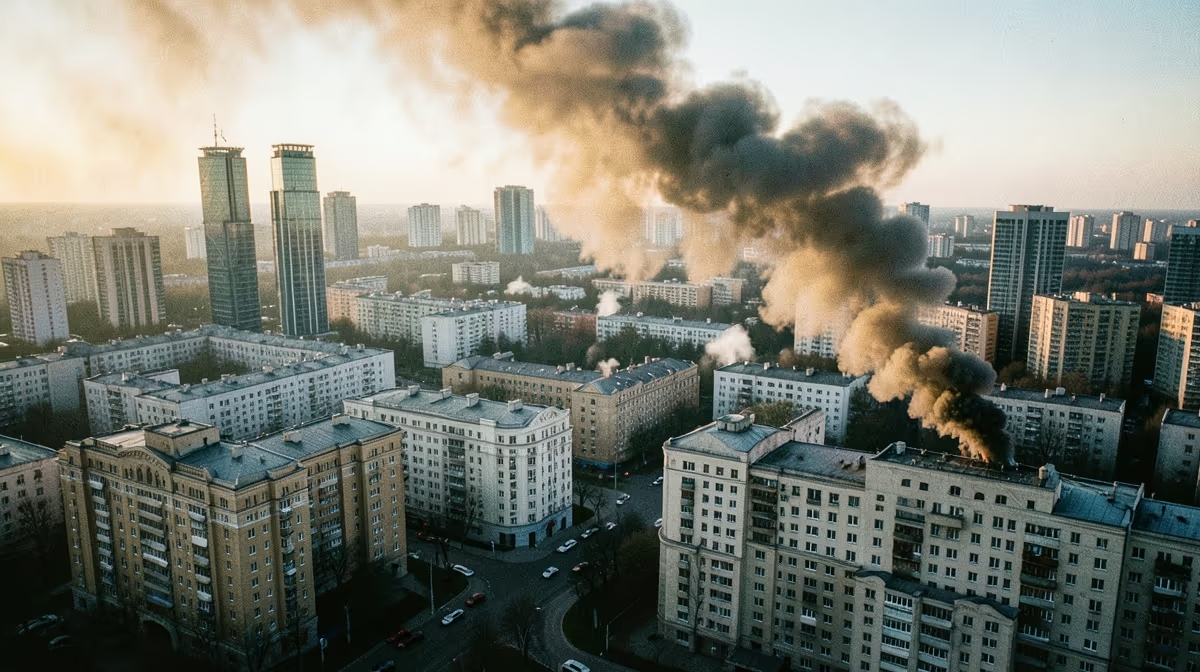
In the early hours of Tuesday, multiple drones were launched toward targets within Moscow and the surrounding region. Municipal authorities and the Russian Ministry of Defense confirmed that air defense systems were activated, with electronic warfare measures deployed to jam incoming signals. While the majority of the unmanned systems were intercepted, debris from the engagements struck several high-rise residential buildings.
Eyewitnesses reported a series of explosions that prompted an immediate emergency response, with residents in the affected districts temporarily evacuated. Aviation authorities acted quickly to restrict airspace, leading to the brief suspension of operations at major international airports serving the city. Russian officials have characterized the incident as a terrorist attack, while the Russian Defense Ministry stated that President Vladimir Putin was briefed on the situation and commended the efficiency of the air defense units. Ukrainian officials have maintained their policy of neither confirming nor denying direct involvement in these strikes, though advisors to the presidency have previously noted that the ongoing conflict would inevitably impact Russian territory.
Key Facts
- Ukrainian drones targeted multiple locations across Moscow in the early morning hours, marking a high-profile incursion into the Russian capital.
- Russian air defense systems successfully intercepted most of the incoming units, although some failed to dissipate completely, causing structural damage to residential apartment complexes.
- No fatalities were reported, but thousands of residents faced temporary displacement as a safety precaution.
- Major international airports in the Moscow region implemented brief flight suspensions.
- The Russian government has officially labeled the operation a terrorist attack and has vowed to formulate a significant response.
Why It Matters
These strikes are psychologically significant because they erode the long-standing sense of normalcy for residents in Moscow, a city that has largely remained shielded from the direct impacts of the ongoing Russia-Ukraine conflict. By bringing the reality of the war to the doorstep of the Russian leadership, the strikes force the Kremlin to reconsider its internal security architecture. There is a tangible pressure to shift military resources away from active front lines to bolster the air defense shielding of the capital. Beyond the security concerns, the incidents have impacted the broader economic environment, influencing insurance premiums for civil aviation and necessitating new investments in infrastructure protection. For the international community, the incident highlights a transition in how both nations approach asymmetric warfare.
Expert Analysis
The root cause of these incursions is the strategic necessity for Ukraine to degrade Russian logistics and morale, while simultaneously forcing Moscow to redirect high-value air defense assets from the front lines to the interior. The conflict is witnessing a rapid development of long-range, cost-effective, AI-guided drone swarms that are effectively bypassing traditional state-level military industrial supply chains. This evolution in drone warfare bears a historical parallel to the V-1 and V-2 rocket campaigns of the Second World War, where the primary objective was the psychological exhaustion of the population as much as physical destruction. Analysts observe that these actions are part of a calculated strategy to undermine the narrative of stability that the Kremlin projects to its domestic audience. The current situation marks the culmination of a timeline that began in May 2023, evolving from experimental strikes to a sophisticated integration of deep-strike drone warfare into the broader Ukrainian military strategy.
Political And Geopolitical Implications
The geopolitical angle involves a delicate calibration, as Ukraine tests the boundaries of how Western-provided weaponry and technology are perceived in the context of escalation. The primary challenge for policy makers is managing the risk of a broader conflict while maintaining support for the Ukrainian position. Russia is expected to utilize these incidents as a basis to justify larger-scale conventional strikes, framing the narrative around national defense. Meanwhile, the international community faces the challenge of interpreting these drone strikes within the framework of existing international law and the thresholds of NATO-Russia engagement. The economic and industrial strain caused by these incursions contributes to a wider climate of global market volatility, as stakeholders monitor the potential for further disruption in energy infrastructure and supply chain security.
What Happens Next
In the next 24 hours, experts anticipate intensified air defense activity around Moscow and a likely retaliatory cycle from the Russian military, potentially involving long-range missile strikes on Ukrainian energy or military infrastructure. The Kremlin is expected to amplify its rhetoric regarding a harsh response to the incursions. Over the next 72 hours, diplomatic fallout is probable as Western allies weigh the implications of the incident against current escalation thresholds. Military surveillance along the border will likely be intensified, and Ukrainian forces may adjust their tactical drone warfare approach based on the effectiveness of Russian countermeasures. Analysts warn of a tit-for-tat escalation cycle; while a best-case scenario involves a transition toward backchannel de-escalation talks, the worst-case scenario involves a major Russian retaliatory strike hitting civilian infrastructure, potentially forcing a formal shift in Western weapons-use policy that could draw all parties closer to a direct conventional confrontation.
Frequently Asked Questions
Has Moscow been targeted by Ukrainian drone attacks?
Yes, Moscow has been the target of several drone attacks since the beginning of the full-scale Russian invasion of Ukraine, involving long-range unmanned aerial vehicles striking various locations.
What kind of damage have the drone attacks on Moscow caused?
Most attacks have caused minor structural damage to residential buildings and administrative offices. There have been few reports of significant casualties or widespread infrastructure destruction.
How does Russia respond to drone attacks on Moscow?
Russia typically deploys electronic warfare and air defense units to intercept threats. Following these incidents, officials often label the strikes as acts of terrorism and frequently retaliate with intensified bombardment on Ukrainian cities.
Are drones used in Moscow attacks launched from Ukraine?
While many are launched from within Ukrainian territory, analysts have investigated the possibility of launch points closer to the border, highlighting the evolving range capabilities of the unmanned systems.
Why is Moscow being targeted by drones during the war?
The strikes serve to bring the reality of the war to the capital, test Russian air defenses, and strain military resources that might otherwise be deployed to the front lines.
Does Ukraine officially claim responsibility for drone attacks in Moscow?
The Ukrainian government often maintains a policy of ambiguity, neither confirming nor denying direct involvement, though officials assert their right to strike military targets anywhere to defend the nation.
Conclusion
The drone strikes on Moscow represent a clear escalation in the tactical deployment of unmanned aerial vehicles within the Russia-Ukraine conflict. By targeting the capital, these operations have successfully challenged the domestic sense of security and forced a reallocation of Russian military assets. While the immediate physical damage remains contained, the long-term impact on the geopolitical landscape and the potential for a retaliatory escalation cycle remain significant. Observers and global policy makers will continue to monitor the situation as both sides navigate the complexities of this evolving deep-strike warfare, with the next few days likely to determine the trajectory of the ongoing military response.
"


